
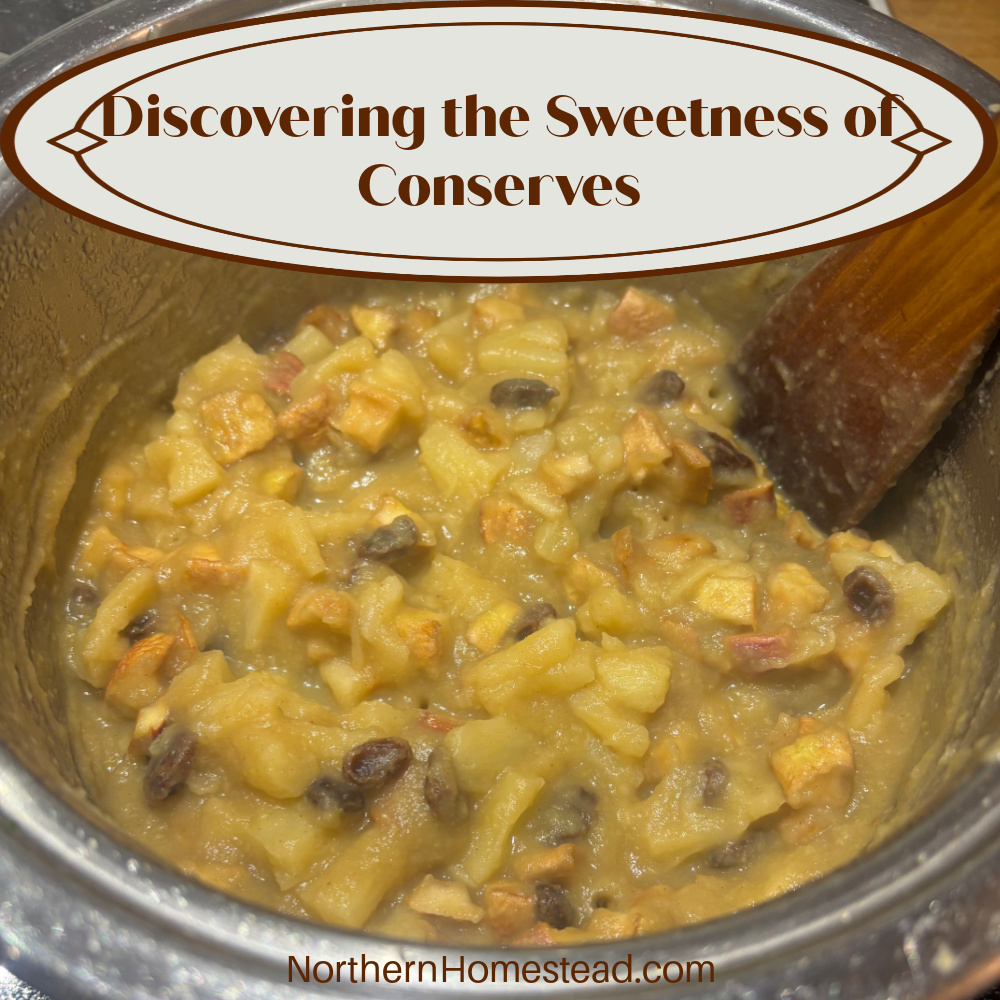
While sharing apple sauce, jam, and butter recipes on my Facebook page, a follower commented, “You forgot apple conserve.” I had to admit that I had never made apple conserve and honestly didn’t even know what I was missing. So here I am, discovering the sweetness of conserves. So join me on my journey into flavorful fruit preserves.
What is a fruit conserve?
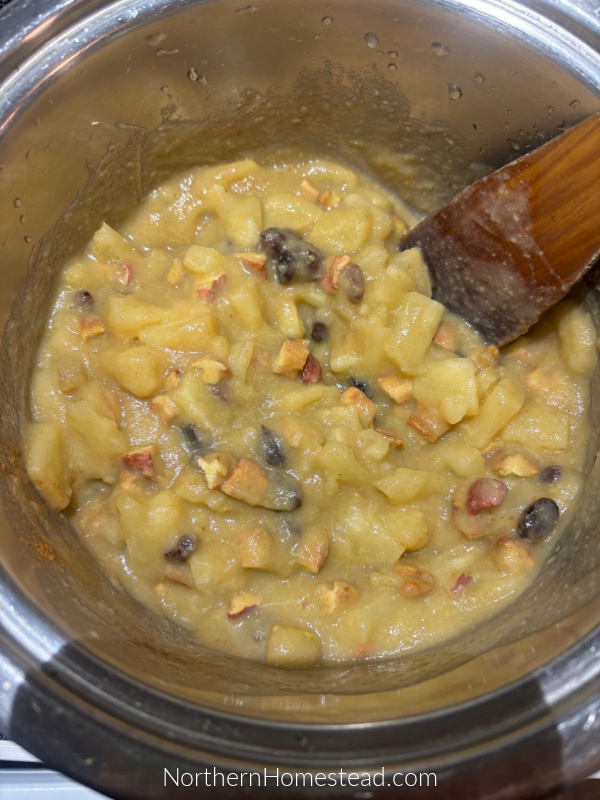
A conserve is a thick mixture of fruit, raisins, spices, and often nuts that you can enjoy on special breads like English muffins, waffles, or even oatmeal. You can also use them as a garnish for a cheese tray. You can make conserves with or without added sugar and pectin.
Apples aren’t the only fruit used for conserves, even though they may be the most common. You can also make conserves from apricots, plums, and even rhubarb.
Where to find a recipe for conserve
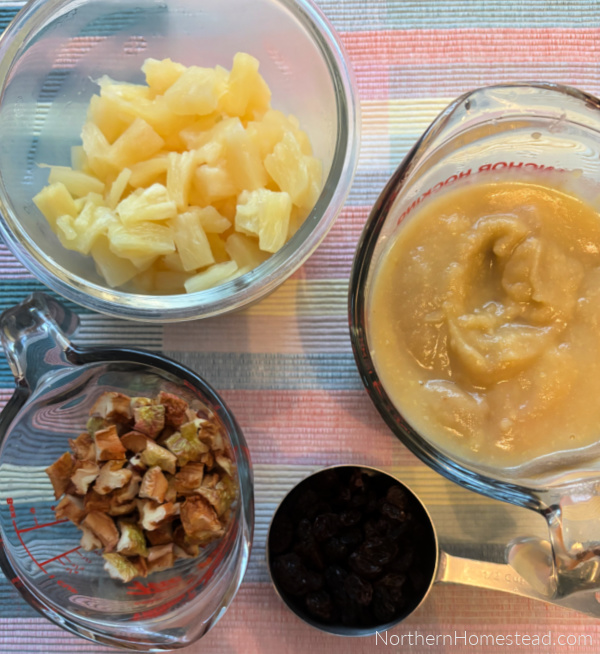
Diving into the world of conserves, I found that, like with jam, there are almost no limits to the combinations you can create. Choose a base fruit, such as apples or pears, and add an accent fruit like pineapple or orange, along with its zest. Spice it up with cinnamon, nutmeg, or ginger, and round it out with dried fruit and/or nuts.
The *Ball Complete Book of Home Preserving* has several very interesting recipes for conserves. As a home canner, I would say it’s a must-have book. If you don’t have it yet, consider gifting it to yourself and trying some of those delicious recipes.
Traditional recipes are often handed down for generations. Apples, raisins, and walnuts seem to be among them. Below are two exsamples from my kitchen.
Apple Cinnamon Conserve
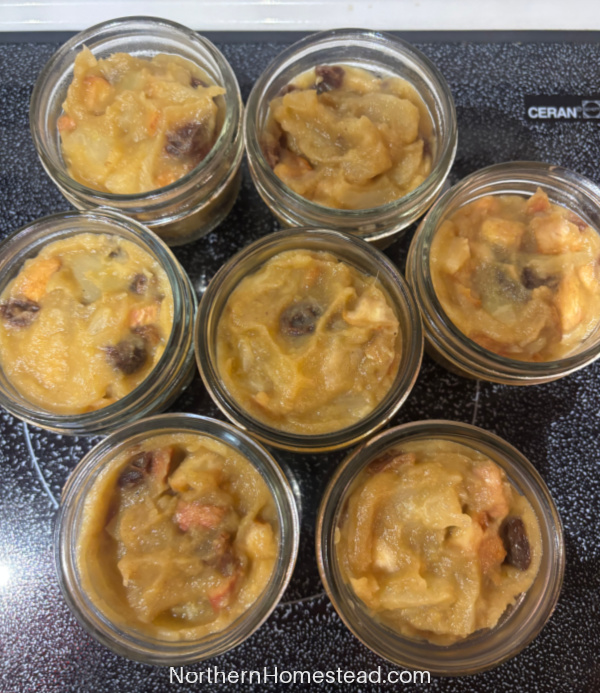
To try conserve, I made the Apple Cinnamon Conserve recipe on page 78. It turned out delicious! It is naturally sweetened with fruit, and the dried apples and raisins provide the traditional chunky conserve texture.
Ingredients:
4 cups unsweetened applesauce
2 1/2 cups unsweetened crushed pineapple, drained
1 cup chopped dried apples
3/4 cup golden raisins
2 tbsp lemon juice
1/2 tsp ground cinnamon
For detailed instructions, you’ll need the book. Here are just the basics. Cook all ingredients to the desired thickness (about 15 minutes) in a large saucepan. Since I used homemade applesauce, it was very thick to begin with. But it also had an incredibly delicious taste combination.
Ladle the hot conserve into clean jars, leaving 0/5 inch (1 cm) headspace. Because of the thickness, remove air bubbles so you don’t trap air.
Again, just like jam, process the conserve for 10 minutes in a water bath canner, adjusting the time to your altitude.
Apple Walnut Conserve
To try something else with conserves, I made a batch of apple walnut conserve. Below is roughly what I did. I substituted rhubarb for orange juice and reduced the sugar to half the weight of the apples. That’s the beauty of home canning: if it’s not a matter of safety, you can play around with the recipe. This one turned out delicious.
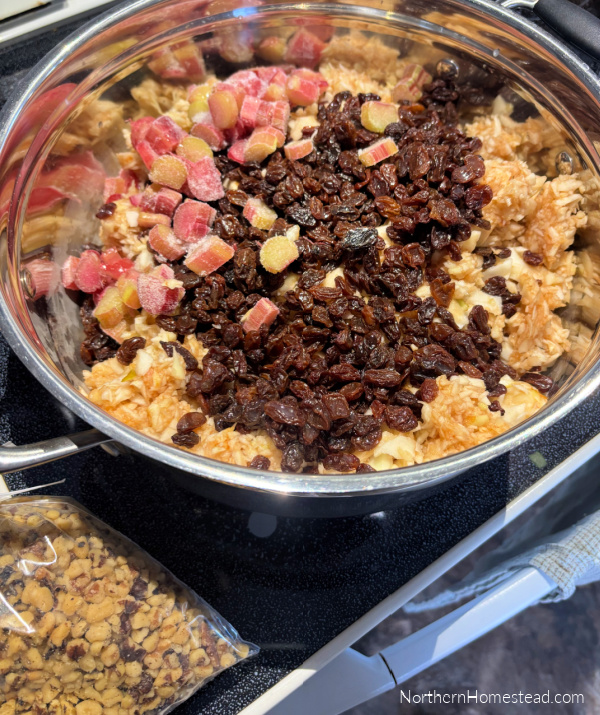
Ingredients:
6 cups diced apples
1 cup diced rhubarb
1 cup raisins
2 cups sugar
1 tablespoon lemon juice
1 cup chopped walnuts
Combine all ingredients except the walnuts in a big saucepan. Bring to a boil and, by constant stirring, cook till it thickens (for about 15 minutes). At the end of cooking, add the chopped walnuts, let them heat through, and mix them in well.
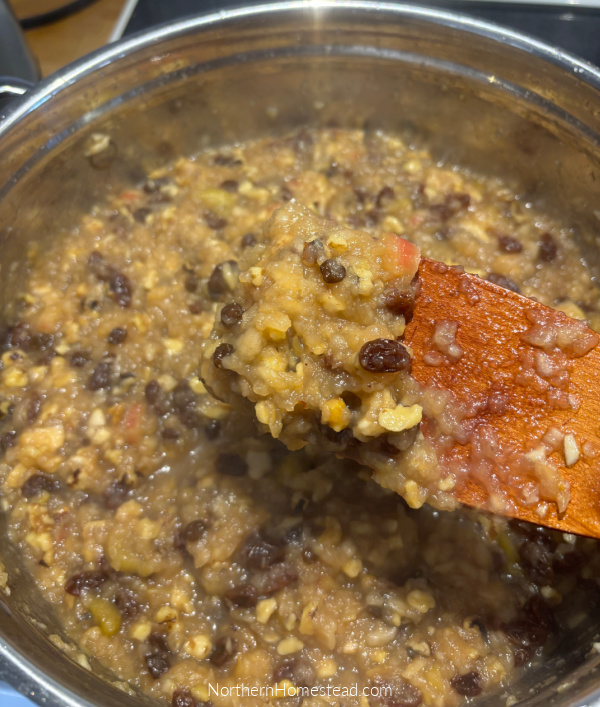
Ladle the hot conserve into clean jars, leaving 0/5 inch (1 cm) headspace. Remove air bubbles, clean rims, center the lid, and screw on the band until finger-tight. Process the conserve for 10 minutes in a water bath or steam canner, adjusting the time to your altitude.
What’s your take on conserves?
Are you new to making conserves, or are you an experienced conserve maker? What is your favorite combination? Whether you’re just starting out or have been experimenting with flavors for years, I’d love to hear about your experiences. Maybe you have a secret ingredient or a cherished recipe that you swear by. Let’s share tips and favorites and inspire each other on this delicious journey of preserving the flavors of our favorite fruits and vegetables! Drop your thoughts in the comments below!
Subscribe to Northern Homestead and follow us on Instagram, Facebook, or Pinterest for more great recipes.
More food preserving articles you might enjoy:
NEWSLETTER SIGNUP

Leave a Reply