
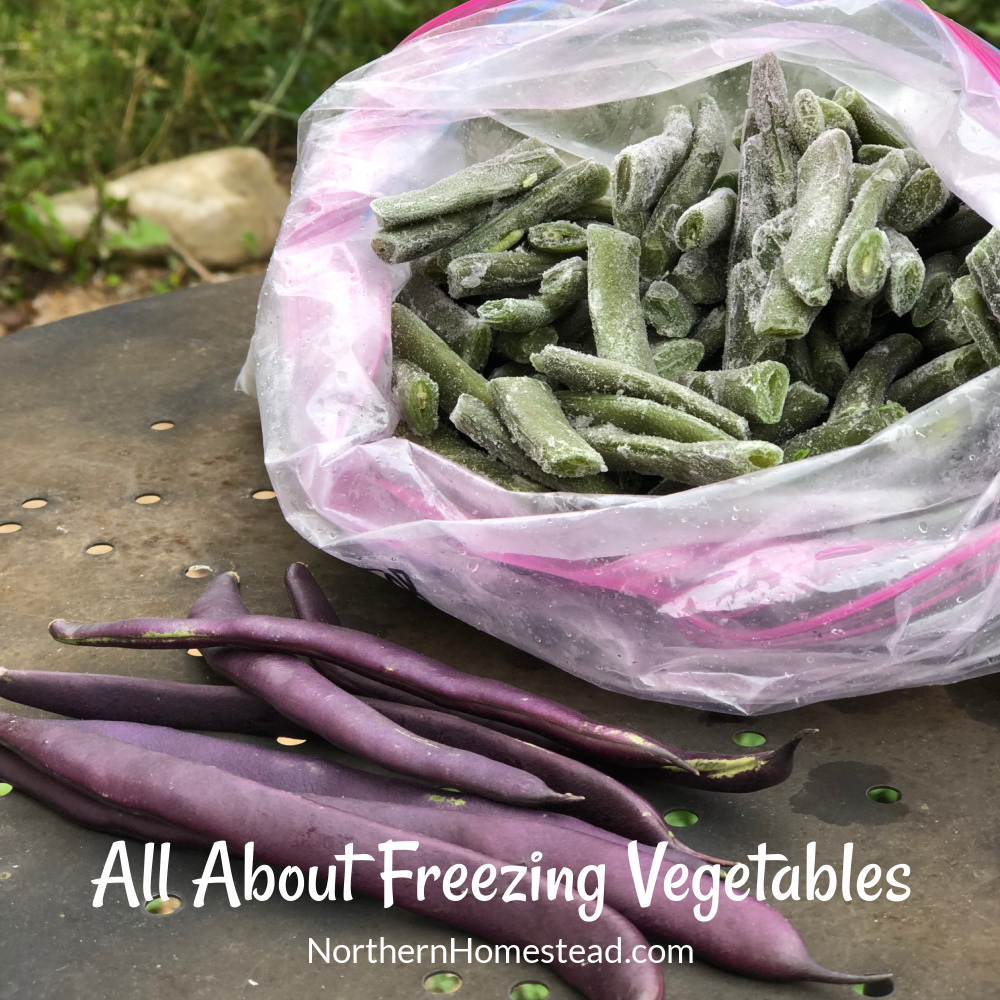
In regions with a short growing season, the desire to savor the summer’s produce into the winter is obvious. Given that frost graces our lands for nearly half the year, freezing as a preservation method seems a fitting choice. Freezing vegetables is perhaps the simplest method to extend their shelf life. For those living off-grid, an outdoor chest freezer can be left unplugged during winter to conserve energy.
A significant advantage of freezing is its flexibility. As produce ripens, simply add to your chest freezer bag by bag. For optimal results, freeze vegetables at their peak ripeness. Let’s dive into All About Freezing Vegetables: Techniques and Tips for Long-Lasting Freshness.
The Importance of Enzymes
Enzymes are biological molecules responsible for various chemical reactions within living organisms. In vegetables, enzymes play a crucial role in processes such as ripening, color changes, and texture changes.
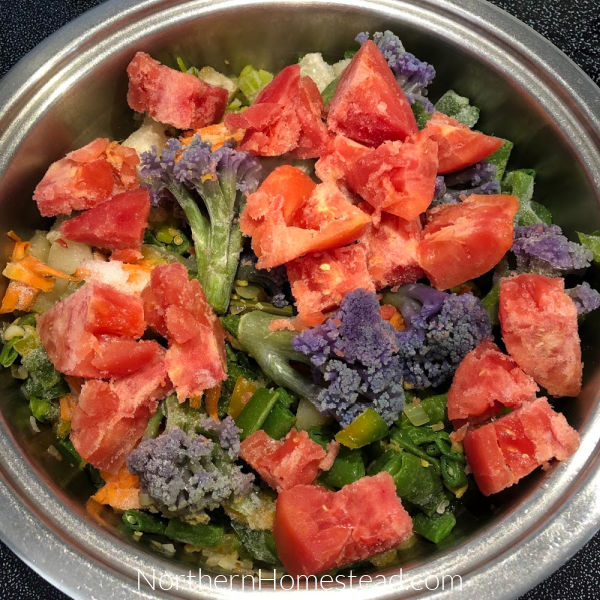
Freezing is a common method of food preservation because it effectively slows the growth of spoilage microorganisms and enzymatic reactions. However, if enzymes are not properly managed before freezing, they can continue to break down cellular structures within the vegetables, leading to issues like texture softening, color changes, and flavor degradation. To mitigate these concerns, you can control enzyme activity before and during freezing by chopping or blanching. Tomatoes are exceptions to it, they can be frozen as a whole, read more here. The picture above is a colorful vegetable curry as an example of how to use frozen vegetables.
Chopping vegetables before freezing raw
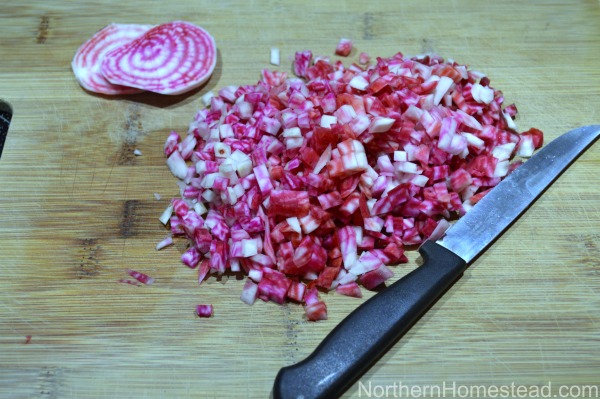
Many vegetables can safely be frozen raw if you chop, mince, dice, or grate them. The chopping slows down the enzyme activity to keep them fresh in the freezer.
Root vegetables like carrots, beets, reddish (for Lagman), and onions freeze well this way.
Also, cauliflower rice, diced peppers, and finely chopped tomatoes freeze well raw. Follow the links to find more information on these vegetables.
- Chopping: Wash and cut the raw vegetables as you like. Depending on the way you want to use them, chopping, mincing, dicing, or grating works well.
- Packaging: Proper packaging is essential to prevent the vegetables from exposure to air and moisture, which can lead to freezer burn and degrade their quality. Vacuum-sealed bags or containers designed for freezing are commonly used to maintain the best possible texture and flavor. Find more packaging tips below.
- Freezing: Once chopped and packaged, vegetables are quickly frozen to very low temperatures. Placing bags or containers close to the freezer wall helps speed up freezing. The rapid freezing process forms small ice crystals, which minimize damage to cell walls and maintain the overall quality of the vegetables.
- Storage Temperature: Store frozen vegetables at a consistent, sufficiently low temperature, typically below 0°F (-18°C). This temperature range keeps enzyme activity suppressed, helping maintain the desired taste, texture, and nutritional value over time.
Blanching vegetables before freezing
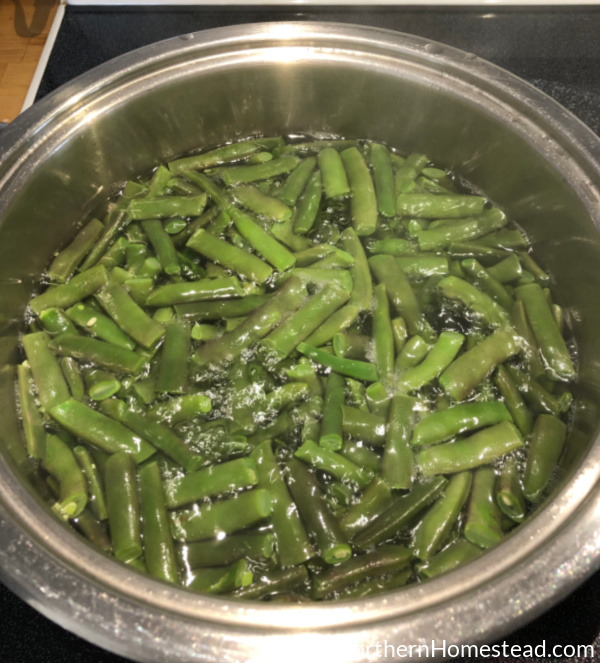
The most common way to control the activity of enzymes before the freezing process is blanching:
- Blanching: Blanching is a pre-freezing treatment where vegetables are briefly boiled or steamed and then rapidly cooled in ice water. This process serves multiple purposes. It inactivates enzymes and slows down their activity, preserving the color, flavor, and texture of the vegetables. Additionally, blanching helps to remove dirt, microorganisms, and air trapped in the tissues, which can contribute to spoilage during freezing.
- Cooling: After blanching, vegetables are cooled down rapidly using ice water. This halts the cooking process and prevents overcooking, while also lowering the temperature quickly to suppress enzyme activity.
- Freezing: Once blanched and cooled, vegetables are quickly frozen to very low temperatures. The rapid freezing process forms small ice crystals, which minimize damage to cell walls and maintain the vegetables’ overall quality.
- Packaging: Proper packaging is essential to prevent the vegetables from exposure to air and moisture, which can lead to freezer burn and degrade their quality. Vacuum-sealed bags or containers designed for freezing are commonly used to maintain the best possible texture and flavor.
- Storage Temperature: Store frozen vegetables at a consistent, sufficiently low temperature, typically below 0°F (-18°C). This temperature range keeps enzyme activity suppressed, helping maintain the desired taste, texture, and nutritional value over time.
The timing for blanching different vegetables
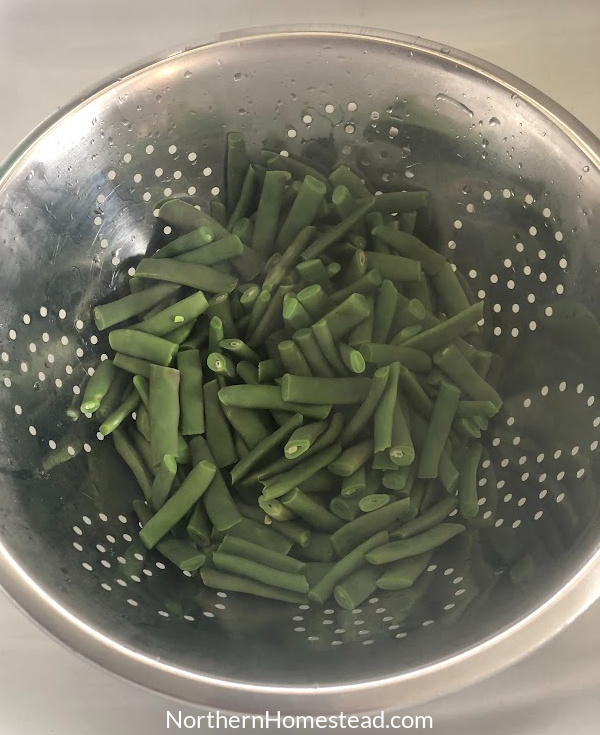
For blanching, use a large pot with enough boiling water to return to a boil within a minute after submerging the vegetables. The NCFHFP recommends using a gallon of water per pound of vegetables. Start timing when the water returns to a boil after adding the vegetables. Using a strainer basket simplifies the process. Otherwise, strain in a colander.
When using a steamer, get the water to a full boil, add the vegetables, and put the lid on. Start the timer right away since the steam will continue.
The blanching time depends on the vegetable variety as well as the size:
- 1-2 minutes for shredded cabbage, kohlrabi, turnip, or parsnip cubes, and peas.
- 2-4 minutes for asparagus, eggplant, green or wax beans, broccoli or cauliflower sprouts, Brussels sprouts, celery, Jerusalem artichoke cubes, okra, pepper halves, and summer squash cubes.
- 5 minutes for small carrots.
- 3-10 minutes for potatoes, depending on size.
- 5-7 minutes for corn on the cob (If you want kernels, it is better to blanch whole cobs first and then remove the kernels).
Cook beets, winter squash, and sweet potatoes before freezing.
Tip for packaging frozen vegetables:
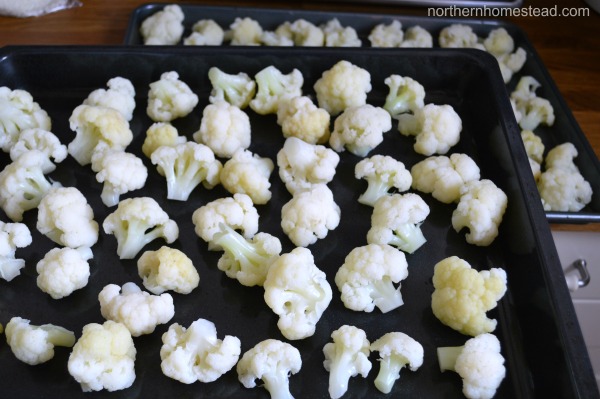
For vegetables that can easily stick together and break apart when removed from the packaging, freeze them on a sheet first, then package them after they are frozen. For example, broccoli, cauliflower, or Brussels sprouts.
Vacuum-sealed bags or containers designed for freezing are commonly used to maintain the best possible texture and flavor. If you do not have a vacuum sealer, flattening the bag and rolling it up before closing has a similar effect.
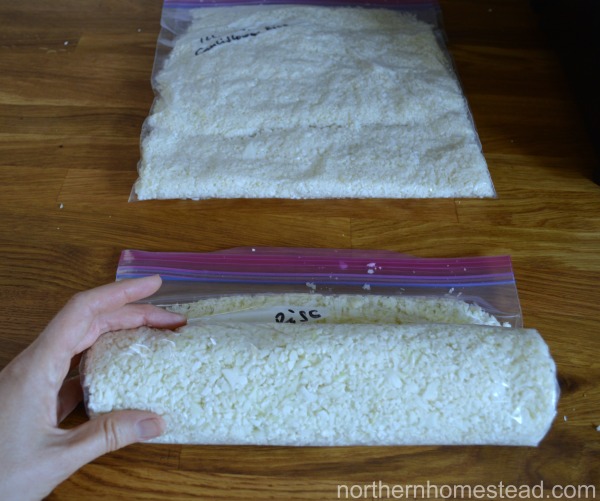
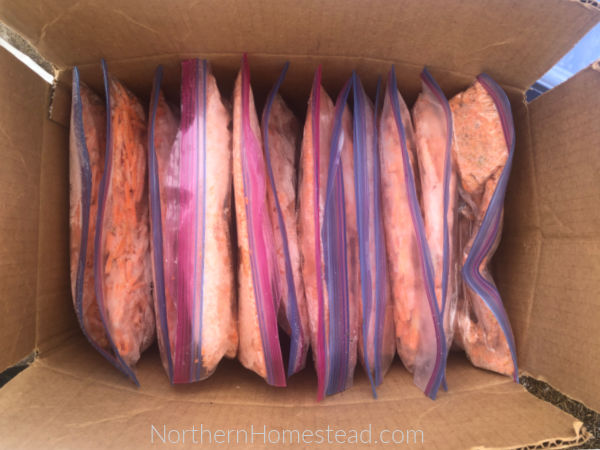
Flat bags freeze quicker and take up less space in the freezer. Read more about organizing a freezer chest with vegetables here.
In conclusion, to preserve the flavor and texture of frozen vegetables, you must control the activity of living enzymes through techniques like chopping, blanching, and rapid freezing. These steps effectively halt enzymatic reactions, ensuring that the vegetables retain their quality and nutritional content throughout their time in the freezer. Proper handling, packaging, and storage also contribute to the overall success of preserving frozen vegetables.
We invite you to subscribe to Northern Homestead and follow us on Instagram, Facebook, or Pinterest for more great recipes.
More food-preserving articles you might enjoy:
NEWSLETTER SIGNUP

Leave a Reply