
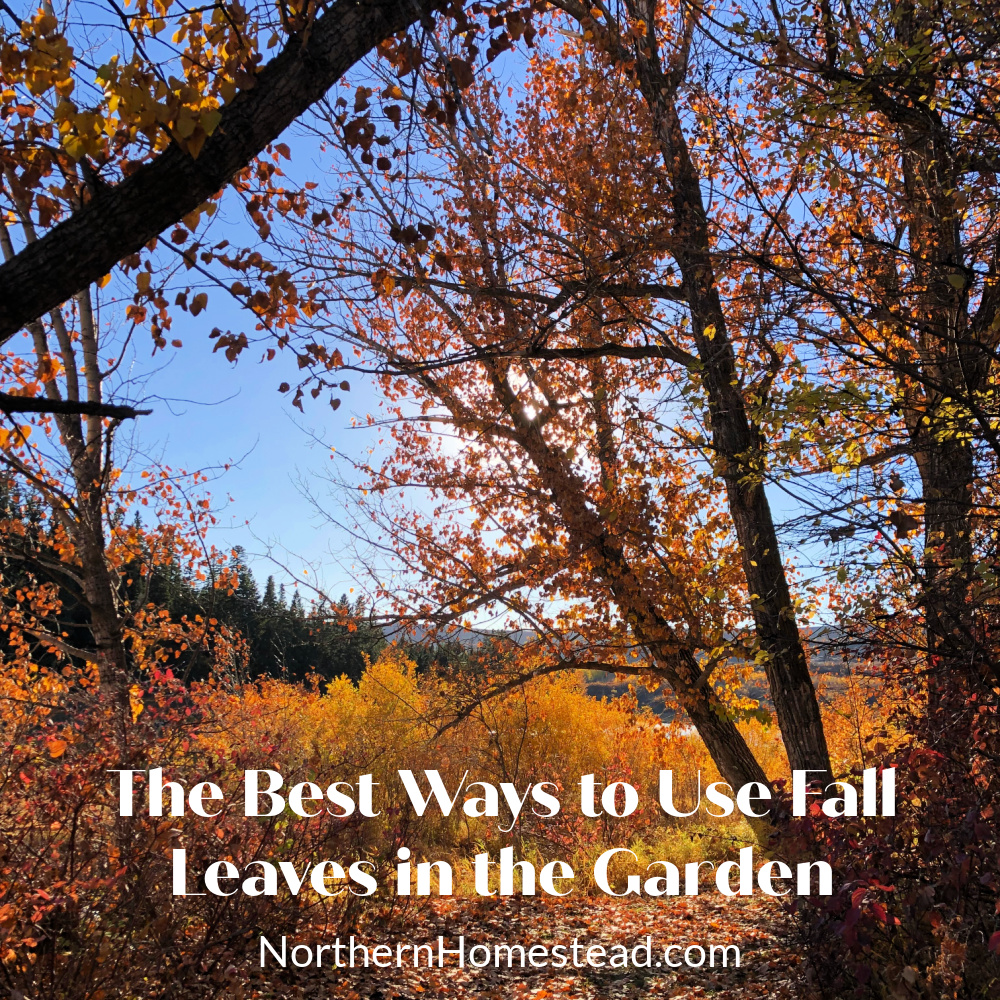
At the end of the season, the leaves put on a breathtaking display, reminding us of the beauty of letting go. I absolutely love fall! But fall leaves offer more than beauty. They are very useful in the garden, so don’t waste this free resource. Even though we talk about leaves a lot on the blog, I thought they deserve their own post. So here are The Best Ways to Use Fall Leaves in the Garden.
To Clean or Not to Clean the Leaves
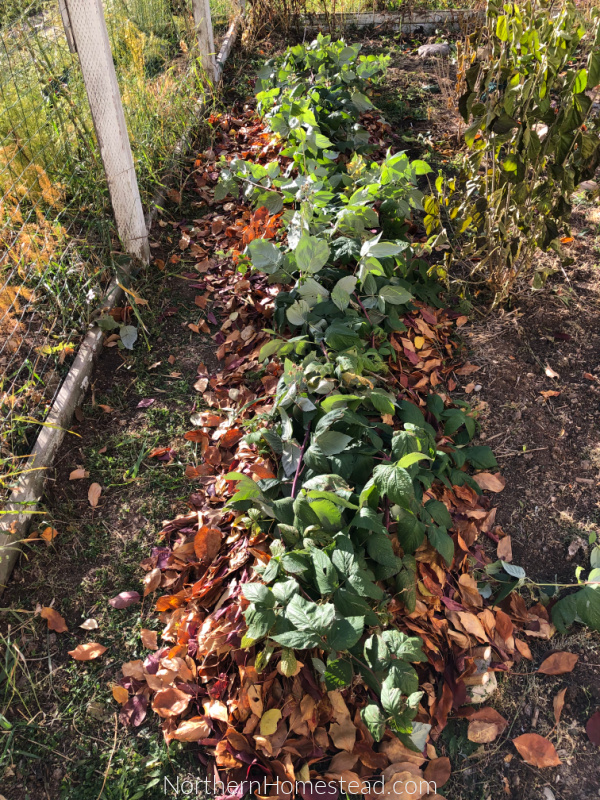
If you have trees in your garden, leaves will fall beneath them, and the wind will move them around. In most cases, you don’t need to clean these leaves up. They cover and nourish the soil, provide hiding places for insects, and naturally accumulate around perennials, protecting them from harsh winter frost. In our garden, I don’t clean up any leaves except in the pathways, where we also remove snow. That’s also how I deal with perennial flower cleanup.
That said, cleaning is necessary in some cases.
Clean if a disease is present. Leaving diseased leaves or fruit with maggots under a tree provides them with an ideal environment to overwinter and multiply the following spring. If you have unwanted maggots, clean up the fallen fruit. Similarly, if you notice any leaf diseases, remove affected leaves from under the trees.
Another reason to clean up is when you are growing a lawn. In this case, leaves are generally not beneficial, so raking them off your lawn is a good idea. If your lawn is free of harmful sprays and your trees are healthy, bag the leaves for other uses. Leaves from Boulevard trees, which are exposed to a lot of dust, or from trees that produce a lot of seeds, aren’t particularly valuable. You can still use them in bags if you don’t find better options, but I recommend using a cleaner source of leaves that are less likely to contain seeds.
Using leaves for plant protection
Nature shows that leaves falling in the fall cover the soil before winter sets in. We will talk about mulching below, but besides naturally accumulating around plants, leaves can also be used intentionally to protect tender plants even more.
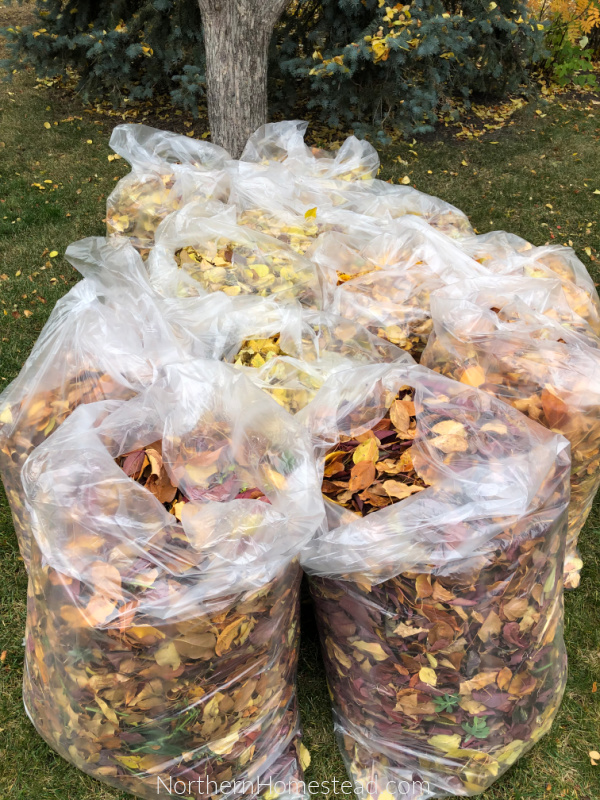
I mentioned bags of leaves earlier, and you might be curious what that entails. You may be familiar only with the orange bagged leaves with a smiley face. I use bags filled with leaves to protect tender plants as part of preparing the garden for winter.
After experimenting with various materials like straw or paper bags, I have found that plastic bags loosely filled with leaves work best. They are lightweight and provide excellent protection. The plastic bags keep leaves from blowing away, getting wet, or becoming compacted. I use them to cover grapes, tender perennials like roses, and berries that aren’t fully hardy in zone three.
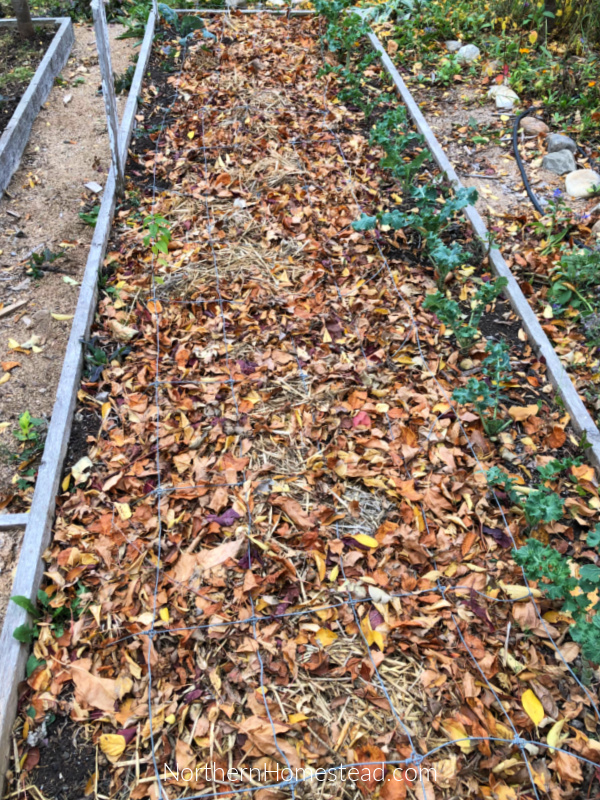
To protect a whole bed, mix leaves with hay or straw to prevent compaction, and hold them down with wire or netting.
Mulching with Leaves
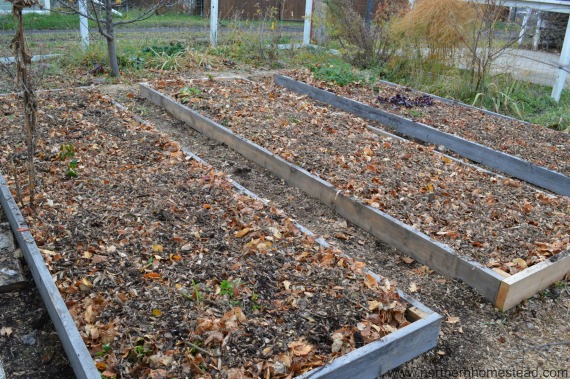
Leaves as mulch can serve two distinct purposes, depending on how you apply them and which leaves you use.
Using fall leaves as mulch can improve and protect the soil. To do so, either lightly work them into the soil to prevent them from forming a barrier or mix them with other compost materials. This approach makes them ideal for mulching garden beds. Alternatively, shredding the leaves can prevent clumping, allowing airflow and water penetration while still providing a barrier.
Fall leaves typically have an acidic pH of about five. Keep this in mind when mulching your garden: they benefit potato patches but suit cabbage less well. Find other mulch options in the blog article maintaining a no-till garden.
In spring, a thick layer of leaves can create an effective weed barrier. They work best in pathways or between perennial plants where you want to suppress weeds. Be aware that leaves from black walnut, hickory, and butternut trees contain growth-inhibiting compounds. Avoid using their leaves for garden mulching. However, you can still use these leaves to suppress weeds in areas where you don’t want any plants to grow.
Using Leaves for Composting
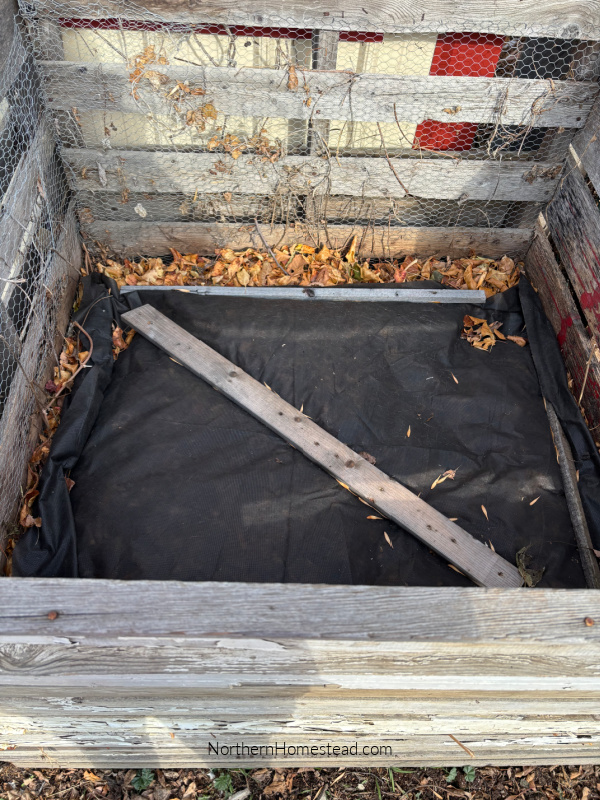
A healthy compost bin needs about a 30:1 carbon-to-nitrogen ratio by weight, or brown material to green material. During the summer months, we have plenty of green material available. All plant materials and kitchen scraps count as green material. Having bags of leaves ready to use in the compost bin is great because they provide a free source of brown material. These bags serve two purposes: they protect tender plants in winter and can be used for composting in the summer. A win-win. The only downside is the plastic bags. Put them in the recycling bin to make new bags.
Alternatively, if you only want to keep fall leaves for composting, keep a bin in a sheltered, dry area filled with fall leaves, ready to use in the summer.
Whether you leave them in place, use them as mulch, protect tender plants, or save them for compost, fall leaves are a valuable garden resource. Instead of throwing them away, put them to work to build healthier soil and a more resilient garden.
Subscribe to Northern Homestead and follow us on Instagram, Facebook, or Pinterest for the latest updates.
More Trees and Shrub Articles You Might Enjoy:
The Best Ways to Use Fall Leaves in the Garden
A Complete Guide to Growing Hardy Raspberries in Cold Climates
Finding and Creating Microclimates in a Northern Garden
Preparing the Garden for Winter in a Cold Climate
Preparing Fruit Trees for Winter in a Cold Climate

Picking Fruit and Berries at Their Peak
Growing Fruit and Berries in an Urban Yard
Growing Aronia and Goji Berries in an Urban Garden
Growing Grapes in a Cold Climate
Planting a Shelterbelt
NEWSLETTER SIGNUP

Leave a Reply