
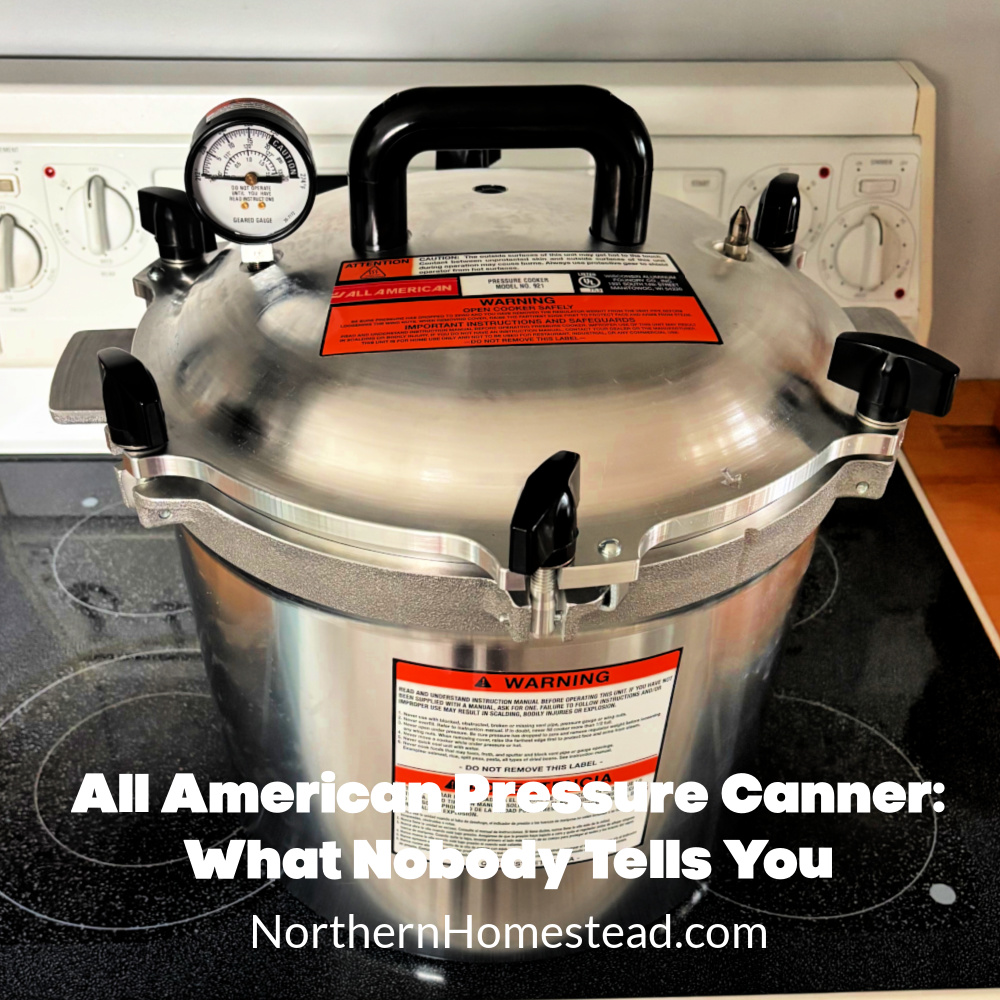
Many experienced canners consider the All American pressure canner the gold standard of home canning—famous for its heavy-duty build and gasket-free, metal-on-metal seal. When I finally got to try one, I was excited to see if it lived up to the hype. While it is undeniably a workhorse in the kitchen, I quickly realized there are a few important quirks that are rarely mentioned. I’m sharing my honest experience, what I learned along the way, and what you should know before buying one yourself.
All American vs. Presto Canner
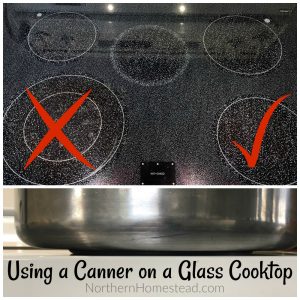
Reviews, no matter how honest we want them to be, still rely on comparison. If you have followed us for a while, you know that I have been pressure canning on a glass cooktop using the Presto pressure canner. Canners like the Presto and many others on the market are lighter. That is a plus if you are canning on a glass top. But this lighter weight is a big minus when it comes to durability. High temperatures can cause the bottom of a pressure canner to warp. The canner’s bottom bows (or bulges), so it wobbles on the stove. That, of course, is a safety concern, and even if the problem is small, especially when used on a glasstop, it leads to loss of energy.
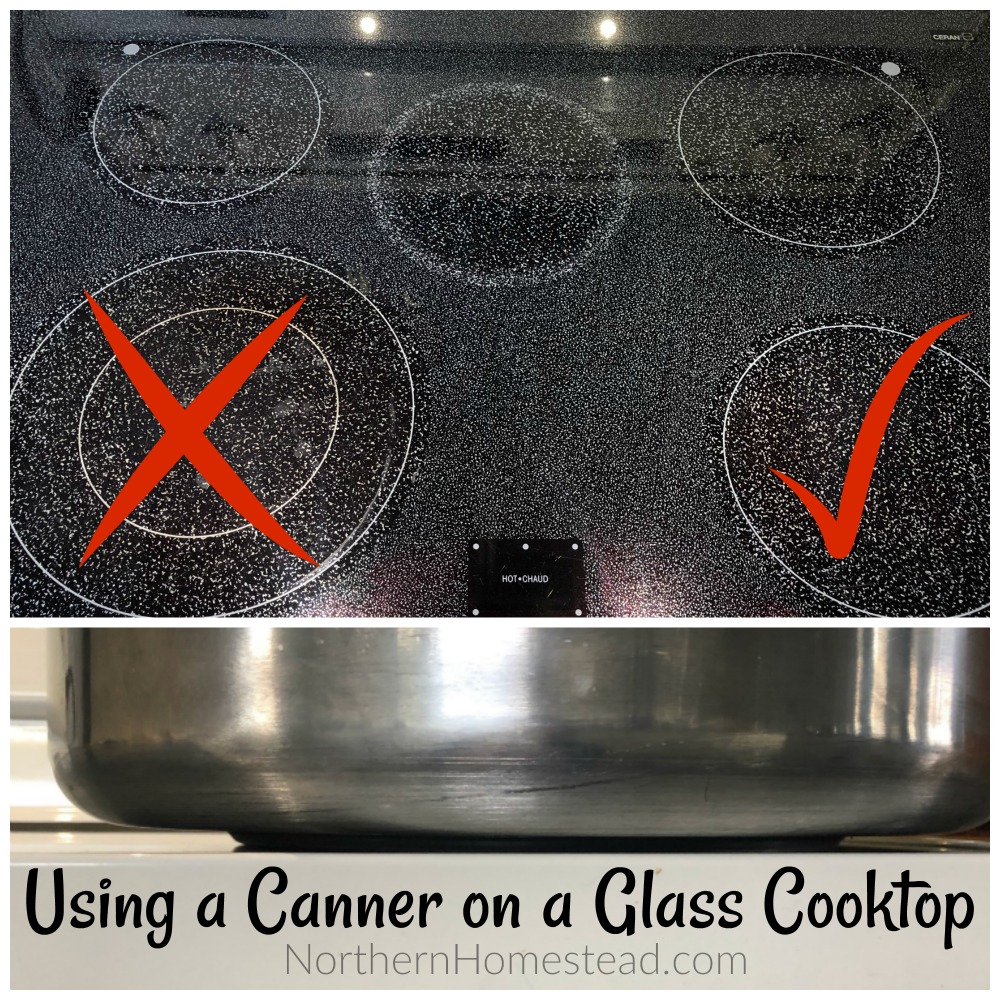
The presto canner also has a small actual bottom, which I always struggled with. Even though it is a big pot, you have to use a smaller burner, which means you also need to use a higher temperature to reach the pressure we need for pressure canning.
The All American bottom
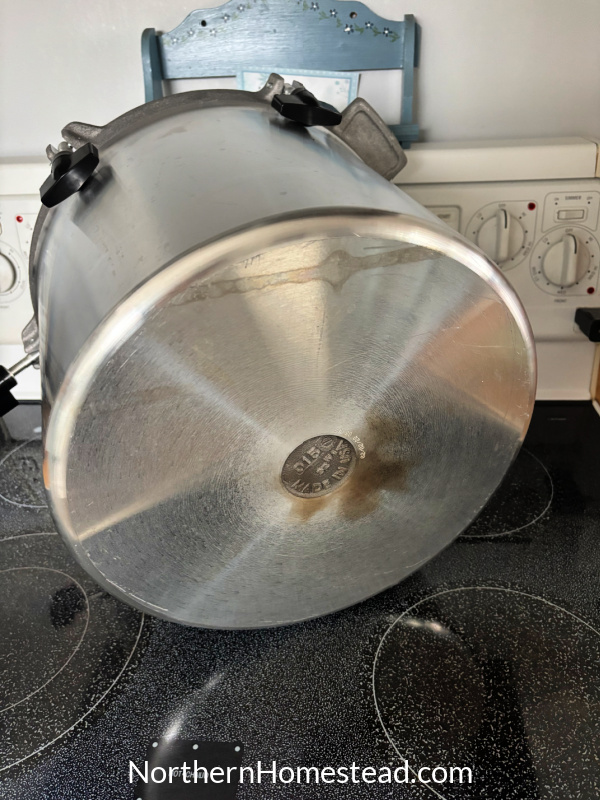
This is where the All American really makes a huge difference. Not only is it built with thick, heavy-gauge metal, but the base is as wide as the canner itself, rather than tapering down to a smaller ring. Because the entire bottom makes direct contact with my largest burner, the heat distributes so efficiently that I never even had to turn the stove to high—I completed the entire canning process at no higher than a medium-high setting. I was pleasantly surprised by how flat and smooth the bottom is; it sits steady and works exceptionally well on my glass-top stove and any other range.
The Metal-to-Metal Seal (And the Hidden Rubber Part)
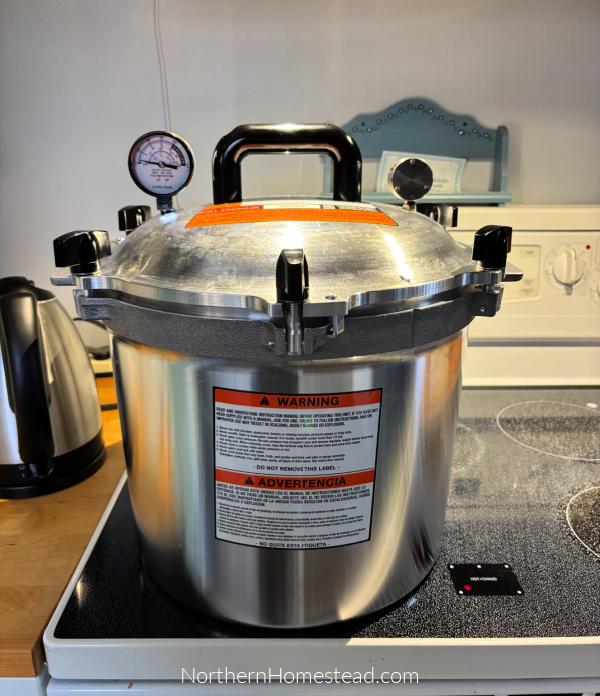
Unlike standard canners, All American pressure canners use a precision-machined metal-to-metal seal and screw-down clamps instead of a rubber or silicone gasket. Wiping the rim with a thin coat of oil before each use helps maintain that airtight seal, and it is important to handle the lid carefully so you don’t scratch or dent the sealing surfaces.
Despite how heavy and bulky the lid is, I was pleasantly surprised by how easy it actually was to lock into place. When closing it, you simply tighten the wing-nut clamps on opposite sides—working in a star-like pattern—to ensure the lid stays completely level as it seals down.
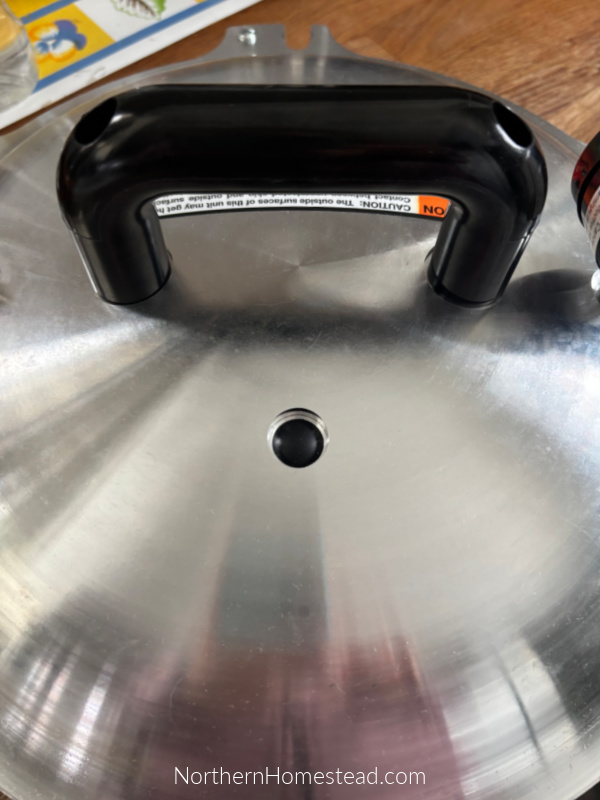
However, the lid isn’t entirely free of rubber that needs replacing. It still uses a small rubber overpressure plug (Part #2040) as a safety release valve, and the manufacturer recommends replacing it every year. That detail really surprised me! While I am certainly not downgrading the canner because of a tiny, inexpensive plug, the common claim that an All American canner needs zero replacement parts is simply not true. This small, inexpensive part, if missing, still makes the whole canner unusable.
The weight of the canner
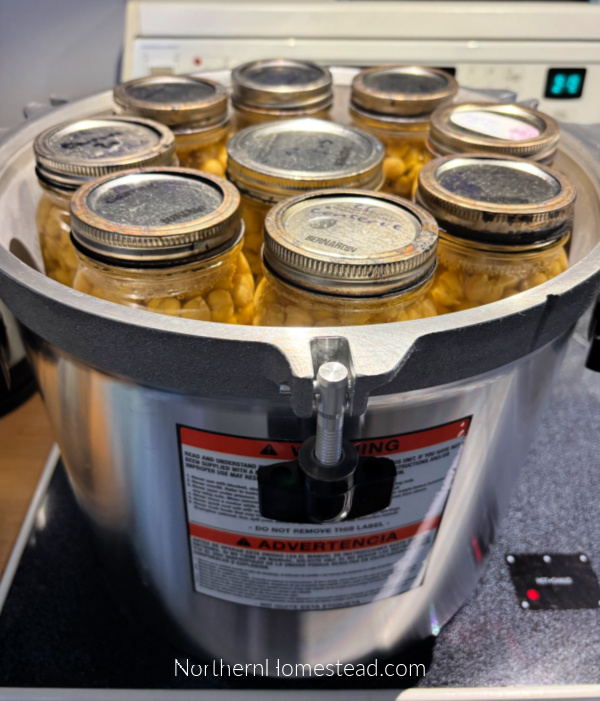
The weight of this canner is definitely worth mentioning—and a surprising portion of it is in the rather bulky, domed lid. At first, I thought I had overfilled the pot because the tops of my jars actually stuck up above the rim. However, I quickly realized that the deep lid is designed to leave plenty of headroom for them. While a heavy-duty bottom makes complete sense for heat distribution, that heavy lid is much harder to maneuver. Personally, I would love a canner with this exact base paired with a lighter lid.
For some glass-top stoves, all that combined weight is simply too much. Most glass cooktops have a total weight limit of around 50 to 60 pounds, and a fully loaded 25-quart or bigger All American canner can easily push 45 to 50+ pounds. If you have a glass cooktop, it is best to stick to a smaller size—the 21.5-quart model or All American 921 (which holds 19 pints or 7 quarts) was the one I used, and I felt comfortable putting it on my stove.
The Pressure Regulator Weight
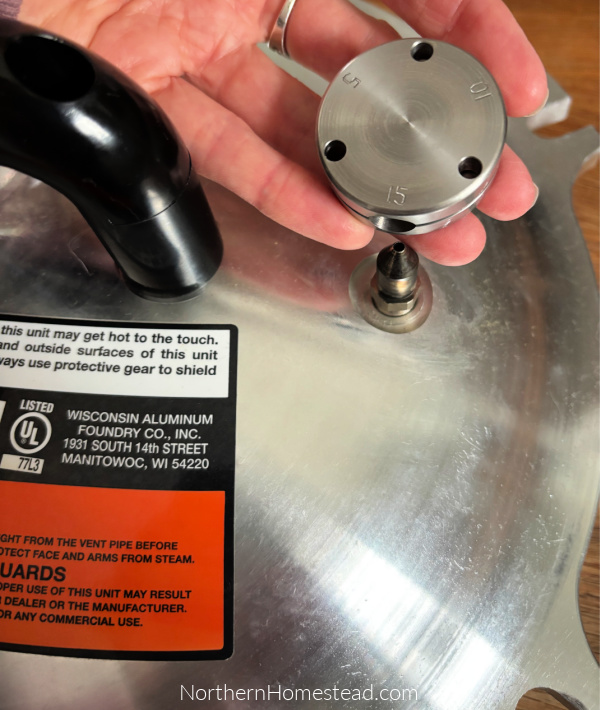
On an All American pressure canner, the “jiggler” is officially called the Pressure Regulator Weight (Part #68). Not just the way to use it is different, but also the way it releases overpressure. It’s not supposed to jiggle all the time, just 1-4 times a minute. If it rocks continuously, the burner heat is too high. The lid vents too much steam, wastes water, and can boil the canner dry or cause liquid loss (siphoning) from your jars.
It totally makes sense, but it took me a while to figure that out and find the right temperature.
The pressure regulator weight features all three pressure settings—5, 10, and 15 PSI—built right into the exact same piece. Instead of keeping track of separate stackable rings, you simply choose the pressure you need and place that specific hole directly onto the vent pipe accordingly.
Final Thoughts
The actual canning process itself was much the same as with any other pressure canner. It didn’t go any faster, which is totally fine—in fact, it felt much safer not having to run my stove burner on high. Because of that lower heat setting, I also noticed far less of that hot, overheated smell in my kitchen. Overall, it was a really pleasant experience.
I would happily recommend the All American canner to anyone looking for a heavy-duty, high-quality pot—just not under the illusion that it requires zero replacement parts, as it is often praised online. Or is it just me that thought that?
Buying one brand new comes with a steep price tag, and I’m honestly not sure the full retail cost is justified. However, it is definitely a fantastic canner to keep an eye out for secondhand on online marketplaces or at garage and estate sales.
I’m so grateful to my friend for letting me borrow theirs to try out. To my surprise, when I compare the overall experience side-by-side with my Presto, the All American comes out on top.
What is your favorite pressure canner, and why? Please share your thoughts in the comments below!
We invite you to subscribe to Northern Homestead and follow us on Instagram, Facebook, or Pinterest for the latest updates.
Find more Homestead Tools here:





NEWSLETTER SIGNUP
Leave a Reply