
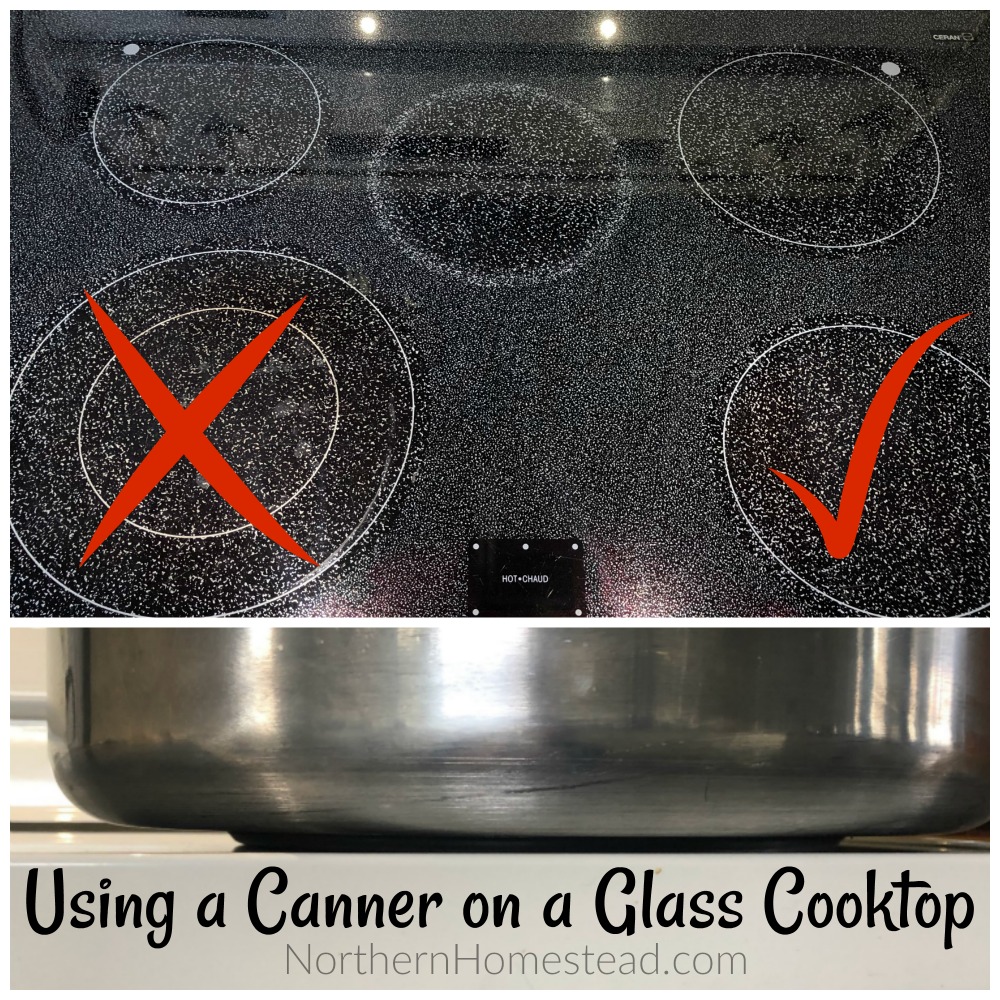
We do all our canning on a glass top stove and have gained a lot of experience with it. In this blog post, we share our tips and tricks for high-pressure canning on a glass-top stove. Many of them are also applicable to other types of canning and steam juicing.
Which canner can be used on a glass top stove?
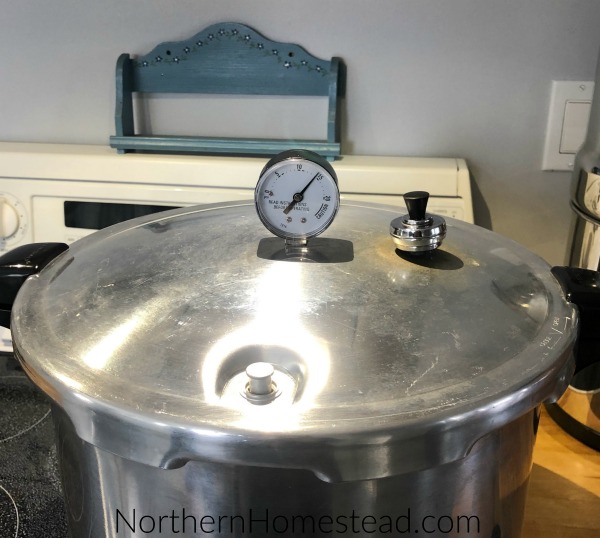
When choosing a canner for use on a glass-top stove, it’s important to select one with a flat bottom and that is lightweight. We use the Presto canner and highly recommend it.
Presto offers a canner designed specifically for induction glass cooktops, compatible with gas, electric, smooth-top, and induction ranges. If you do not yet have a canner, I recommend this model, as it will be suitable for any cooktop you may use in the future.
The All-American canner is very heavy, so the bigger models with 25+ quarts are not safe to use on a glass-top stove. To be safe, check with the stove manufacturer first before using the heavy canner.


For water bath or steam canning, all stainless-steel canners with flat bottoms can be used on a glass-top stove.
Canning on a glass cooktop
Rule number one for successfully using a glass cooktop is to keep it clean at all times. If you’re accustomed to using other types of cooktops, you may clean them regularly, but be more casual in between cleanings. But for glass cooktops, it’s essential to keep the surface clean at all times. Before every use, quickly wipe it down to ensure it is dry and free of debris. If anything spills on it, clean it up immediately. This practice helps prevent scratches and allows the cooktop to withstand higher temperatures for longer. Occasionally, I perform a deeper clean, just as you would any other cooktop. However, if you maintain a regular cleaning routine, a thorough cleaning isn’t necessary.
Since pressure canning takes considerable time and can heat up the glass top, make sure the cooktop is clean before you begin. Also, check the bottom of the canner to ensure it is clean and dry.
Use the right size element
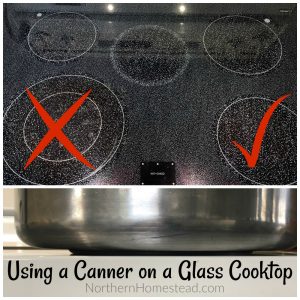
The Presto canner has a smaller bottom than the canner itself (as shown in the picture above). It’s important to ensure that the bottom of the canner, which actually touches the cooktop, matches the burner’s size. If they don’t match, the range may overheat. Even though the canner is large, I do not use it on my larger burner; instead, I use the smaller burner that is appropriately covered by the canner’s bottom. Be sure to check the size of your canner’s bottom to confirm you’re using the correct element size. If you’re unsure, measure both the elements on the stove and the bottom of the canner. Then choose the one that is closest to the canner bottom size.
When the burner is fully covered, you can safely use the high setting, and the glass should not overheat.
Additional safety precautions
A pressure canner filled with jars can be quite heavy. To prevent scratching the glass cooktop surface, place it in position before filling it with jars, and avoid moving it until the process is complete and the jars have been removed. Do not slide the heavy canner on the glass top.
Maintain a consistent heat level throughout the canning process. The canner does not need to be on high heat at all times. Once steam is achieved, reduce the heat slightly, then turn it back up to reach the required pressure. After reaching the desired pressure, lower the heat to maintain it. A Presto canner pressure regulator is a useful tool for this purpose. Find more information about it below.
Try to avoid using other burners while canning, as each additional burner contributes extra heat. Choose a time for canning when no other cooking is taking place.
If you have a glass top stove and have been hesitant to start canning, especially high-pressure canning, due to safety concerns, let me assure you that it can be done. The Presto canner with a pressure regulator is an excellent tool for canning, not just on a glass-top stove.
We invite you to subscribe to Northern Homestead and follow us on Instagram, Facebook, or Pinterest for the latest updates.



Leave a Reply