
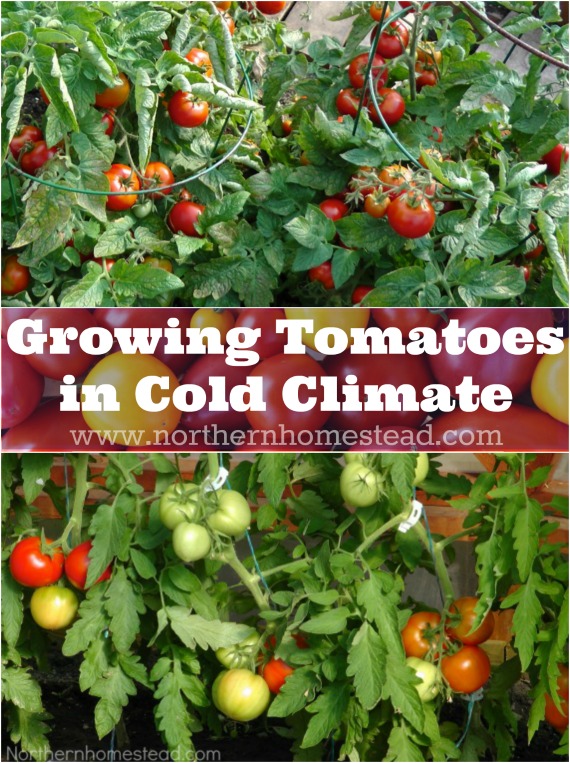
Nothing says summer like a freshly picked, ripe tomato from the vine. However, in a cold climate and short growing season, it does not happen very often, if at all. Most tomato growers around here pick green tomatoes in the fall and after ripen them indoors. Our summer seems to be just too short and too cool to ripen tomatoes.
We have good news for you today: With these 9 essential tips for growing ripe tomatoes in cooler climates you too can harvest ripe tomatoes in the summer.
Tomatoes are a summer crop. They die in freezing weather, but they also do not like it cold, windy, or wet. To grow tomatoes and get them to ripen, they need a warm, dry spot. However, with summer night temperatures dropping under 10C (50F) tomatoes will be shivering. What to do? Here are some simple tips for growing tomatoes in a cold climate and harvesting ripe tomatoes in the summer.
Note: Achieving ripe tomatoes in a greenhouse is much easier than outdoors, and I think it is the best way to go for us northern growers. Still, in this post, I will concentrate on outdoor growing and just give some tips on greenhouse growing.
1. Choose an early tomato variety
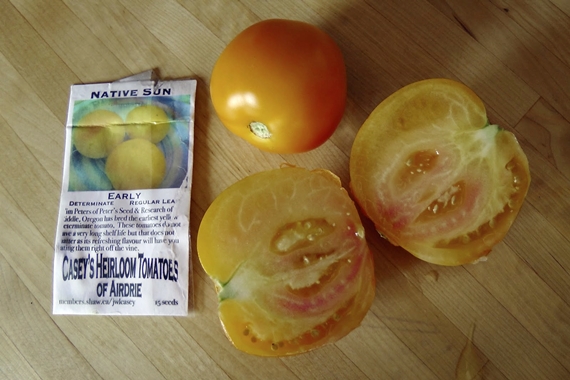
Not all tomatoes are the same. Some ripen faster and tolerate cool weather better than others. Generally, determinate or dwarf tomatoes are earlier and better suited for outdoor growing. Casey’s Heirloom Tomatoes catalog has a guide to the best (non-cherry) tomatoes to grow outdoors in Calgary (zone 3), as well as a guide to the best tomatoes to grow in pots. You might find your favorite variety on that list.
Other seed suppliers also have great tomatoes for a short, cool season. Just make sure they are early. It is best to get seeds from local growers, or a climate similar to yours. Those tomato plants have already been adjusted to the weather and will grow and produce better.
2. Start tomatoes about 6 – 8 weeks prior to planting them out
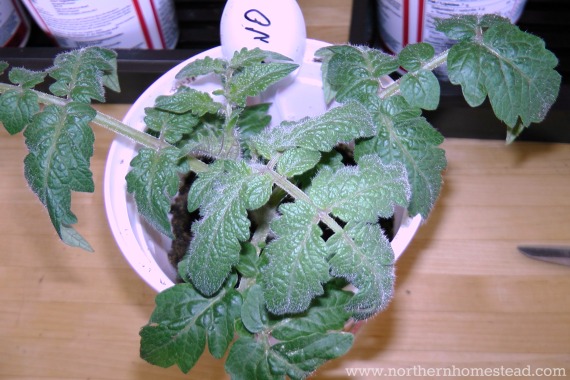
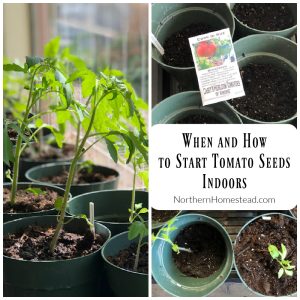
You want the seedling to be just about setting out buds. Not bloomed yet. In our area, our last frost date is May 26. Since tomatoes do not tolerate any frost, you might have to wait till June 1 to plant them outdoors. Start the seeds indoors at the end of March to mid-April. If you have grow lights or a very sunny window, the seedlings will grow faster, so plant them later.
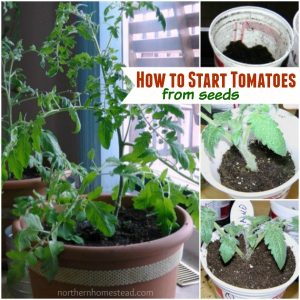
In most cases, starting seedlings earlier does not produce ripe tomatoes any earlier. If the seedling is overgrown, it will suffer, and you will get ripe tomatoes later. Read all about starting tomatoes from seeds here.
If you do have a greenhouse and/or use protection (see below), you might be able to plant them a few weeks earlier.
3. Choose a sheltered sunny location
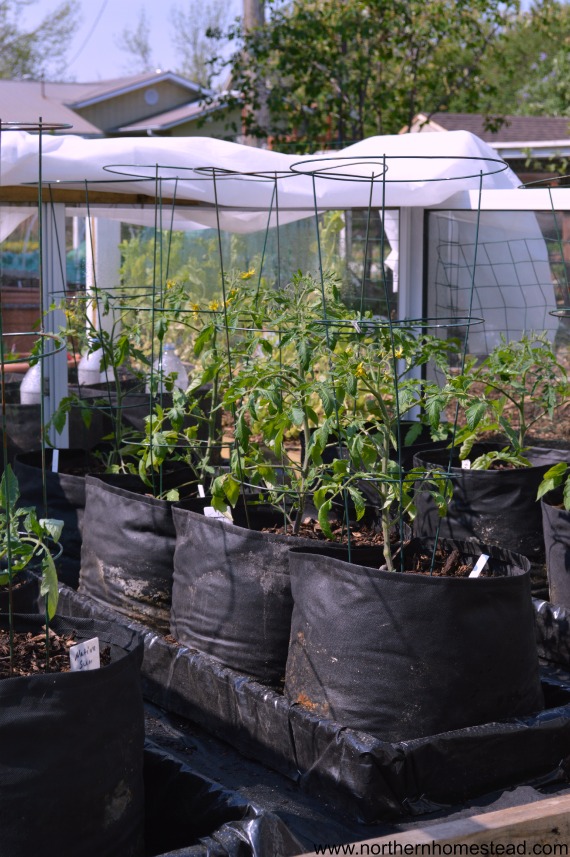
Location is everything when it comes to growing tomatoes. If you have a spot in your garden that is too hot for most crops, it might be just right for tomatoes. If you do not have a warm spot in your garden, tomatoes can be grown in pots or grow bags on your deck. We grow ours in grow bags on our driveway. The heat from the concrete and the black bags will help to keep the heat-loving plants warm. See how to grow in grow bags.
Note, if you are in a warm climate, tomatoes might be too hot in containers on the driveway. We are speaking here about a cool climate.
4. Add manure to the soil while planting
Manure tends to warm the soil. Horse manure is especially known for that. Just make sure the manure is composted. Later in the season, water with compost tea. The boost will help the plants to grow better and mature earlier.
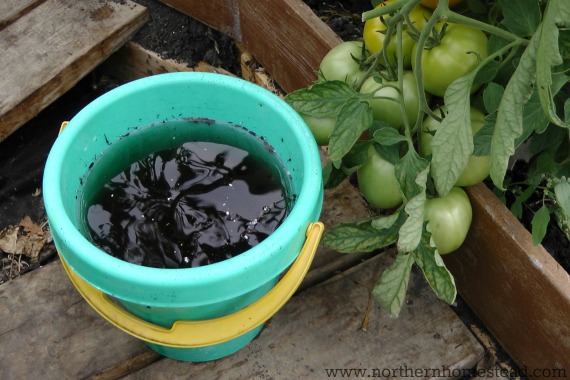
A tip that I just learned from a Russian grower is interesting enough to share. He uses freshly cut grass (hay) and piles it up so the hay starts to compost and heat up. At this point, he layers the hot compost around the tomato plants. It is not hot enough to harm the plants, but it does provide additional heat.
5. Protect young tomato plants
You get what you pay for, or in this case, what you invest in. Planting tomatoes in an open field and leaving them to the elements will not lead to early-ripening tomatoes. Give them as much protection as you can give outdoors. I like the Plant Protection Blanket
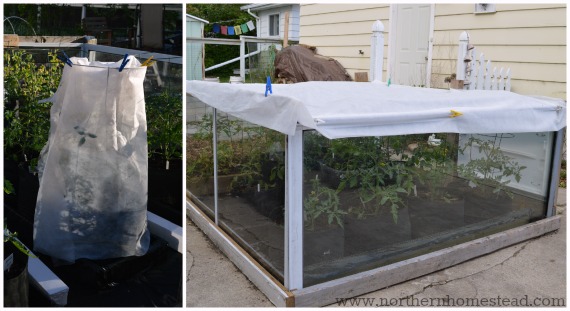
Built a wind barrier for the tomatoes out of recycled windows. This simple glass frame works very well in creating a micro-climate.
You can also use a Kozy Coats Water Filled Garden Teepee
6. Add thermal mass
The Kozy Coat already serves as both protection and thermal mass, or you can simply place a milk jar filled with water next to the plant. Rocks work the same way, build a little wall behind your plants, the rocks will heat up during the day and give the heat back at night, giving some wind protection as well.
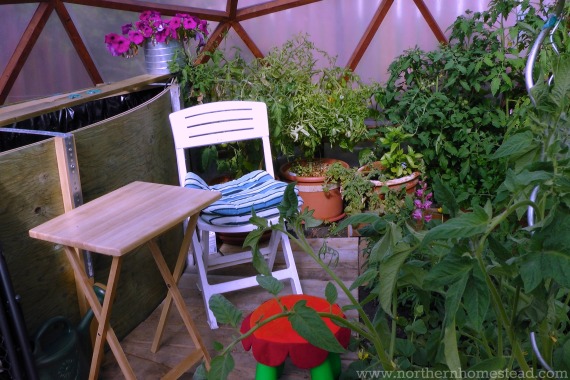
Thermal mass seems even more important in a greenhouse (Read more about a water tank in a greenhouse). A plastic-covered greenhouse only gives you about 1-3 degrees at night, but heats the place beyond comfortable during the day. Temperature fluctuations are very hard on plants. Thermal mass helps to regulate it.
7. Ensure pollination
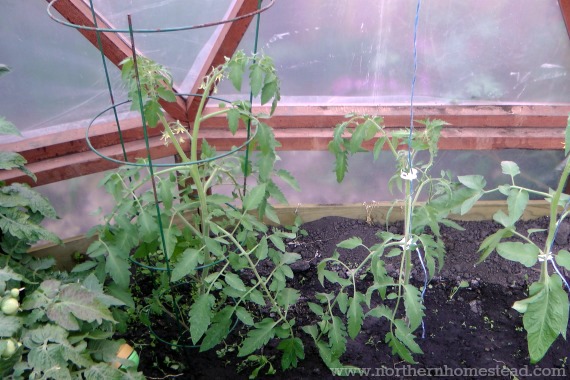
Pollinating tomato plants is very easy; just shake the plants or the flower cluster a bit, and that’s it. Sure, wind or insects can do it for you, but while waiting for them, you might lose some precious ripening time.
8. Water with stagnant water
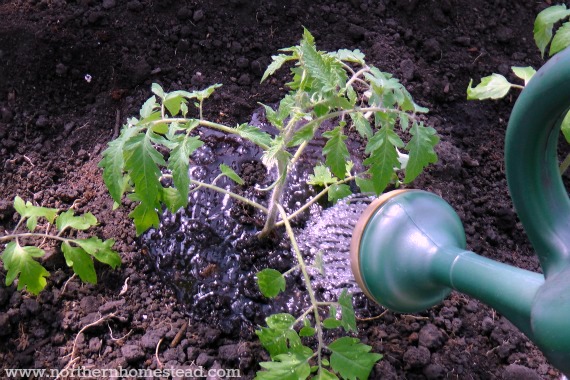
Watering plants with tap water may or may not harm beneficial soil bacteria, but the water is too cold for heat-loving plants. It is better to use stagnant water warmed by the sun. That way, the plants will not go into shock every time you water.
9. Prune your plant

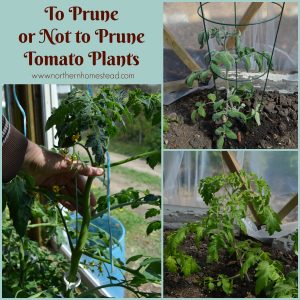
Most determinate plants do not need pruning. Still, if you have very large tomato clusters, cut them back a bit; they will ripen faster. If the plant is indeterminate, definitely prune it back. Read whether to prune or not to prune tomato plants. Outdoors, you want to prune the plants even more than in a greenhouse. You will get fewer fruits, but they will be larger and ripen faster. It’s the better choice.
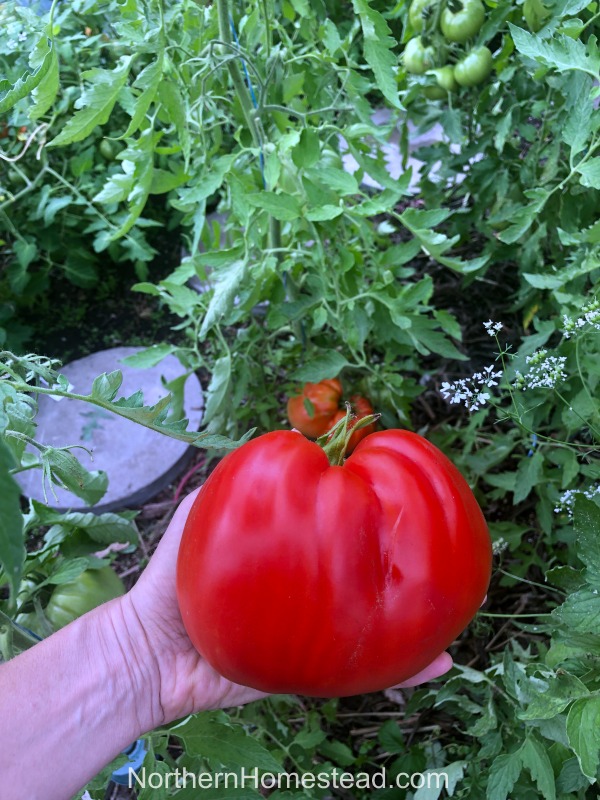
Here you have it, 9 simple tips to grow tomatoes successfully in a cold climate and harvest sun-ripe tomatoes in the summer. The more protection, love, and care you give, the earlier the plant will grow and ripen.
However, for growing ripe tomatoes around here, some summers are better than others. If the weather is just too cool, and it snows in between, do not beat yourself up about it. Tomatoes do ripen nicely indoors.
Happy tomato growing!
If you like this article, don’t forget to subscribe to Northern Homestead and follow us on Instagram, Facebook, or Pinterest for the latest updates.
More Growing Tomatoes Posts You Might Enjoy:

NEWSLETTER SIGNUP

Good advice… we usually have great tomatoes.. just not enough of them, but with all of the rain and no sun this year, these tips may come in handy. Thank you.
Well, it all depends an the weather, doesn’t it? Tomatoes do not like rain all that much. Hope you can give them some rain protection. Happy tomato growing!
Good article. Luckily I live where we have a longer summer so I don’t have these problem, but your ideas sound very feasible and I love your pictures. Shared on twitter & pinned. Visiting from Homestead Blog Hop.
Long summers also means you can use some of those tips to grow food in the off season ;). I would not grow tomatoes, but cabbage and carrots and spinach. Happy gardening!
Great info! Thx! Am building a small bungalow and have created a landscape design that incorporates a demi-green house backing onto the south wall of my garage, specifically for tomatoes. Any further tips on greenhouse growing?
Thx again,
John
Congratulations on your new greenhouse. We do have many greenhouse growing tips. Find them here: https://northernhomestead.com/category/greenhouse/
Very interesting and informative, we do like the tomatoe cultivation in our home from childhood and feel very delighted to see when our garden tomatoes turn red from green.
It’s a special moment, every time. Enjoy and happy tomato growing.