
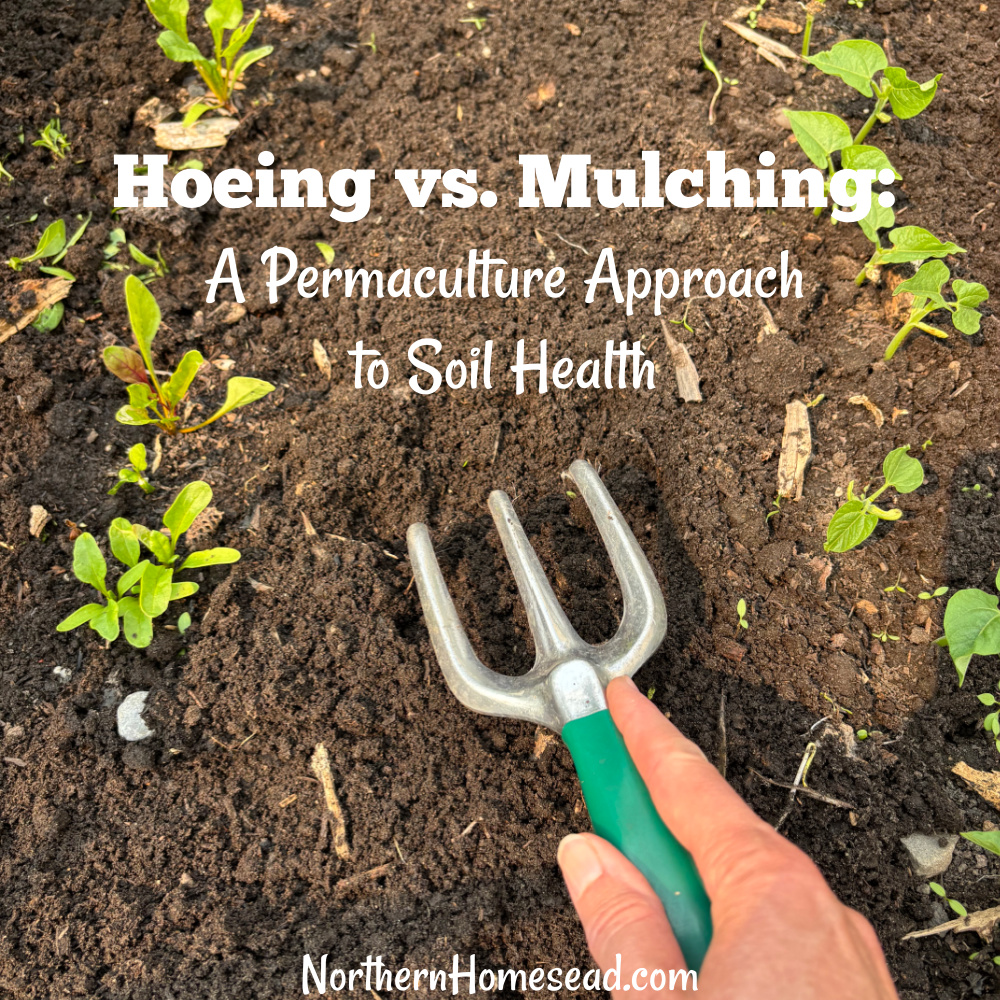
There is an old German gardening rule that says, “Hoeing once is worth two waterings”. It is based on the principle of breaking soil capillarity. When soil dries out, microscopic channels called capillaries form. Underground water rises through these tubes and evaporates from the surface. To avoid that in a permaculture garden, we usually mulch rather than hoe. In this article, we explore hoeing vs mulching: A (new) permaculture approach to soil health. If you want to grow a no-till garden but struggle with mulching, this is for you.
The soil needs food
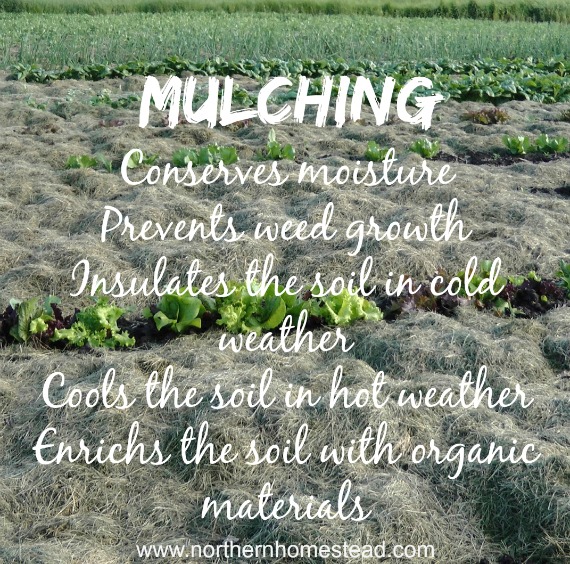
As we covered in the ” Feeding the Soil ” blog article, the soil needs food to keep providing nutrients to plants. How much depends on the soil in your area. But even the best soil can get depleted over time. Adding mulch the permaculture way prevents the soil from drying out, suppresses weeds, and feeds the soil as the natural mulching material breaks down. It seems to be the best option, and that’s why it is so popular.
The challenge with mulching
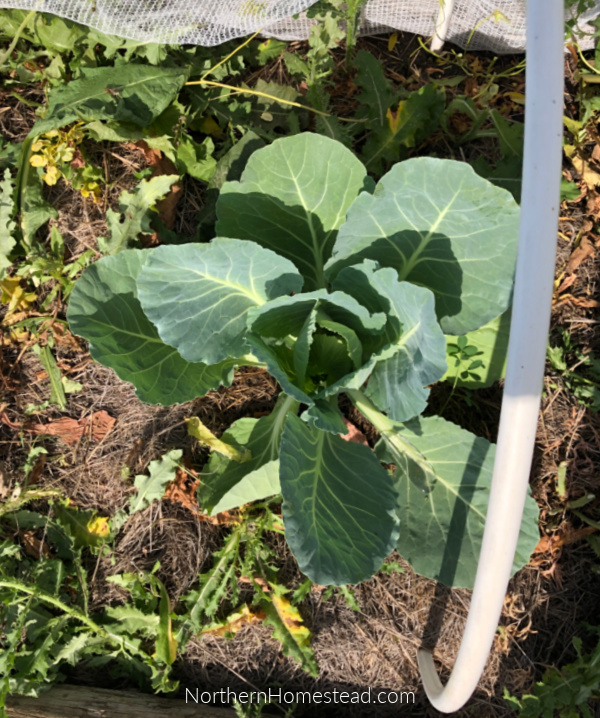
Even though mulching the soil is discussed in almost every gardening class, it has its own challenges. For one, you need good organic material to mulch the garden, which prevents moisture loss and suppresses weeds. That organic material is widely available to some and out of reach for others, especially as increasingly aggressive chemicals are used on hay and straw. I often pondered whether there is another way that is still beneficial for the garden soil and can be used in a no-till garden.
The second challenge with using mulch is that it needs space. When planting densely as I do in our home garden, mulch is kind of in the way. We solved that problem by growing in raised beds and only mulching the growing area with good compost.
Mulching also creates a challenge in the slug problem. Again, in that case, using compost helps. And where there are many rodents, mulch presents a real challenge.
Aggressive weed overgrowth is another challenge. Areas with heavy soil struggle with mulching. As you know, weeds grow according to the soil structure, so heavy soil tends to have aggressive weeds. They are there by nature to break up that soil. But if you want to grow a garden at the same time, it becomes almost impossible; you need a lot of mulch and time to break that pattern. That is why many gardeners with heavy soil give up on no-till or, in the worst cases, on gardening altogether.
Hoeing the soil as a solution?
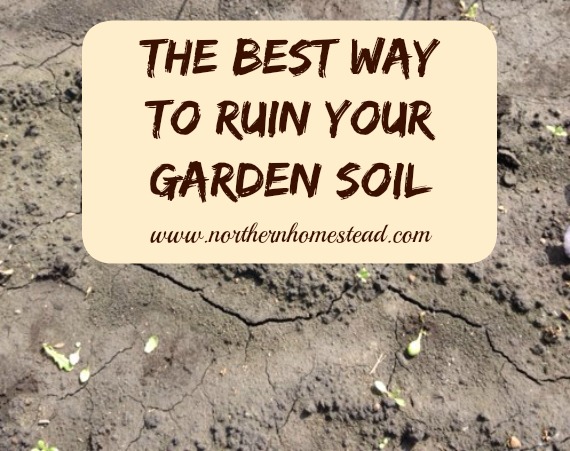
Hoeing breaks up the topmost layer of soil, destroying the tiny capillary tubes we talked about earlier, and you can see in the picture above. This locks the moisture in the lower soil layers, right where the roots need it. The extra benefits of that are that loosening the soil improves aeration, destroys weed roots, and allows future rainwater to sink in faster instead of running off. It also discourages rodents and even snails from settling in the soil.
Well, you might say, that’s nothing new, it’s exactly how my grandpa did it. I know that is how I learned to garden on my parents’ homestead, too.
The traditional gardening approach is to till the soil in spring, then hoe it throughout the summer to keep weeds that tilling brought to the surface in check. None of it builds soil, though, and that’s why it is laid aside as outdated.
Connecting old-fashioned hoeing and no-dig soil building
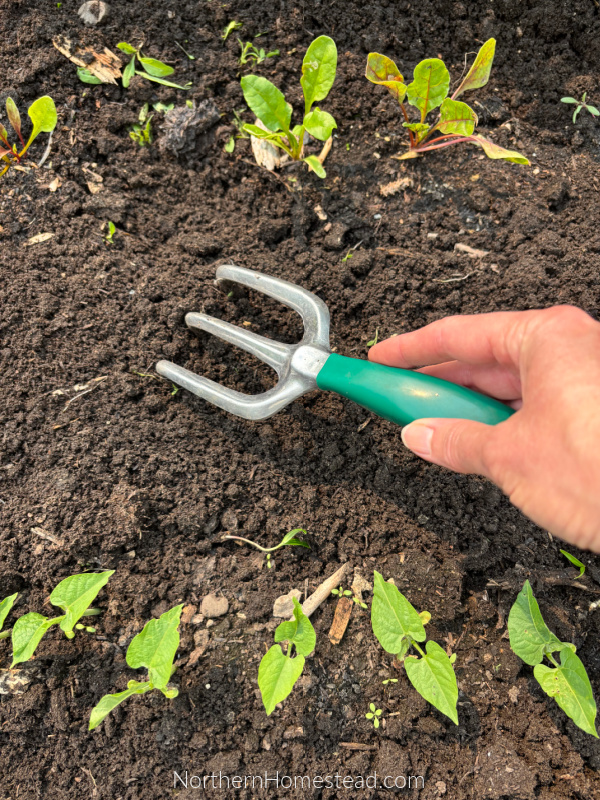
On this rainy weekend, I watched a tour through a well-established permaculture property in Germany. The hoeing caught my attention. The owner had gardened there for over 30 years and had extensive experience and knowledge of permaculture. Besides, he seemed to struggle with many things that we northern climate gardeners also struggle with. Heavy soil, often too much rain, unwanted creatures destroying the plants, and cool weather. Of course, being in Germany, he has the advantage of milder winters, as most northern climates have. But that can be adjusted. You can see the video here if interested.
The experienced gardener, however, does not mulch; he hoes about every 14 days using multiple-prong cultivators. He says about the hoeing instead of the mulching method:
It just has to stay crumbly; because it’s crumbly, it acts sort of like mulch—the crumbs sit on the surface of the soil underneath. I call it “self-mulching”—mulching the soil with itself—because, after all, it’s just a surface layer.
That part makes sense. It is about the same as my compost mulch layer on the raised beds. Except that the compost layer stays crumbly during the growing season. But it also asks for new compost annually.
Compost is still the big player
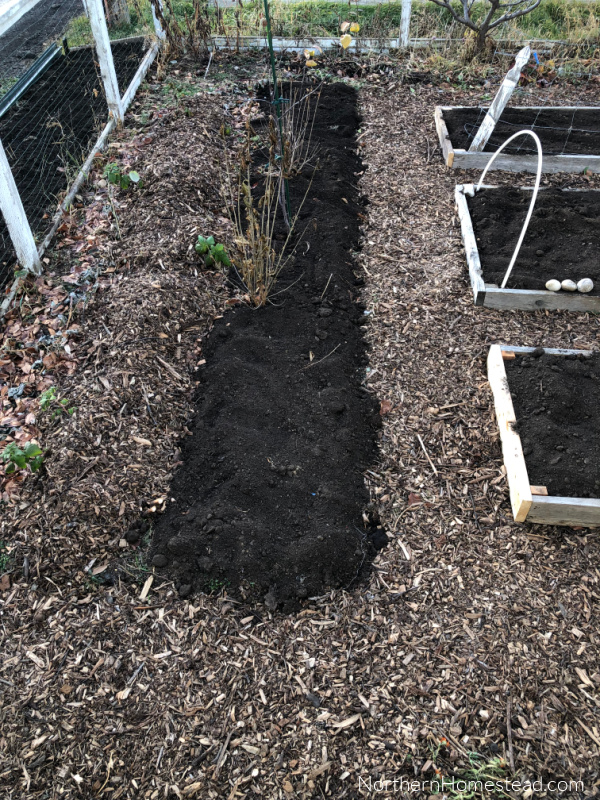
I wondered, though, whether having a self-mulch layer on the garden soil would be all that is needed for a successful no-till garden. As the property tour progressed, more of my questions about the hoeing method were answered.
Being a permaculture property, not just a garden, he had animals as well, and with that a lot of manure and bedding material – read compost. He would just use one of the beds to pile that up on. Being in a temperate climate, that pile would decompose quickly and turn into very rich soil. So the following year, he would grow squash on that soil. And rotate the compost pile to another bed.
In a cold climate, that composting would probably take a year or two longer, but still, it could be a great way to do it. Another option is to have a dedicated compost area, as we usually do. However, using one of the garden beds eliminates all the shoveling; it’s really ingenious.
But no matter how you compost, the bottom line is that he does compost heavily about every 10 years as he rotates his compost piles on all his beds. How often to add compost would, of course, depend on the soil. Adding a smaller amount of good compost to all beds about every 3-5 years would have a similar effect. In our experience, we can see that that could work well. In between, hoeing the garden as needed is a great option.
Winter protection for a hoed garden
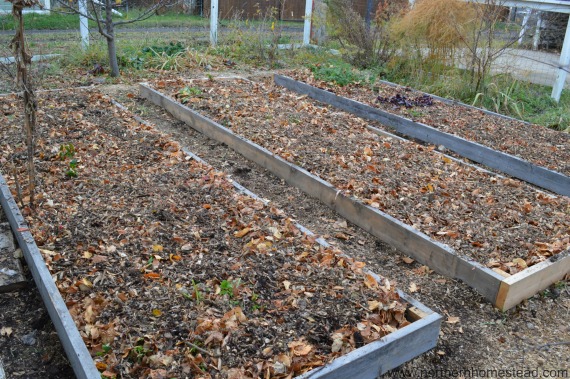
Another big, and I mean big, factor in no-till gardening is winter protection for the soil. In a temperate climate, a cover crop is a great solution. In a snowy climate, the snow can do that job. But if snow cover isn’t sure, and there is no time to establish a cover crop, you need to cover the soil to protect it from erosion and hardening.
Leaving plant material, or leaves, is an option. But in an open-field garden, where the wind is blowing, you need a cover. Straw, a tarp, or weed control fabric can be used. The straw can be used for the pathway during the growing season.
Remember, a covered garden does not need to be tilled or dug in spring. With that, you close the cycle of no-dig gardening. In spring, the cover is removed if it hasn’t decomposed, the soil is hoed, and it is ready for growing.
A garden design for a no-till hoed garden
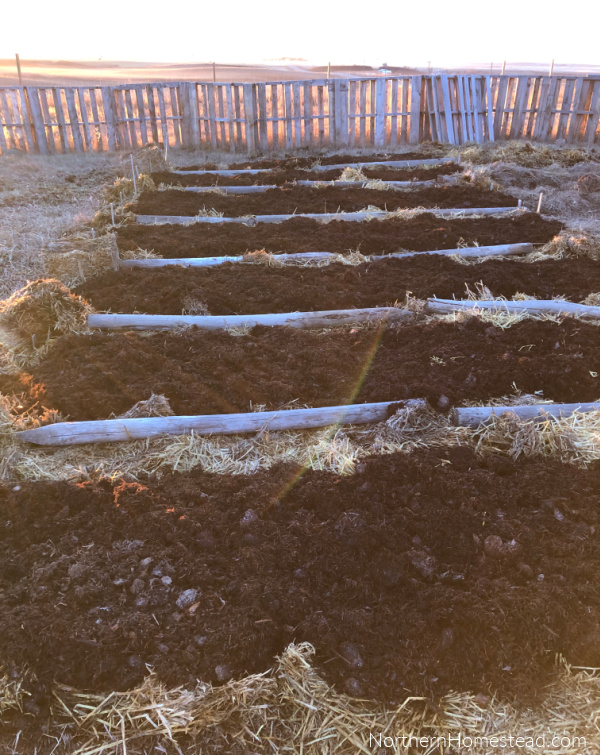
Last but not least, let’s talk about the garden design. Since a hoed garden is a great option for heavy soil, it is also a good choice for a big country garden. Those gardens are often left as a big open field because it is easiest to plow or till it that way in spring. Bringing all the challenges of tilled gardens along: Soil erosion, weeds, and even flooding during heavy rain.
The no-till method, with compost applied every few years as needed, winter soil protection, and hoeing during the growing season, eliminates the need for tilling. Now the garden area can, and should be, divided into smaller beds. With some grass or pathways in between.
In the video property example, the owner dug ditches to divide the excess water. During the rainy season, he says it flows like a stream, and the video shows the ditch is still damp.
A garden divided into beds is also a lot easier to care for. You can work it bed by bed, and always feel accomplished. You can use the composting method on one of the beds, so that no shoveling is needed. And even when bringing in compost, it is only needed on the beds, not the whole big garden.
Now you might have caught some of my excitement about that property, which offers a solution for gardeners who want to grow a no-till garden but struggle with the sheer amount of mulch required or the side effects of mulching. I always love a good garden tour that comes from real-life experience and aligns with my permaculture principles, even if it is in a very different way. There is no one-size-fits-all approach. And I hope that this blog post is very helpful for some.
We invite you to subscribe to Northern Homestead and follow us on Facebook, Instagram, or Pinterest for the latest updates.
More posts you might enjoy
NEWSLETTER SIGNUP
I’m reading Masanobu Fukuoka’s “One Straw Revolution.” It’s is so supportive to everything you’re doing to suppress weeds and enrich your soil.
Yes, mulch has many benefits if you can find it and use it. In this blog post it was my aim to show an alternative with soil own mulch.