
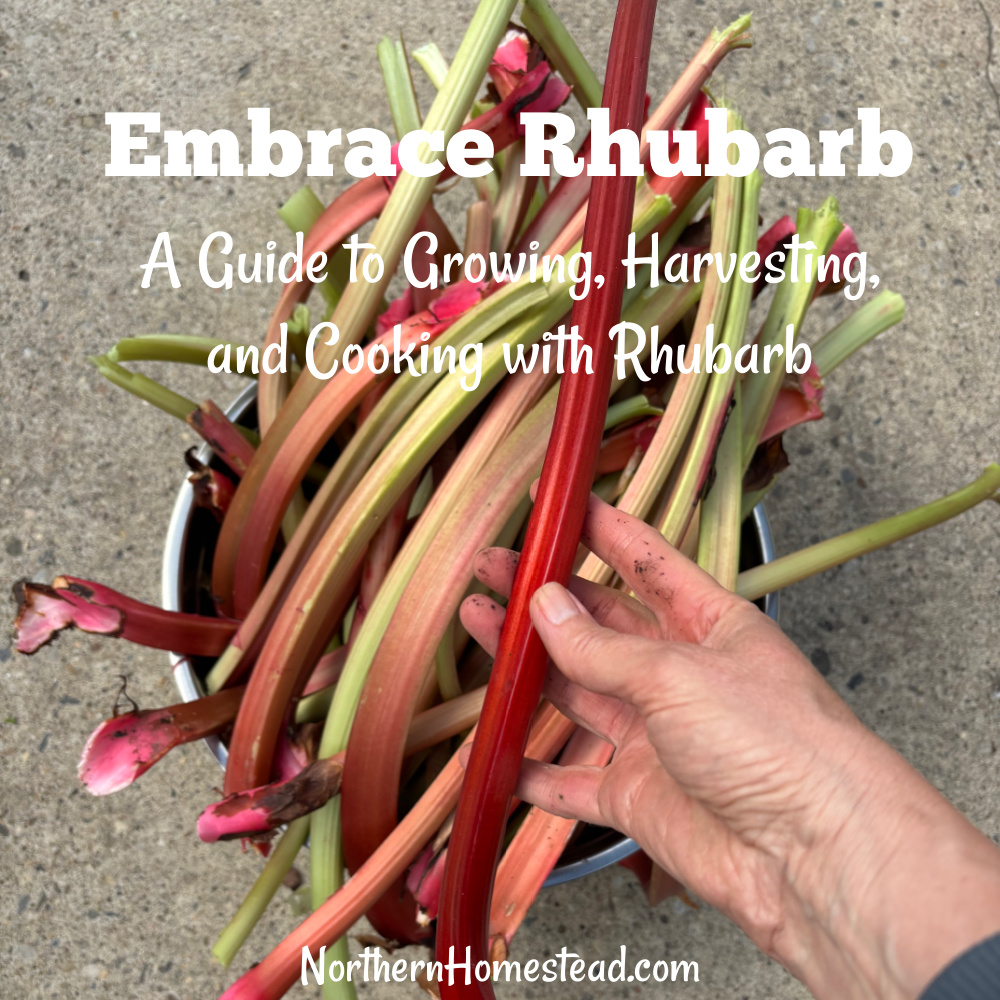
There is a saying that rhubarb is the zucchini of spring, meaning both produce abundantly and can be used liberally. As soon as the pick season hits, you see rhubarb being offered by friends and neighbors. Rhubarb, a perennial vegetable, is mostly known for sweet dishes and desserts. In this blog article, we dive into the amazing world of rhubarb.
Rhubarb Varieties
You might think there is only rhubarb, but no, it comes in wide varieties. Victoria is the most popular, but Canadian Red, German Wine, or Valentine also sound delicious.
The best variety, though, seems to be a family heirloom, a plant handed down for generations. We got one of those. We have no idea what the name is, but when we bought our house, a friend insisted that I had to have her family’s rhubarb. It is a great variety, even though I have no idea what it is called.
So either get some seeds of a variety that sounds good, or ask around for family-favorite seedlings, or both, but make sure you plant at least one in your perennial garden.
Where to plant rhubarb
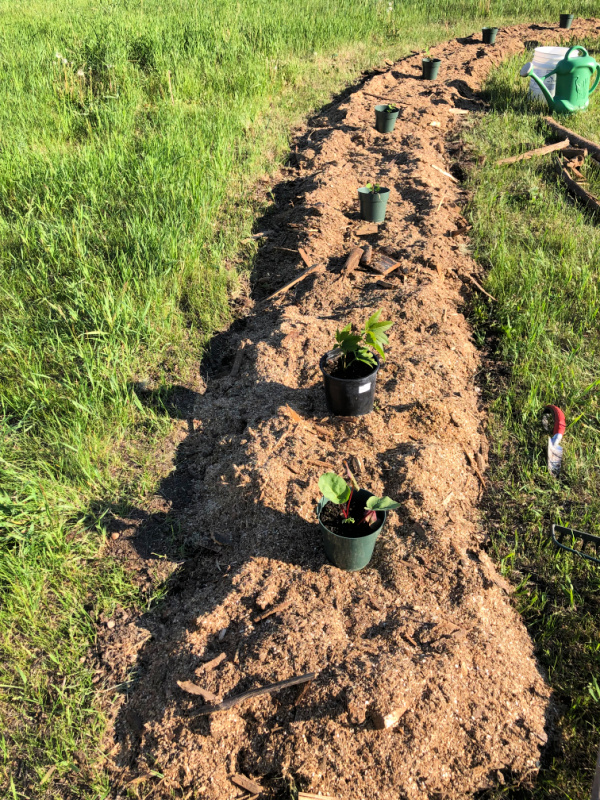
Rhubarb is a hardy perennial that thrives in USDA Zones 3 to 8 (and Canadian Zones 2-3). Originating from Siberia, it needs winter to go into dormancy and grow vigorously in spring.
Being a perennial, it needs a permanent spot. That being said, it can be transplanted. We transplanted a plant once it outgrew its initial spot. Rhubarb does need a lot of space, at least 3 feet in diameter.
The soil is said to be rich in organic matter and well-drained. That is where we planted our rhubarb. It got so big, and we had so much of it, that I decided to give it a less favorable location. What do you think? It didn’t take long, and the plant is taking over there, too.
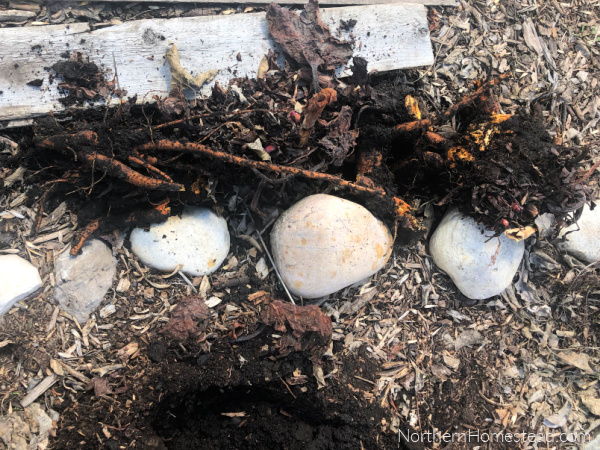
So I don’t think soil plays such a big role. Rhubarb has big, and I mean big, tuberous tap roots. They go very deep and find what they need. However, you do not want the soil to become waterlogged.
Full sun or partial shade is fine. It’s a great plant for a low-maintenance perennial garden.
Planting rhubarb
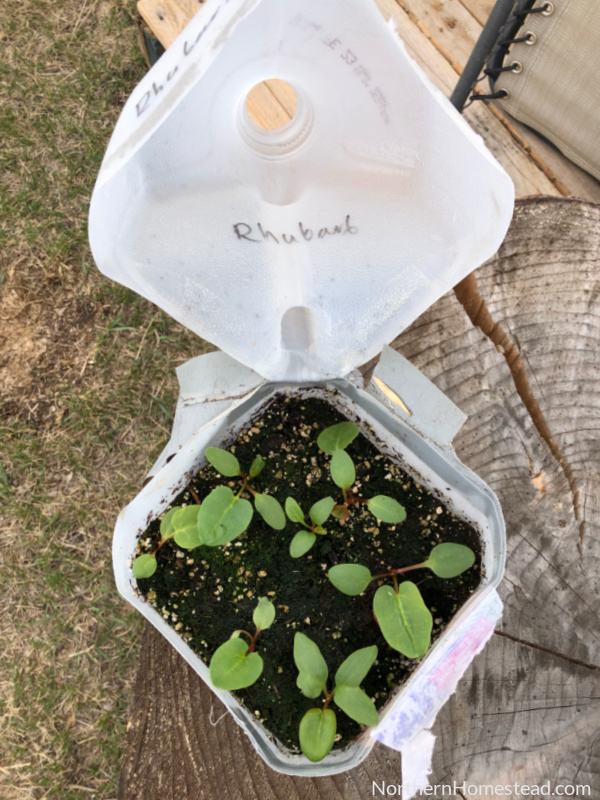
Rhubarb is a perennial that takes a couple of years to get established. It can be grown from seed and does well when started in Winter Sowing. Once the seedling is established, transplant it to the location you want to keep it.
For faster results, rhubarb can be divided from an existing plant in early spring. Once established, it multiplies freely.
Care for rhubarb plants
You will find many tasks to care for rhubarb when searching for it. However, I think my rhubarb plants laugh at me just by thinking about it. Those arm-thick roots really don’t need any care. However, to start, you want to plant it in a location with good drainage and mulch with compost or wood chips. Other than that, leave it alone; it will do its thing.
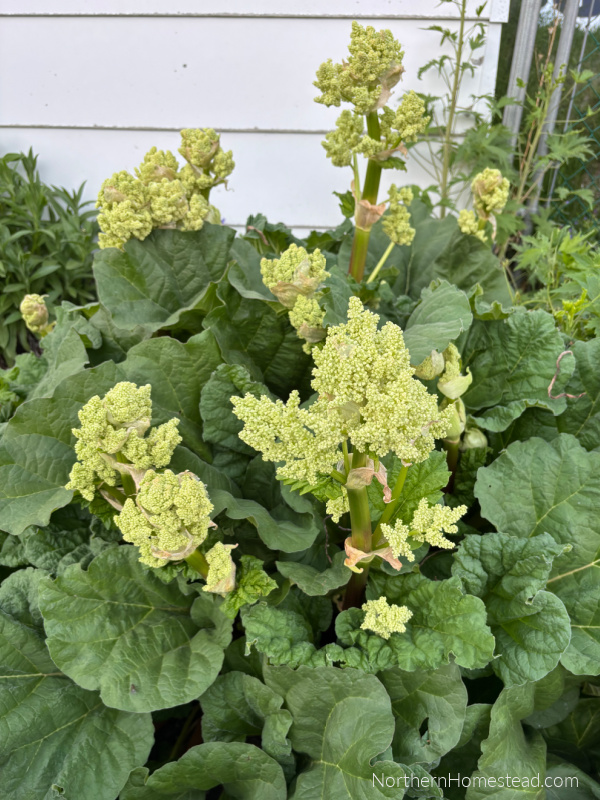
Rhubarb likes to go to seed. If you want more stalks and not seeds, remove the seed buds. Also, check whether the plant is not overcrowded, which might be an indicator of why it is going to seed. In that case, divide it next spring to give it more room. You can transplant the new seedlings or find them a new home.
Harvesting rhubarb
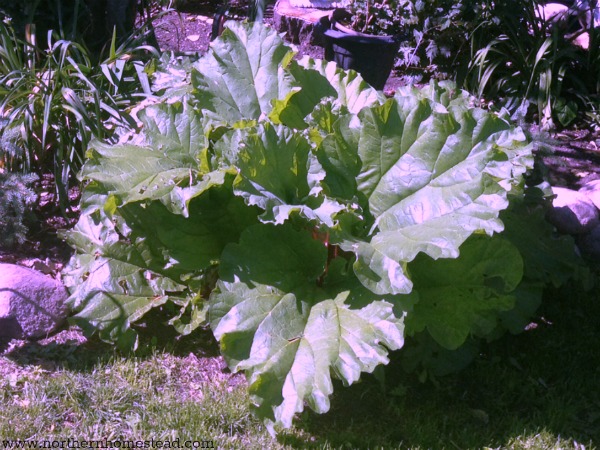
Young plants should be harvested carefully, leaving enough stalks for the plant to develop the roots that will thank you in the years to come. Once established, I find rhubarb to be very forgiving.
I usually do a big harvest (about 1/3 to 1/2 of all the mature stalks) in late spring or early summer, and continue with smaller harvests as needed during the growing season. Some growers suggest not harvesting later in the season at all. That is true when the plant is still young. But a mature plant can be harvested throughout the summer.
One year, we had a hailstorm at the end of the season. The rhubarb was shredded. If the theory were true that rhubarb should not be harvested later, that would be the end of that plant. But no, it came back next spring just as good as always.
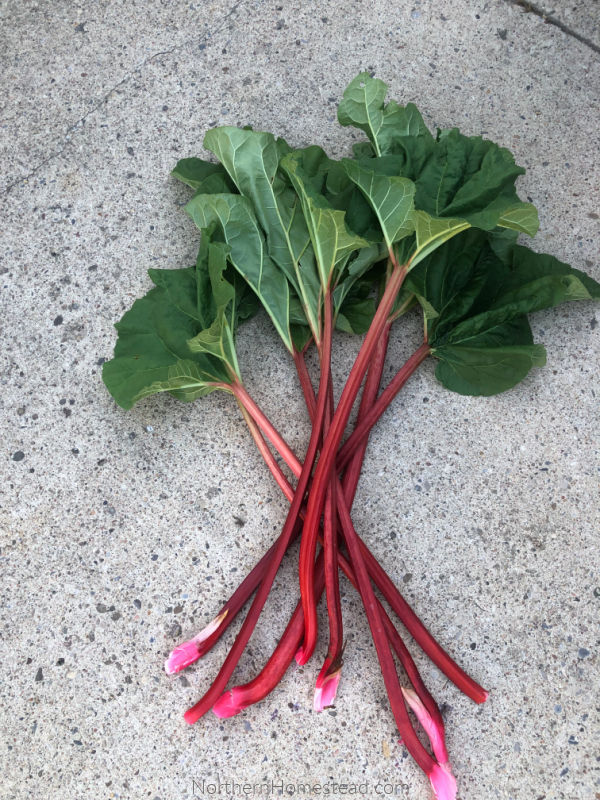
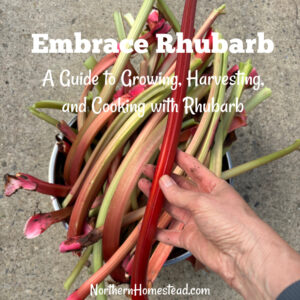
I pull the stalks from the root so the base is clean. If there are many long, spindle-shaped stalks, I often remove them to improve airflow around the plant. My favorite stalks are midsize, not too thick so they do not need to be peeled, and not spindly. But we all have different preferences.
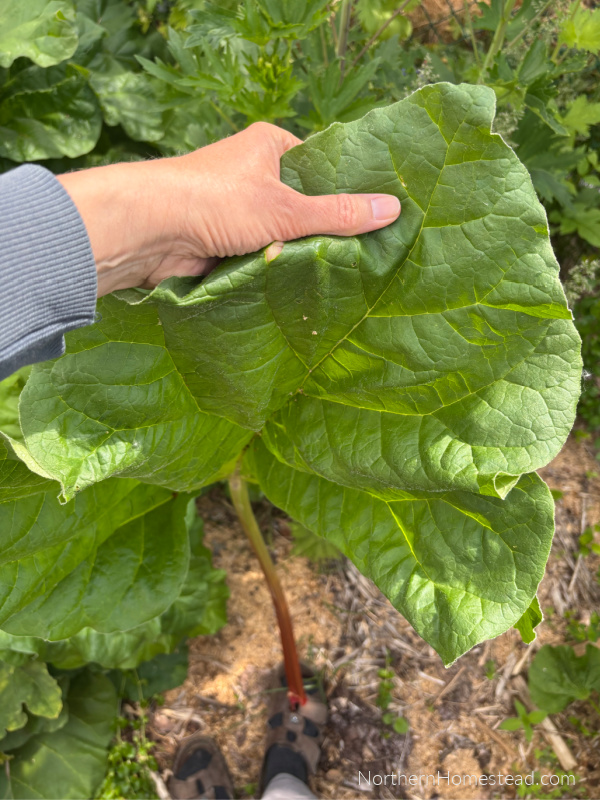
Note that only the stalks of rhubarb are edible. The leaves are actually toxic. But do not worry that animals would go and graze on it; they will not. But be aware not to give them to caged animals, who might not know the difference.
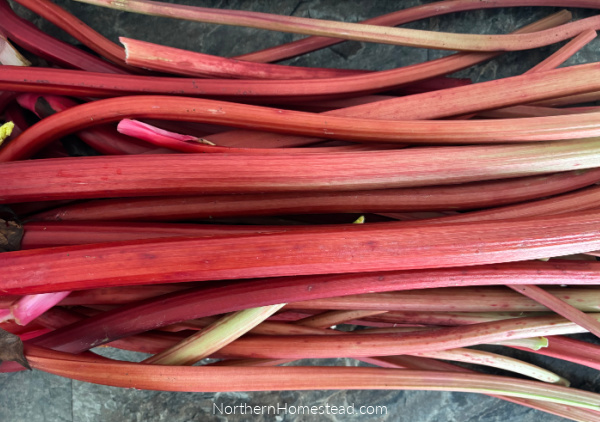
After harvesting, cut off the leaves and the root end. Peeling is not necessary for tender rhubarb. However, greener, more tart varieties are better if peeled. Also, if you don’t like stringiness in your dish, peeling is your best option. Personally, I just remove whatever peels off when cutting the ends. Wash thoroughly, and the rhubarb stalks are ready to use.
When not to harvest rhubarb
There is a myth that you must stop picking rhubarb by July because the stalks turn toxic. We already mentioned that we do not stick to that rule because late-summer stalks are completely safe to eat. However, they can become tough, woody, and stringy, especially in temperate climates with long growing seasons. In our short growing season, rhubarb is unlikely to get to that stage at all. It is recommended, though, to stop your harvest by mid-summer simply to let the plant leaves recharge the roots for next year’s crop.
Frost is when Rhubarb Turns Toxic!
While rhubarb is incredibly cold-hardy, a severe freeze (below -4°C / 25°F) changes the rules. Hard frosts cause the leaves to wilt and blacken, forcing toxic oxalic acid down into the stalks.
If your rhubarb leaves are mushy, limp, or blackened after a freeze, do not eat the stalks.
Cut the damaged stalks down to the ground and toss them in the compost. Don’t worry—the roots are resilient. Within a few days, new, healthy, perfectly safe stalks will emerge for your next harvest!
Using rhubarb in recipes
Rhubarb is a very versatile plant. It is a bit tart on its own, but it makes delicious combinations. In early summer, rhubarb goes well with strawberries. Usually, strawberries dominate the dish, but the rhubarb gives it a yummy, sour note. In the fall, rhubarb and apples are a great combination. It’s my favorite! I often leave midsummer rhubarb alone so I can harvest more once the apples ripen.
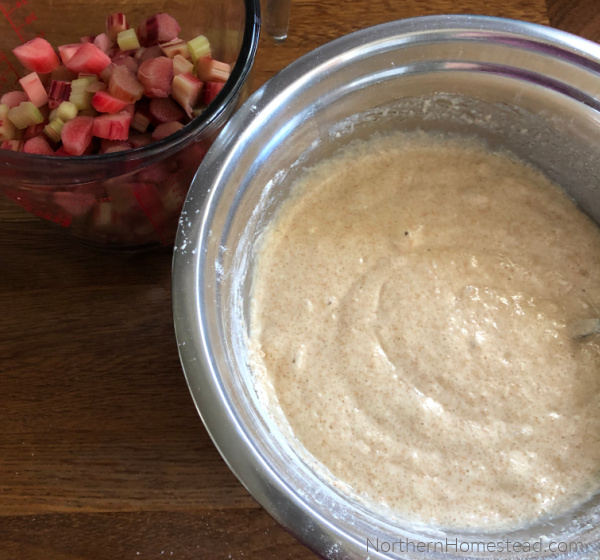
The ideas for using rhubarb in recipes are almost endless. One of my favorites is baking. Make a simple coffee cake with rhubarb, or muffins. Rhubarb pie on its own or with strawberries, apples, Saskatoons, etc. Also, shortbread and bars.
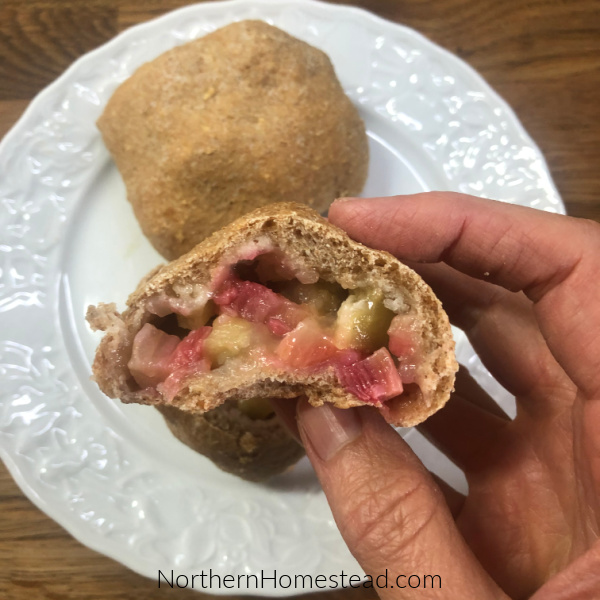
One of my favorites is pirozhki with rhubarb and apples. It’s like hand pies, great to take for a picnic or a garden snack.
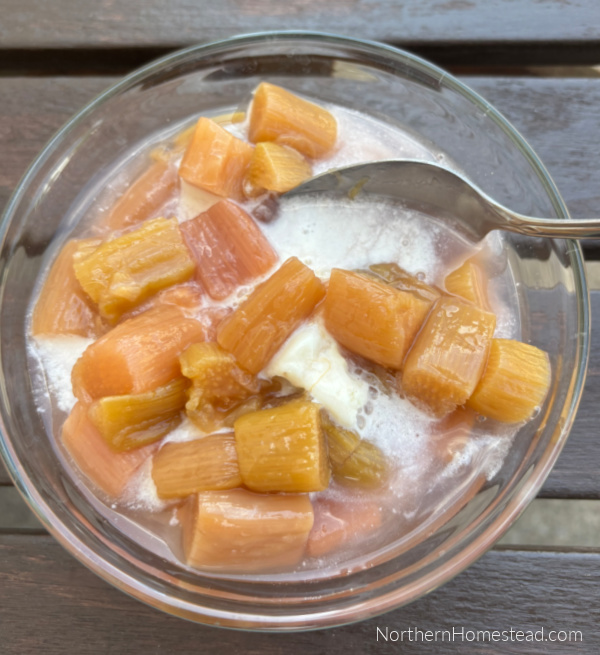
Rhubarb makes a great sauce for pancakes, ice cream, and more. It can be cut into chunks or small pieces that cook down to a puree. Adding vanilla pudding or serving it over rice pudding makes a yummy German dish. They serve it for lunch.
Rhubarb can be used not just in sweet dishes. Rhubarb stew is another option. The creative Kitchen has a Khoresh Rivas recipe.
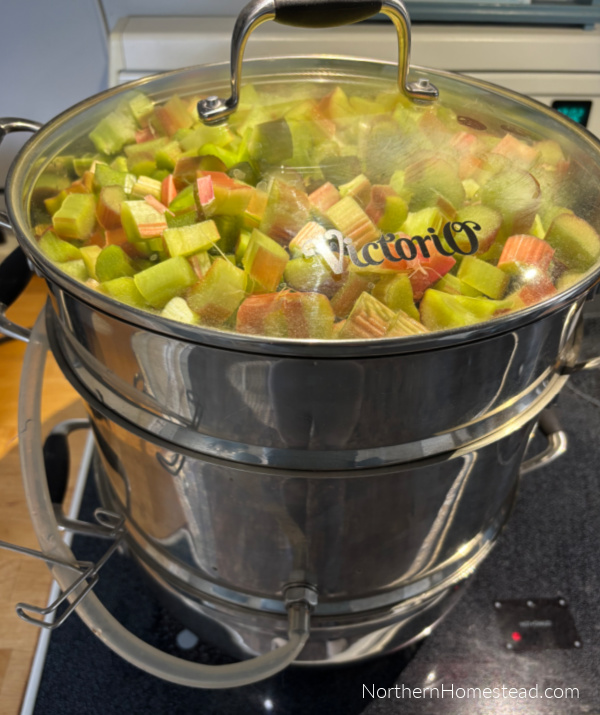
Rhubarb can also be juiced; we use a steam juicer and use the juice for cocktails and punch, or make it into wine.
Preserving rhubarb
An abundance of rhubarb calls for a variety of ways to preserve it.
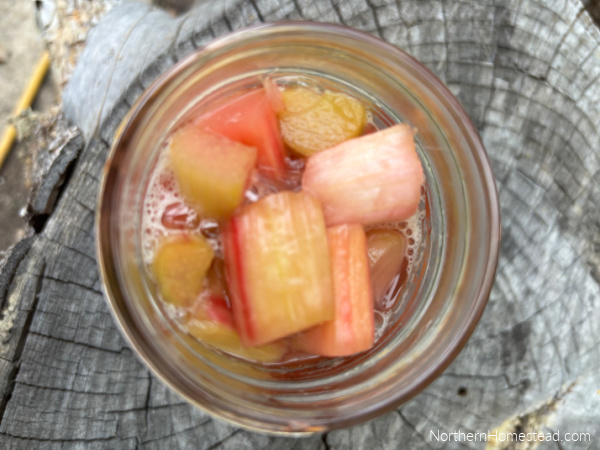
Rhubarb in syrup or as a rhubarb sauce can be canned to preserve for winter. It’s very convenient and ready to be used.
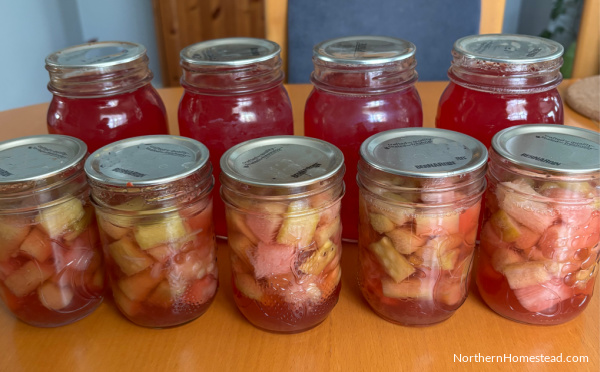
Rhubarb juice is also great for canning. A steam juicer makes the whole process easy. Cut the rhubarb into about 1-inch pieces and steam away. You can process 5 kg that way. It takes only an hour to steam out the juice. I add a tablespoon of sugar to each pint jar before canning.
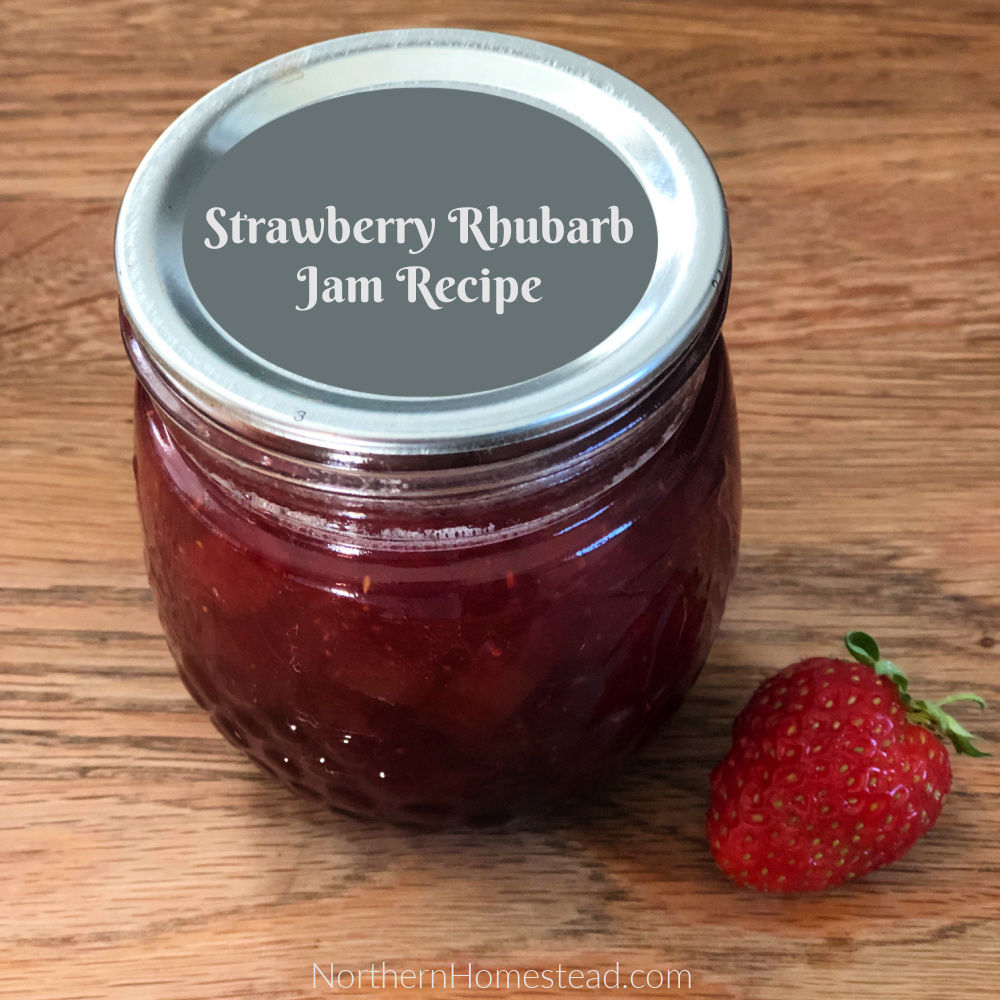
Rhubarb jam is delicious. Here is a rhubarb strawberry recipe. I hear, though, that other berries make a great combination also.
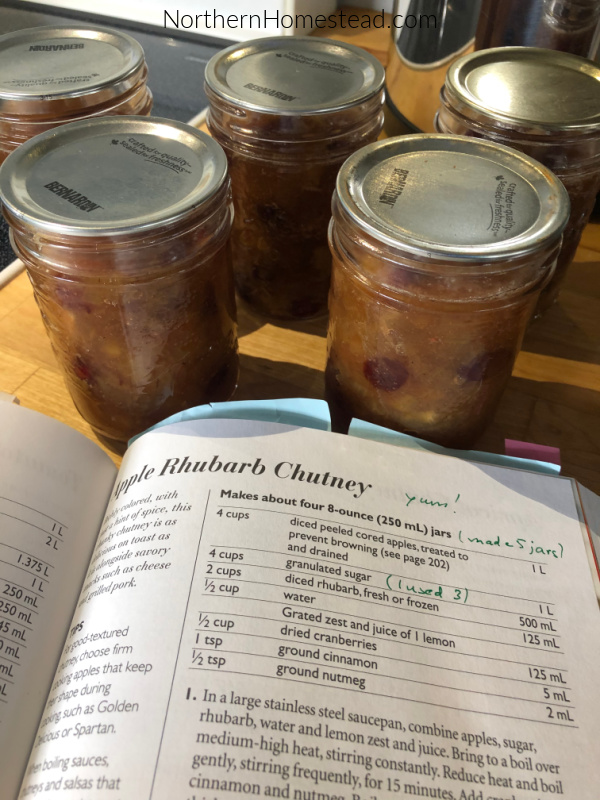
Rhubarb chutney is another great idea. The Ball Complete Book of Home Preserving has several great rhubarb recipes.
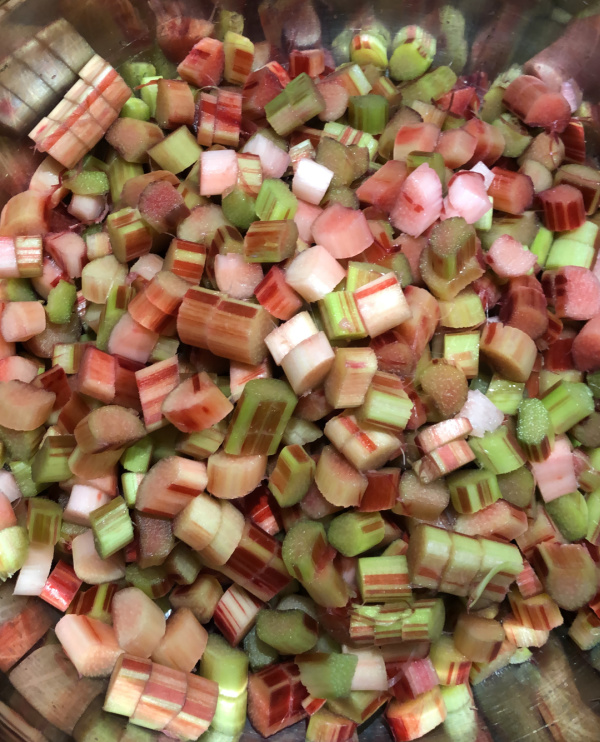
And last but not least, rhubarb freezes well. Wash, peel if needed, chop, and freeze. I usually freeze it in portions. Another option is to freeze it on a tray so you can take out as much as you want later for recipes.
There is certainly more to say about this amazing vegetable that we treat as a fruit. If you have a favorite tip or use for rhubarb, please share it in the comments.
We invite you to subscribe to Northern Homestead and follow us on Instagram, Facebook, or Pinterest for the latest updates.
More Growing Food Posts You Might Enjoy:
NEWSLETTER SIGNUP
My last trip to the store was shocking! Rhubarb is $5 a pound here!
Just shows how beneficial it is to grow your own. Being a perennial you plant once and enjoy for many years for free.