
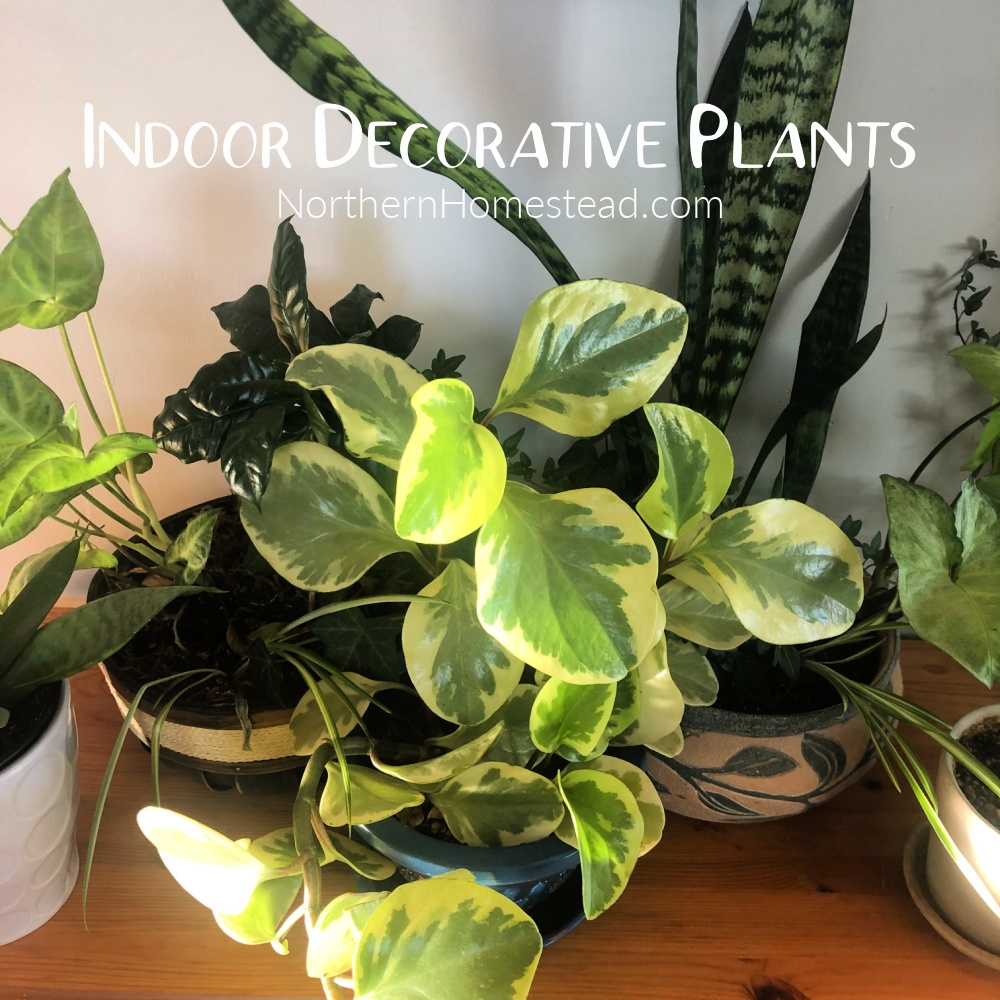
Here at Northern Homestead, we talk about indoor plants a lot, and we usually mean edible plants. Today, we want to discuss how to successfully grow indoor decorative plants, rather than our usual focus on indoor edible gardens. Decorative houseplants have their place, too. And we grow lots of them. The many pictures will give you a glimpse into our home and indoor garden room. Enjoy!
Indoor Decorative Plants vs Edible Plants
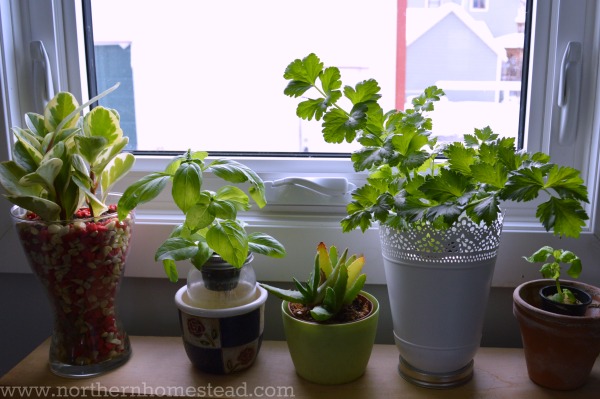
All plants are decorative, and most are very beautiful. However, to distinguish them from one another, we call plants that can be eaten edible plants, and those that can not, decorative plants. Indoor decorative plants are also often called houseplants.
Decorative indoor plants differ significantly from edible indoor plants. Decorative indoor plants are perennials, and most of them are at least shade-tolerant. Most indoor edible plants, on the other hand, need direct sunlight.
As a rule of thumb, if you have a sunny south-facing window (in the northern hemisphere), you can grow edible plants; everywhere else in the house, you can grow decorative plants, or edibles with grow lights.
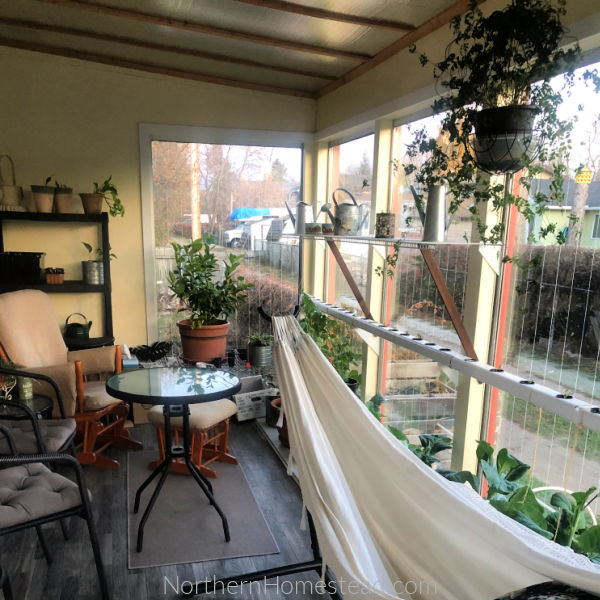
It may be advisable to keep decorative and edible plants somewhat separate. Since edibles have a shorter life span, they also grow much faster, which attracts more pests. Aphids love edible plants, but will usually leave your decorative plants alone until you mix the two. Now you can get into trouble. If you have a very valuable decorative plant, you might want to keep it separate from a fast-growing lettuce plant.
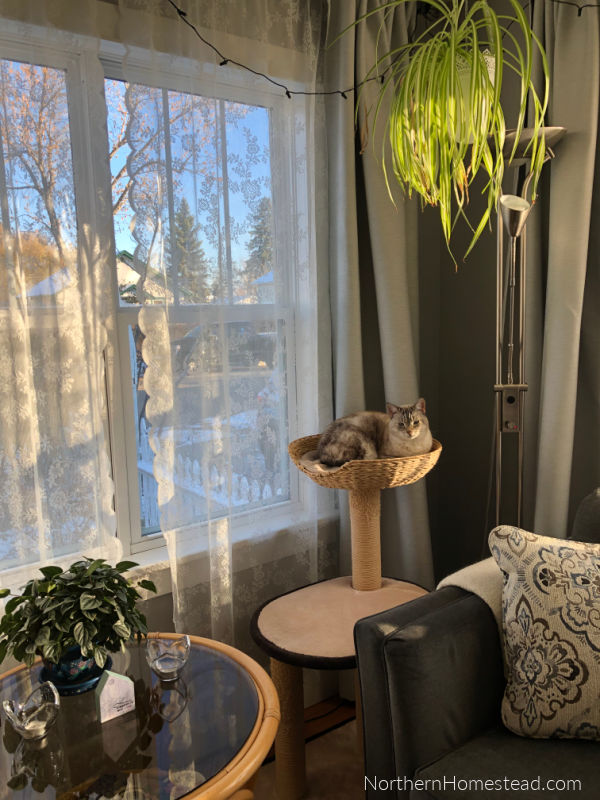
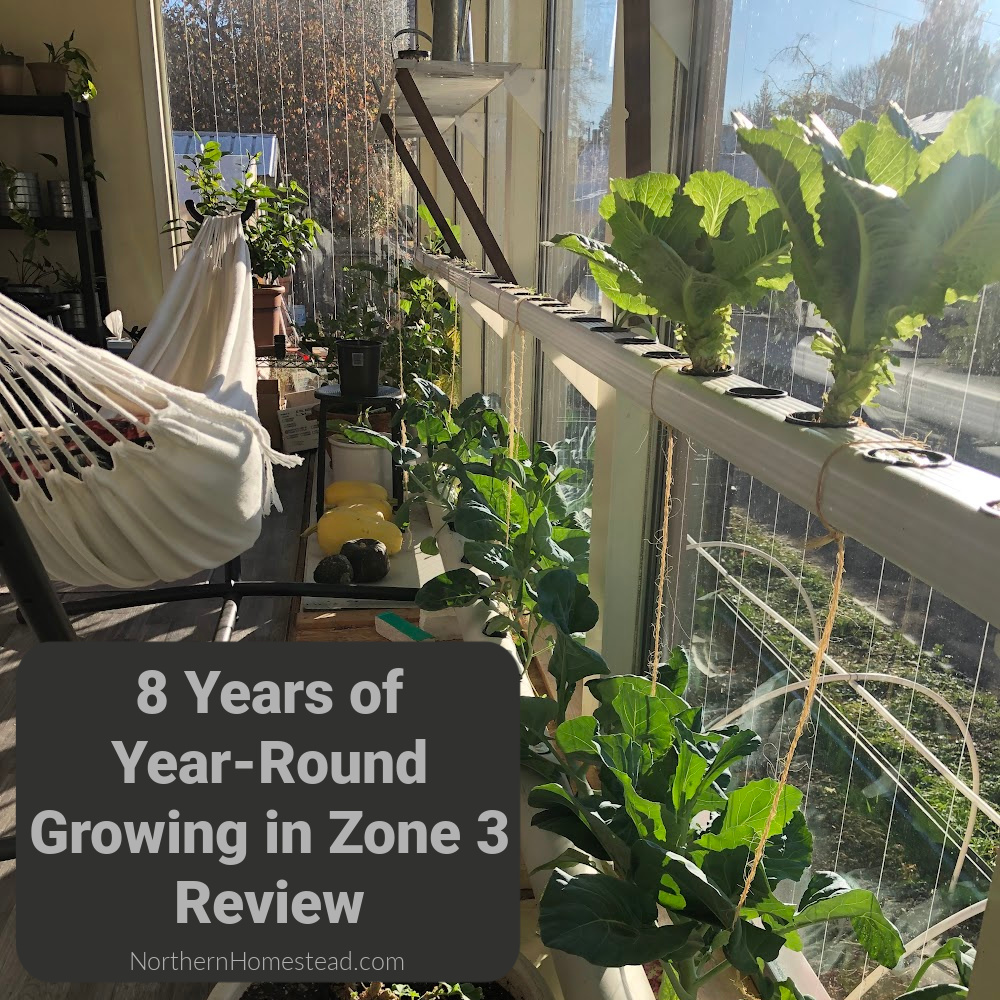
That said, we do grow both, as shown in the picture above in our indoor garden room. Please keep the differences in mind and monitor the plants at all times.
Why grow decorative plants
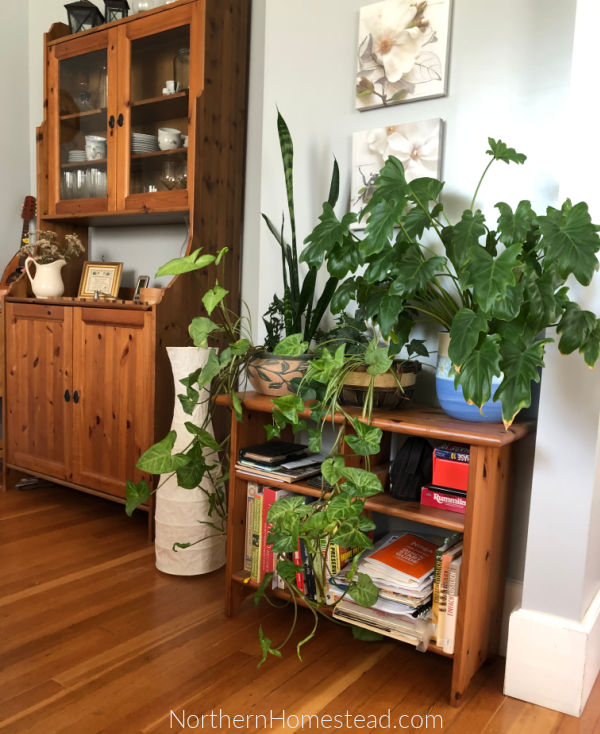
That’s a valuable question, since all plants are decorative, why not grow only edibles? Many gardeners do just that. However, if you, like me, love having plants around you at all times, decorative house plants are a great option.
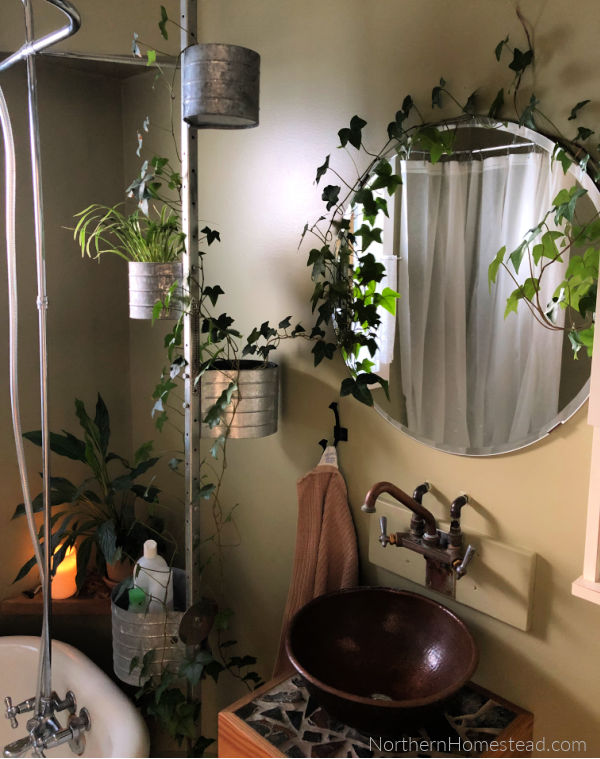
I know of no edible plants that would survive in our low-light bedroom and bathroom, but there are many decorative plants that thrive.
Decorative plants add ambiance and oxygen to any room. Many are also air-purifying by removing or absorbing harmful chemicals.
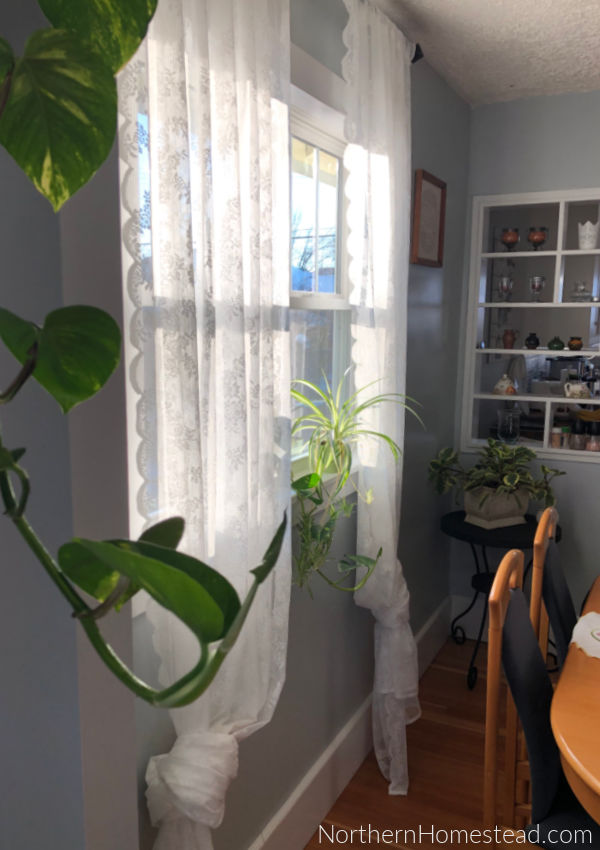
The snake plant, for example, converts carbon dioxide into oxygen at night and is a great choice for a bedroom. Spider plants and Peace Lilies are also great choices for improving indoor air quality.
That brings us to the next question:
What decorative plants to grow
The list of decorative plants is almost endless. There is likely a wide variety that would fit perfectly into your home.
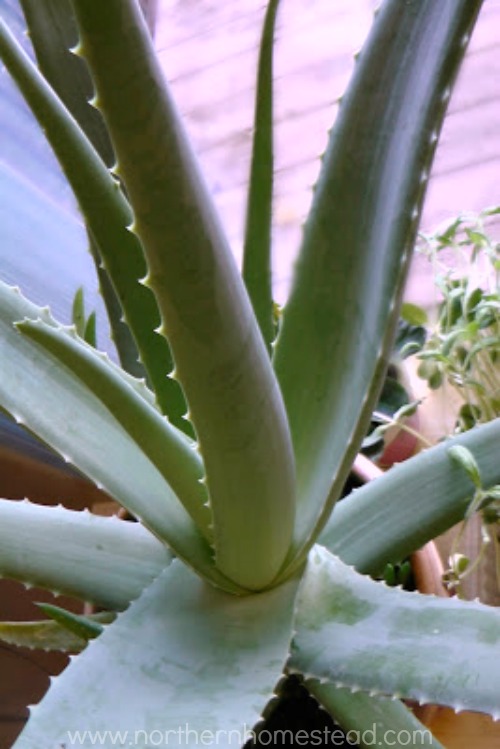
If you have a bright, warm, and sunny house, consider plants that are tropical or originate from a desert. Plants like Aloe Vera, cactus, and palms will do well. And you already notice that those plants are borderline edible as well as decorative.
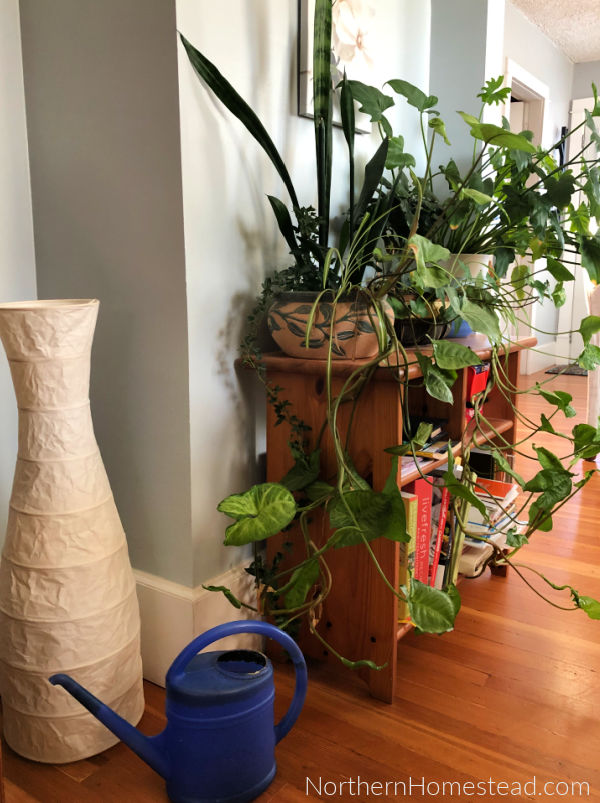
If your house has little to no direct sunlight, shade-loving houseplants will do better. Snake plants, ferns, and pathos will still decorate your room beautifully.
Simply put, know your house environment and read the labels. If you need a list of plants to go shopping with, a quick Google search can help. For example, search for houseplants that don’t need sunlight:
Peacock Plant
Dumb Cane
Dragon Tree
Spider Plant
Heart-Leaf Philodendron
Bromeliads
Peace Lily
Chinese evergreen.
Or if you have pets, search for plants that are safe for cats and dogs:
Ponytail Palm
Spider Plant
Cast Iron Plant
Prayer Plant
Zebra Calathea
Boston Fern
Fittonia
Parlor Palm.
If you are looking for a particular plant, you can also usually find all the information online. You don’t have to know everything, just know where to find information. By the way, since we are talking about it, the information online that AI serves you so graciously usually comes from bloggers just like me. Please use the link to show appreciation to the original poster. Thank you!
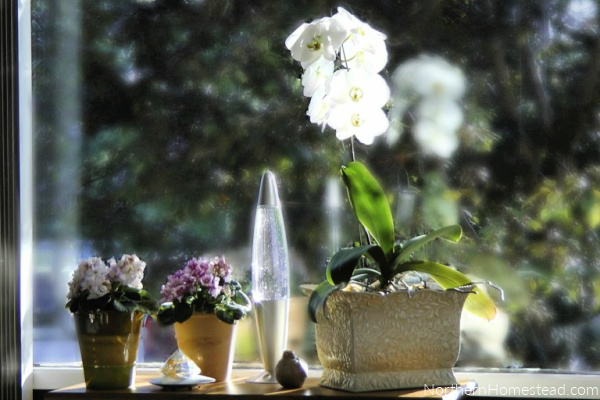
Growing blooming indoor plants is especially fun. African violet and orchids are two beloved varieties. Flowering houseplants typically require more sunlight and occasional care.
Where to get indoor decorative plants
Just like with all plants, houseplants can be purchased or propagated. Many of them propagate easily by cuttings. We will discuss propagation below.
Indoor decorative plants can be quite expensive. If it is not a gift, I often look for ones on sale. Using sales for plants can be tricky, though. If a plant did not have a good start, it might not have a long life either. But it can!
When buying at big-box stores, it makes sense to buy a larger pot or a second pot of the same size right away with the plant. The plants have been fertilized to look nice on the sale day and often require more soil. Re-potting and/or dividing them reduces fading.
Greenhouses often offer higher-quality plants, and we have had good experiences with Ikea plants.
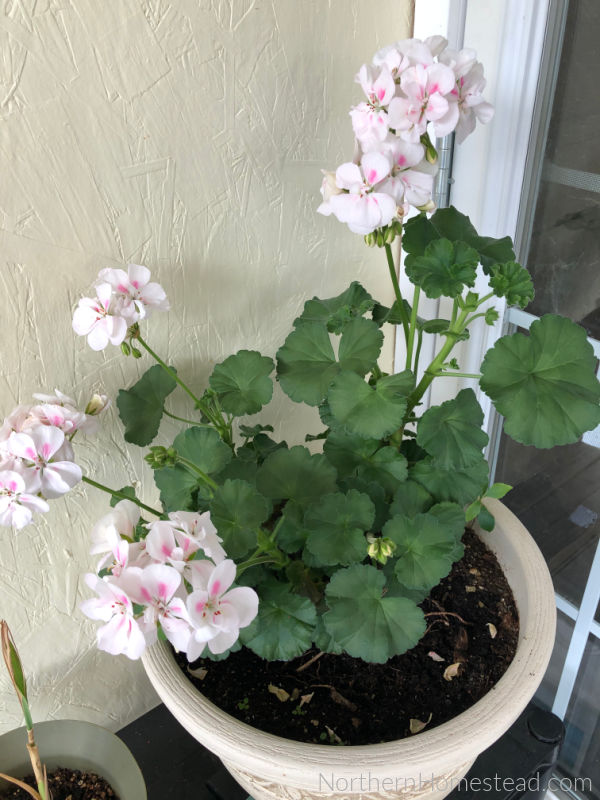
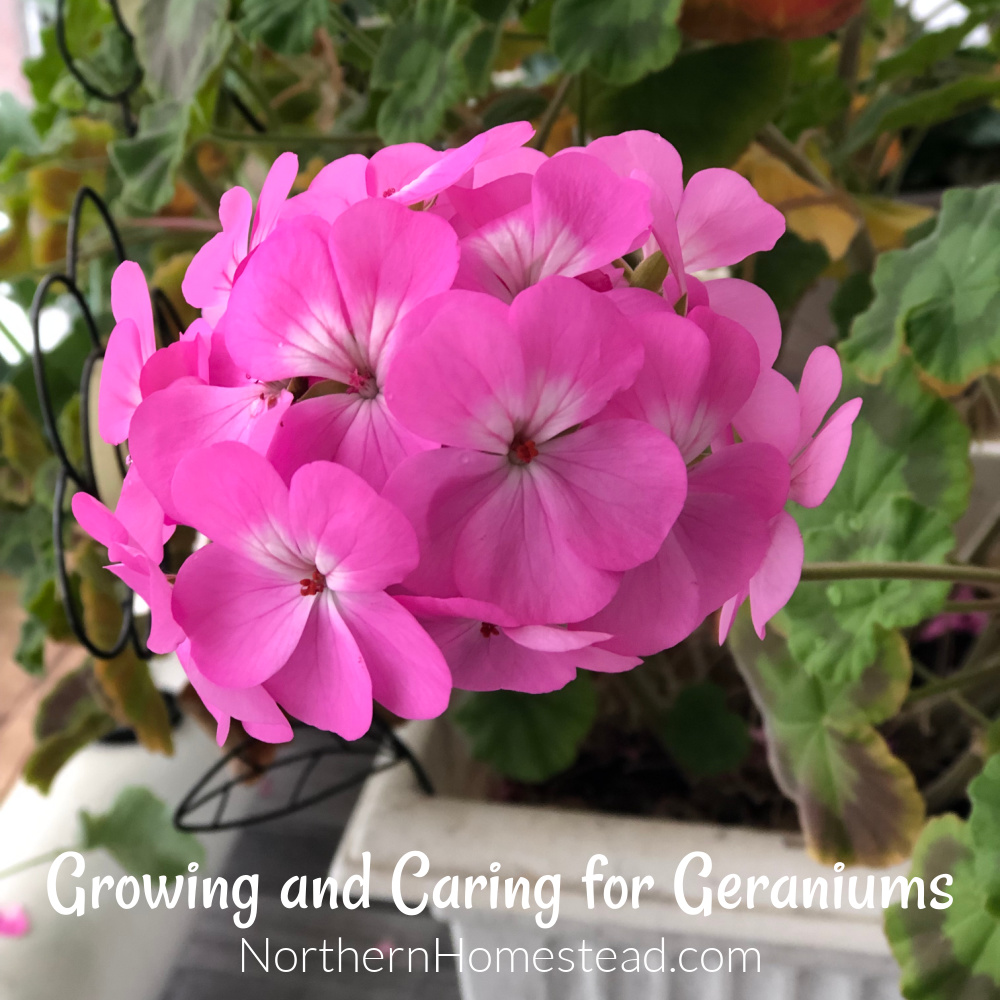
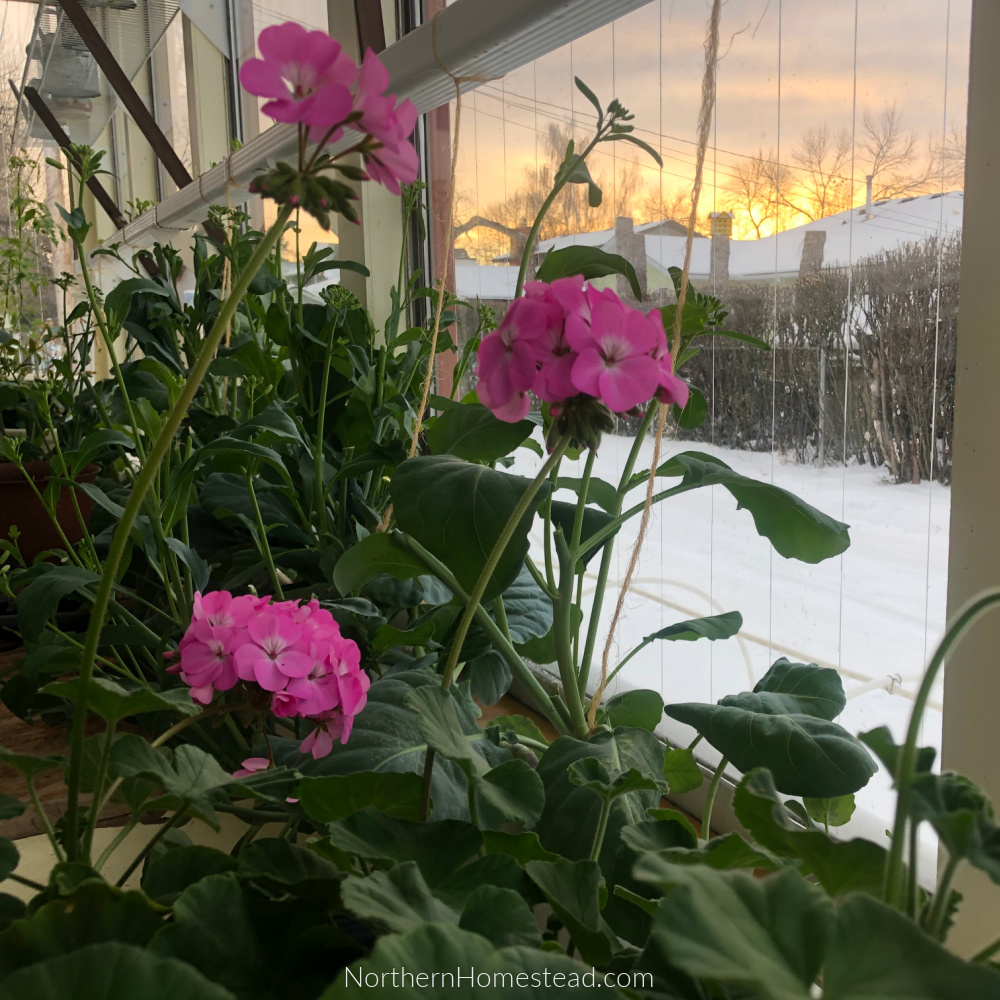
Some outdoor decorative plants can be brought in and overwintered. We have had great success with geraniums. I usually replace at least the top layer of the soil with new soil, so as not to bring in unwanted bugs. You will need a bright location for blooming geraniums. Read more about growing and caring for geraniums here.
Transplanting and dividing plants
Decorative plants typically do not grow very fast, but at some point, they will need a larger pot. As we mentioned, some plants need a new pot immediately if they were planted solely to sell quickly.
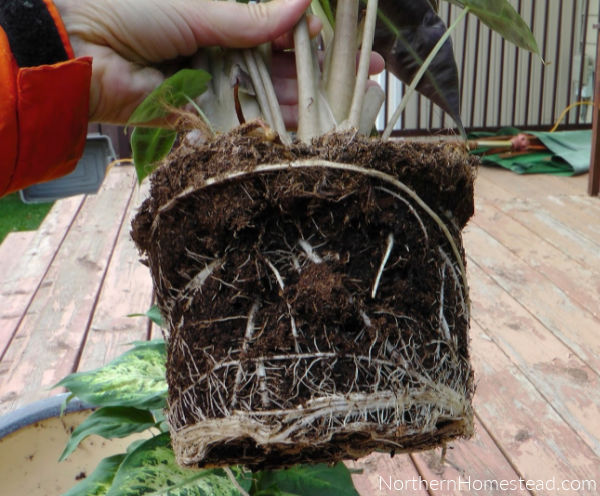
Gently remove the plant from the container and examine the roots. If they are exposed, or even worse started to go round, it is time to transplant. The picture above shows the roots of a newly purchased plant.
Use a slightly larger pot if you want to go bigger. Fill the bottom with a small amount of potting soil, place the plant in it, and refill the pot with fresh soil. Make sure not to leave air gaps, as shown in the plant above.
If you want to keep the plant small, gently trim off excess roots and refill the pot with fresh soil as needed.
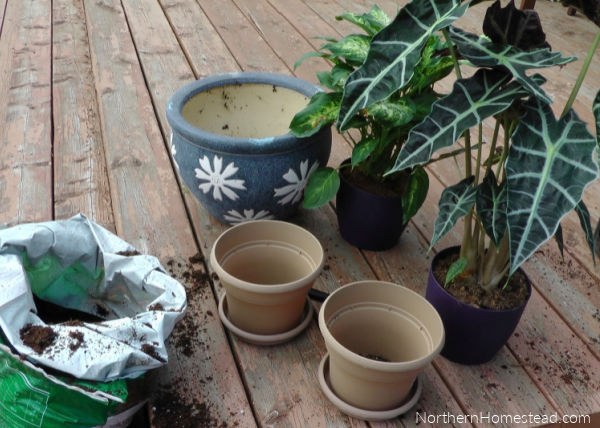
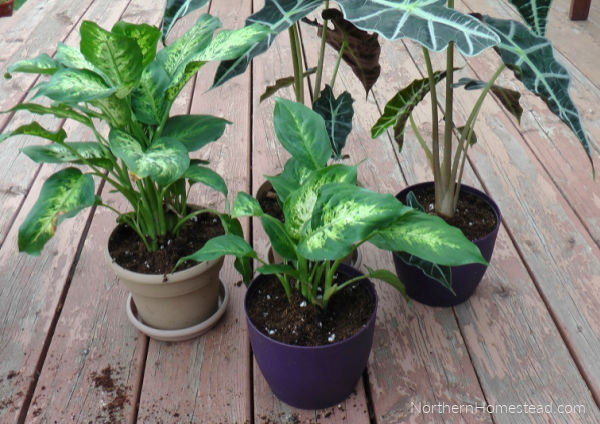
Some plants can be easily divided. Look how many stems it has, and go as naturally as possible. Now remove the plant from the pot and try to separate it; it will often work. The pictures show how we went from two plants to four.
Sometimes, though, it is better to use a knife: if the two stems are too close together, cut them apart at the top, then gently separate the roots by pulling them apart. The important thing is, whatever you do with the plant, be gentle, and it will forgive you and grow even better. Once there are two parts (or more), plant them right away. Water the plant and keep it out of direct sunlight for a few days to a week.
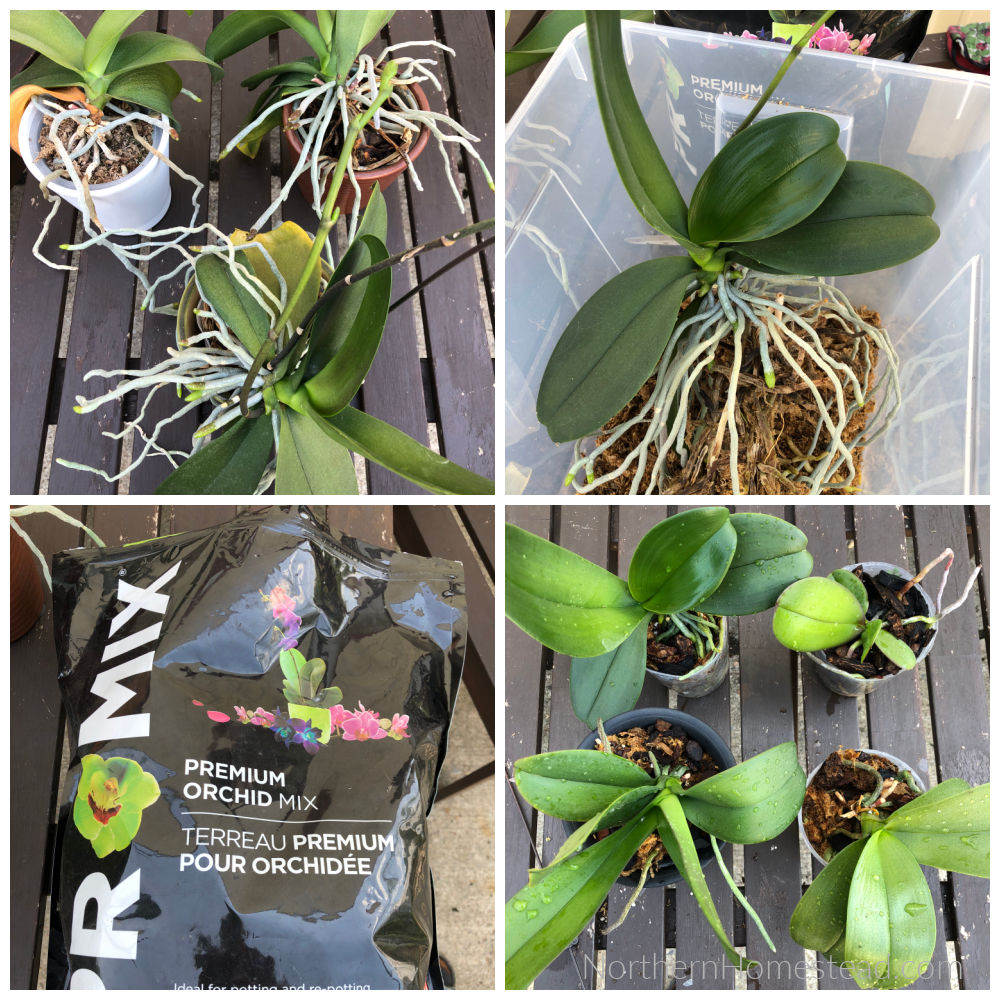
If needed, use a special growing medium, like here for the orchids. Most tropical orchids grow in the air, rather than in soil. Their fleshy roots are covered with a layer of white cells called velamen, which acts as a sponge to absorb water. Again, if you’re unsure about your needs, do some research. That’s what I do too. Thankfully, there are many bloggers and vloggers who share their knowledge freely.
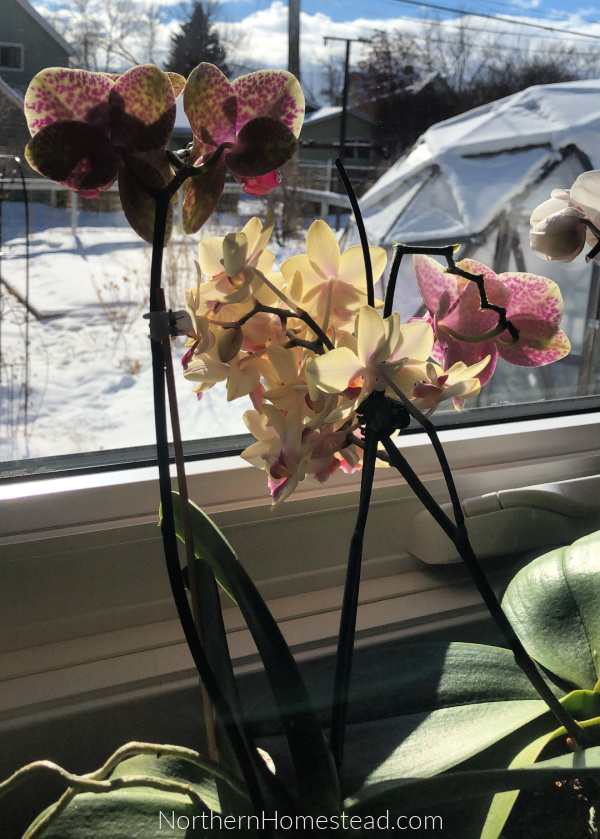
These orchid plants got a good trim, and 3 of the 4 had flower buds right after the transplanting, as a way to say thank you for the treat. Looking forward to seeing them in bloom all winter once again.
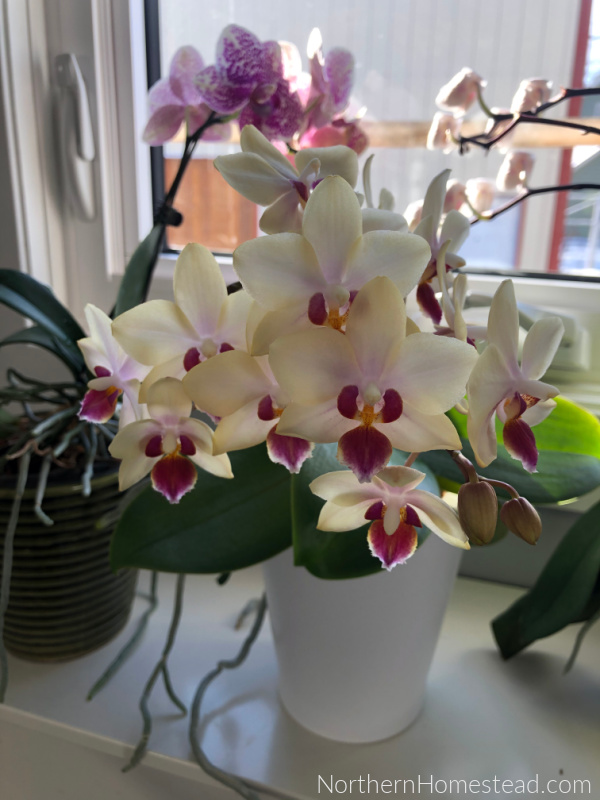
And do I ever love orchids!
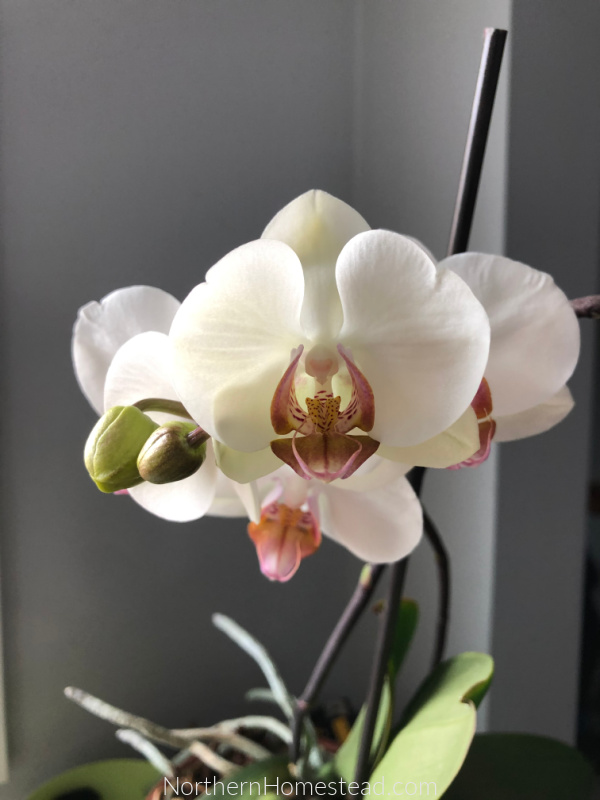
Aren’t they beautiful!
Propagating indoor decorative plants
I am not aware of any seed available for decorative houseplants. If you know and have some experience in that, please share in the comments below.
I have had great success with cuttings and with plant babies, or so-called “pups” or “plantlets,” that a mother plant produces.
Plants that propagate well by cuttings are Pothos, Tradescantia, African violets, and Philodendron, to name a few.
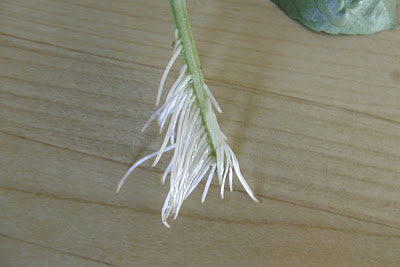
Simply cut off a stem with a few leaves, or just a leaf, as in the case with African violets, and put it in a glass of water, and it will grow roots. The new plant is now ready to be planted.
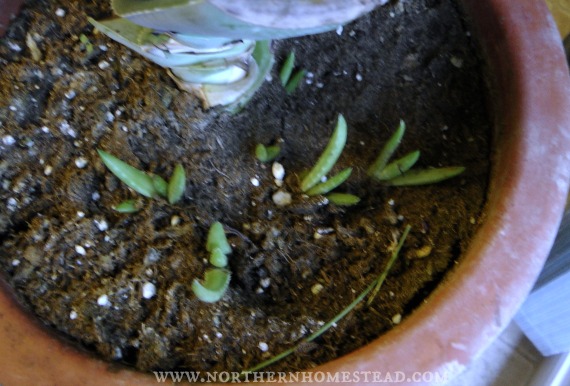
Plants that have made babies for me are snake plants, spider plants, aloe, and even orchids. Sometimes it’s very unexpected to see a new baby plant pop up. See it as a gift, gently remove it from the mother plant, and give it a new pot.
Troubleshooting and care
Like with most plants, if we give them love and care, they grow and thrive.
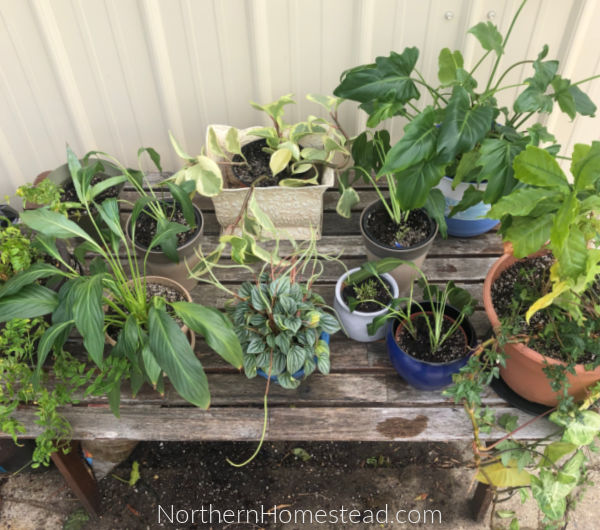
About once a year, preferably on a nice, not-too-hot summer day, I like to take the house plants outside and see who needs a new pot, who needs dividing, etc.
A few times a year, when I see a need, I give the plants a thorough shower in a deep sink and soak the potting soil. It removes insects, dust, and excess salts from the soil.
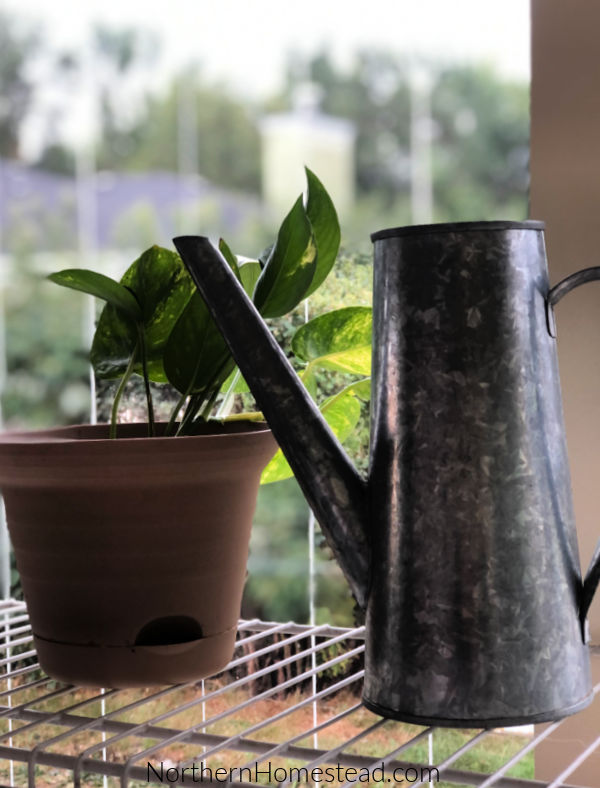
There is a much greater danger of overwatering an indoor plant than of underwatering. A plant in a sunny window will need more moisture, but it does not need to be kept consistently moist. As a general rule, I water my indoor plants once a week. Some get just a little water; some are watered well. Always look at the soil. If it is dry, give more; if it is still moist, just give a few drops.
Fertilize as needed, with a fertilizer of your choice. At this point, I don’t have a specific brand I would recommend. Hoseplants don’t need much, just follow the instructions on the fertiliser. I usually use it less frequently than recommended.
To keep flies and bugs away, burning matches in the soil seems to help. I guess it’s the smell. Others sprinkle cinnamon for the same purpose.
If mold is an issue, activated charcoal tablets are helpful. Just place one or two into each pot. Also, occasionally bring the plants outdoors for an hour or two of direct sunlight.
If a leaf has yellowed, pruning is the best way to address it. And if a plant does not want to grow and vanishes, well, so be it. It happens to the best. Say goodbye and get a new one.
We invite you to subscribe to our newsletter and follow us on Instagram, Facebook, or Pinterest so you do not miss a thing.
More Indoor Gardening Posts You Might Enjoy:


NEWSLETTER SIGNUP

Leave a Reply