
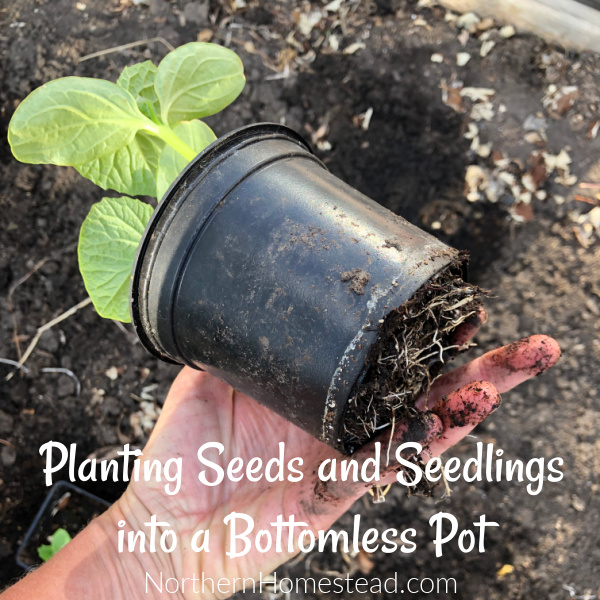
This blog article started as a simple way to grow cucumbers, with 3 significant advantages over the traditional method—planting pickling cucumber seedlings in a bottomless pot. However, we soon learned that this simple method has much greater potential and is useful for a variety of plants.
First, let’s look at the advantages of this simple planting method. Then we will share a step-by-step how to do it. Even though it is so simple, one wonders why we haven’t come up with that idea sooner.
Why use bottomless pots for planting?
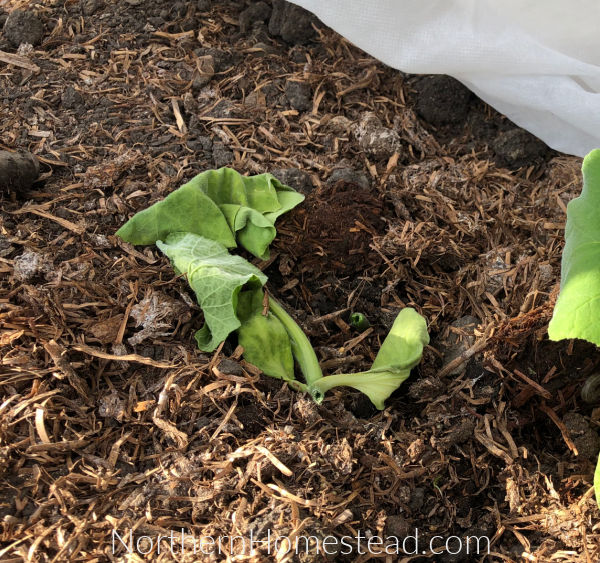
As with most of the awesome gardening hacks, this method grew out of a problem; ours was cutworms. Looking for a solution, we found that having some protection around the plant works well to keep it from cutworms.
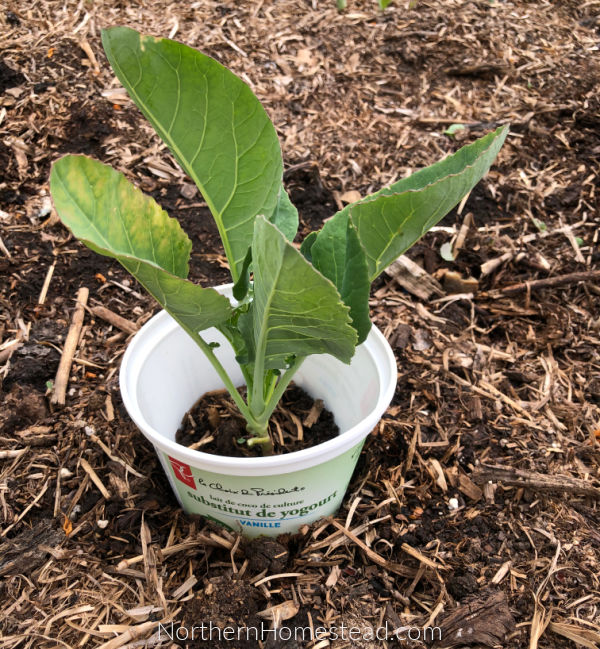
So I started planting seedlings into a bottomless pot, which is a bit tricky but doable. But it made me wonder if we could start seeds in a bottomless pot.
You’ve probably heard of, or maybe even used, soil blocks for planting. The method tells us that soil holds together without a pot. However, you will need a soil blocker to form the blocks. Keeping in mind that soil holds together and considering what we needed, this bottomless pot idea was born.
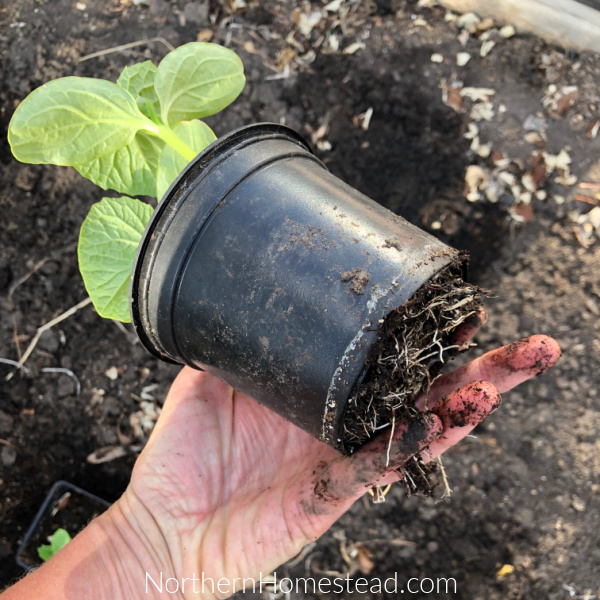
That leads us to the second advantage of a bottomless pot. The transplanting is so simple that it can hardly be called that. We really just plant pots. And since plants in the cucurbit family don’t like being transplanted much, we have a win-win here.
But that’s not all this method can do. We also noticed that it makes watering way easier. Cucumbers are sensitive to water; if the leaves are overwatered, they get powdery mildew. And since we let the pickling cucumbers spread out on the ground, it’s hard to see where each plant’s base is.
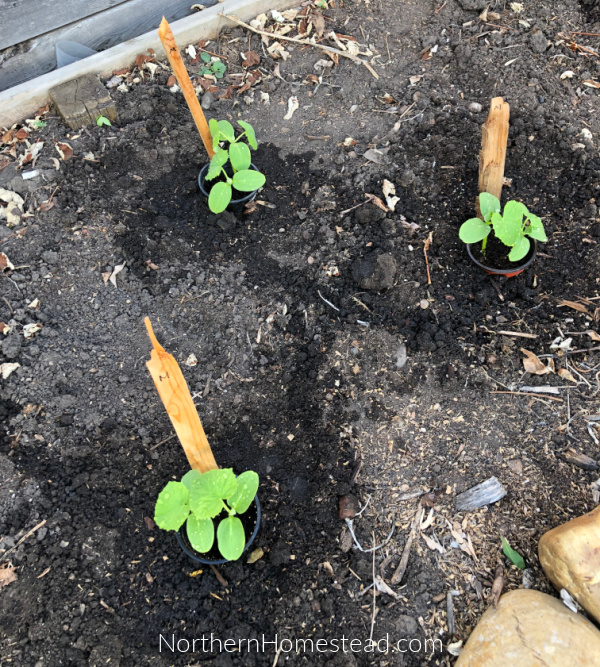
So we put a stick into the ground right next to the pot to mark the base of each plant. Now we can water the pot at the root and do not have to guess where the roots are. By the way, we prune the cucumber seedlings back to one plant per pot as soon as they are established.
The bottomless pot makes planting easy, protects seedlings from cutworms, and makes watering simpler all summer long.
Preparing the bottomless pots
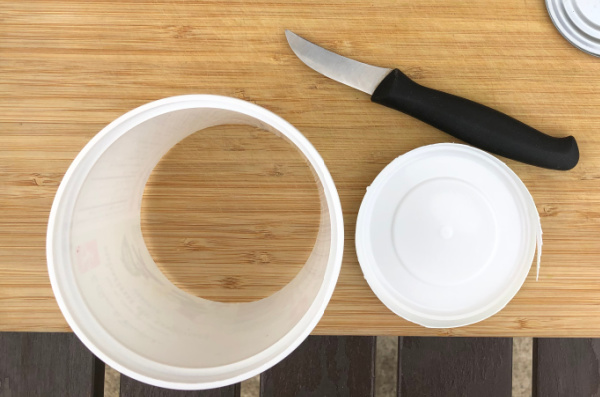
The bottomless pot can be any container that is easy to cut. Preferably, I use recycled pots from the garden center. They are usually made of thin plastic and are very easy to cut open with scissors.
Recycled yogurt or cream containers work well, too. You will need a sharp knife to do the job. And even though they are sturdy to start with, they are not as durable as the thinner potting containers. In the end, just use what you have on hand because it does not matter. All we are looking to do is cut off the bottom to make a bottomless seedling pot.
Now fill all the bottomless pots into a garden tray, and you are ready for the next step.
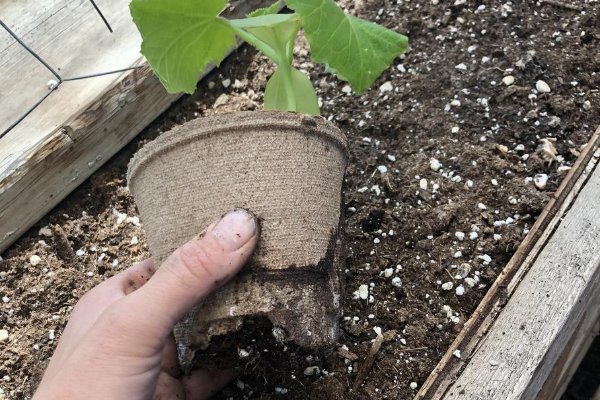
What about the peat pots (brown fiber pots), you might wonder, that are made to be planted into the ground. As Krista shares, you still have to gently cut or remove the bottom of the peat pot to work well in a short growing season. It simply takes too long and more moisture than our dry climate offers for the pots to break down.
Planting seeds in a bottomless pot
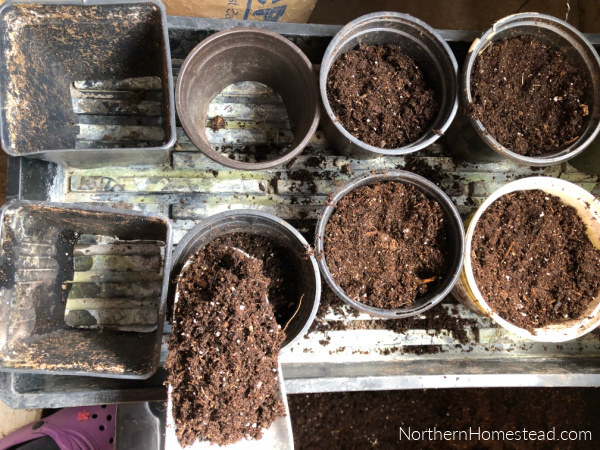
Fill the bottomless pots as usual with your favorite soil mix to start seeds. I like to use the Promix organic vegetable and herb mix or mix our own soil.
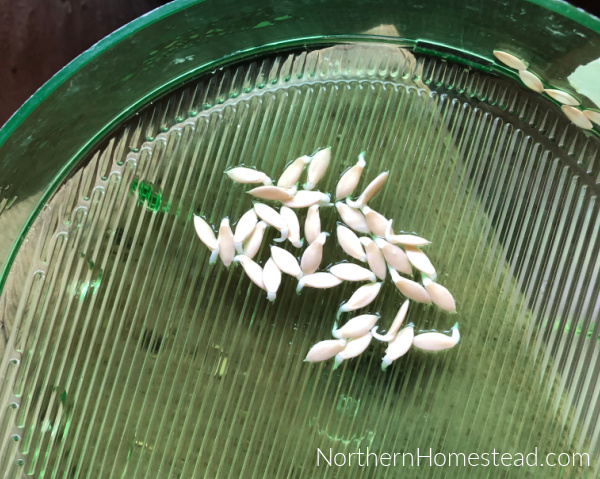
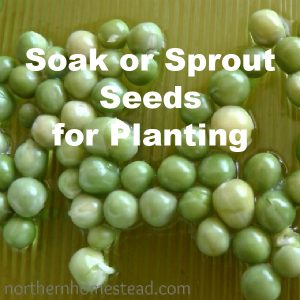
Optional seeds can be soaked or sprouted before planting. That speeds up germination and lets you see which seeds germinate. Read more here.
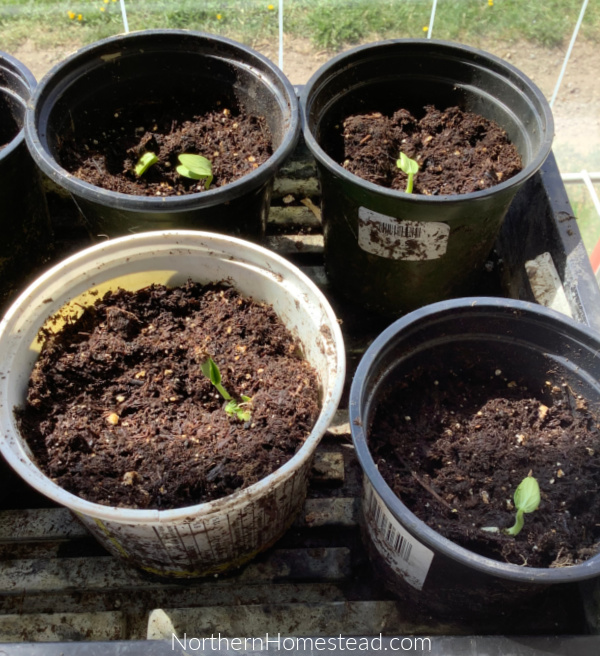
Just a few days later, the little sprouts show their first leaves. Watering can be done from above, or just give a cup or two into the tray.
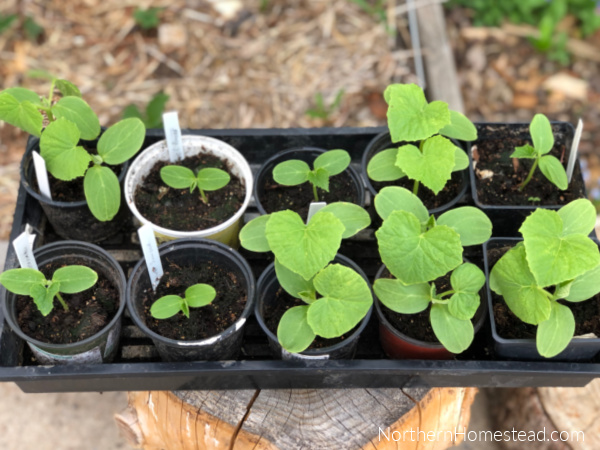
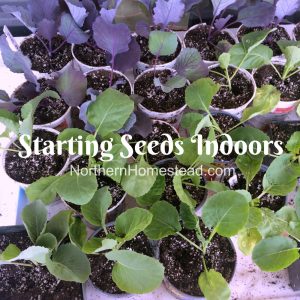
Once the seedlings show their true leaves, they are ready to be planted in the garden. In the picture, two varieties are planted at different times, so some are smaller than others.
Planting the bottomless pots in the garden
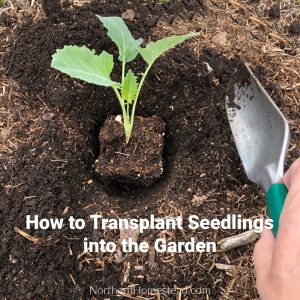
For planting out bottomless pots, you will not need to dig big holes, just enough to fit the container, making sure there are no air pockets under the roots.
Now, remove the bottomless pot gently from the tray and place it into the hole. Push back the soil, and the pot is planted.
To show how easy it is, I made a short video. Watch it below or head over to YouTube to watch the simple process.
Once all the pots are planted, water them well to encourage them to take root in the soil. If you want, you can also put a stick into the soil that will show you in the future where the plant starts.
Since planting pickling cucumbers in a bottomless pot worked so well, I started to extend this method to other plants. I think anything can be started or planted in bottomless pots for easier transplanting, and if protection from cutworms or slugs is needed.
Planting seedlings into a bottomless pot
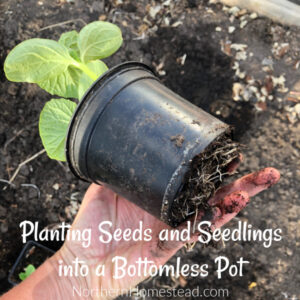
If you didn’t start seeds in bottomless pots but still like the idea, especially if you’re dealing with cutworms, you can plant seedlings into bottomless pots. First, prepare a pot as explained above, making sure it’s big enough to hold the seedling you plan to plant. Next, dig a hole and place the pot in it. Finally, plant the seedling into the bottomless pot in the hole, just as you would when transplanting seedlings.
The bottomless pot must be higher than the ground to be effective against cutworms, but it doesn’t need to be as high as shown in the picture. However, it might protect a small seedling from slugs. If the roots are significantly larger than the small bottomless pot, you can dig the hole deeper to ensure they face downward.
We appreciate your feedback on bottomless pots. Please continue sharing your comments!
We invite you to subscribe to Northern Homestead and follow us on Instagram, Facebook, or Pinterest for the latest updates.
More Planting Posts You Might Enjoy
NEWSLETTER SIGNUP

Do you stake your cuke plants?
Not the pickles, no. I just let them stay close to the ground where it is warmer. If I grow cucumbers in the greenhouse I do.
Thank you for sharing this method! I use this approach with direct seeding into the garden, but germination success isn’t always guaranteed. Definitely going to add the sprouting and indoor starting to the mix. I started doing this btw also out of necessity, but my problem was slugs devouring seedlings. Thanks again for another superb idea!! Just love how practical and do-able your projects are!
Good to know that it protects seedlings from slugs as well. We don’t usually have slugs during our dry spring.
Thank you for your kind words, appreciated it.
Does this method make any difference to the squash vine borer?
We do not have any experience with this insects. But what I read is that the eggs are laid at the base of the plant. So if the eggs are inside the pot, it would not protect, if outside, it could. Adding a netting or barrier to protect the base even more could help as well.
Thanks for this tip Anna. I have often put a barrier around susceptible seedlings, but this would be so much easier. I think I will transplant my kale, collard, and cabbage seedlings into bottomless pots, as well as start my cukes and squash in them.
I always appreciate your suggestions for what works in your area since I live about 20 miles north of you.
You are so welcome! The plants you mentioned are all great options to plant into or start in bottomless pots. It’s so sad to see a seedling being cut off in one night, prevention is key.