
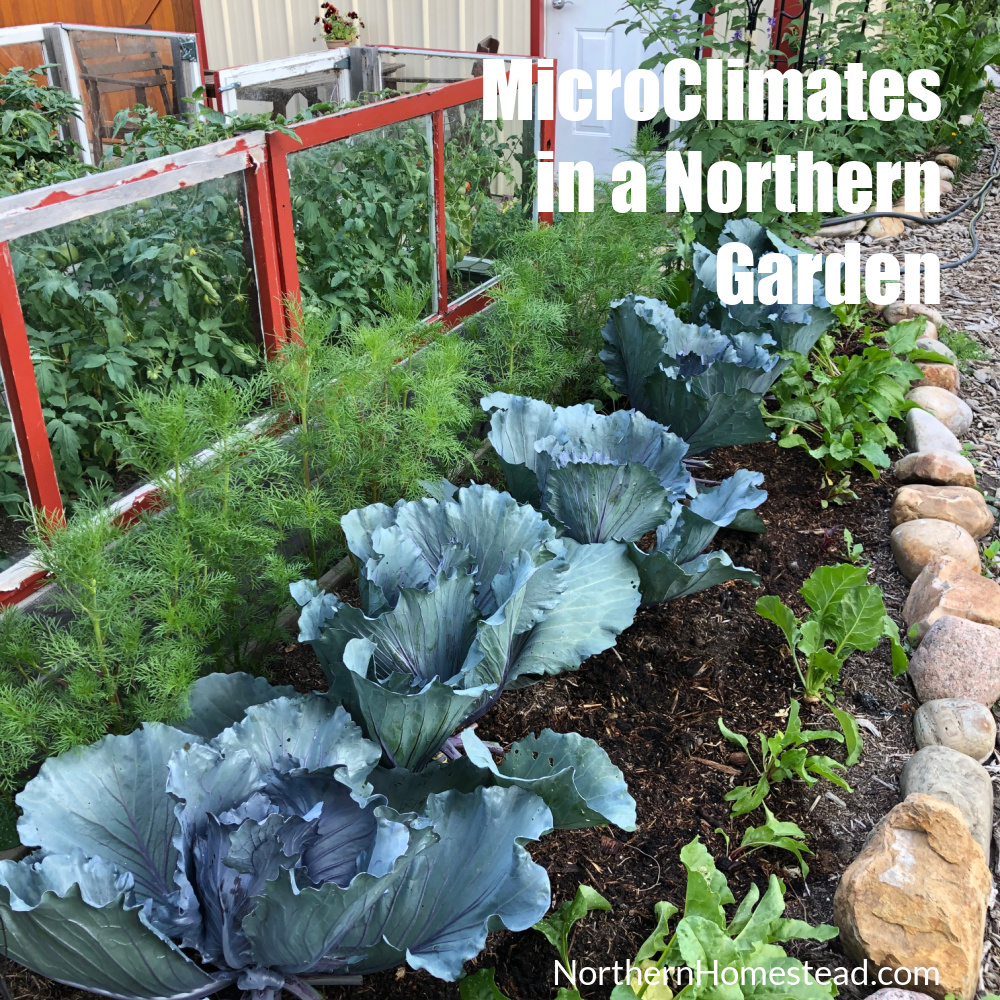
If you garden in a cold climate, a microclimate can make all the difference between no frost or frost damage and ripe or green tomatoes. A few degrees colder or warmer can have a huge impact on what we can grow and how well the garden is producing. So let’s talk about finding and creating microclimates in a northern garden!
A microclimate is a subject for any climate, but since we are in a cold climate, we will look at it from that perspective.
Know your climate
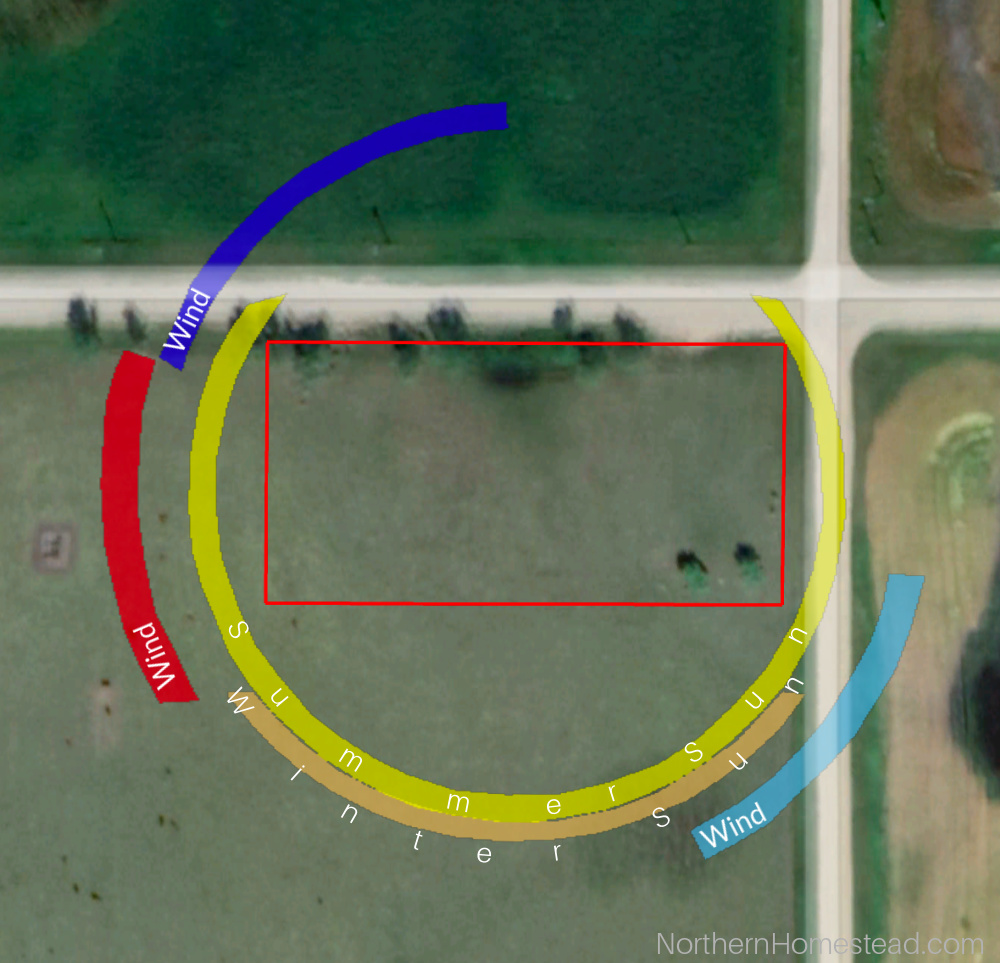
To find or create a microclimate, we first need to understand our climate. How the sun moves in the sky will tell us how the shade impacts our property. In a small piece of land or a garden, you can conduct a shade survey.
We also want to know where the prevailing wind comes from. Iowa State University offers great information on that. Just type in your location, and you can see what winds you are dealing with. I made the wheel above during my Contour Map Generator training, which is included with either the Basic contour map or the comprehensive map generator package.
Precipitation is another factor to consider. Do you have a lot of snow or rain, or maybe both? Or are you in an arid climate where preserving the moisture is the first priority?
How to find your best microclimate
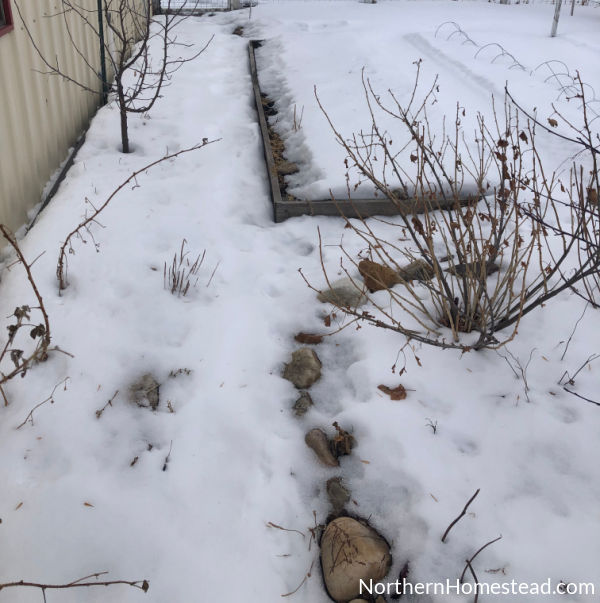
Early spring is a great time to find the microclimate nuggets in your garden. Areas where the snow melts first are warmer; in colder areas, the snow stays.
Where there is barely any snow, it’s a windy spot, and where the snow drift accumulates, it is sheltered.
The drier area is a hill; the wetter area is the low point, even if you may not be able to tell the difference with the naked eye, as water flows to the lower point. Knowing this, you can plant accordingly, using drought-tolerant plants rather than those that prefer more moisture.
Make a shade survey in your garden. In April, the day length is the same as in September, take notes to know your garden. In a northern garden, you want to catch all the sun you can for your vegetable garden.
The shady areas can also be used. Some fruit trees, like apricots, are a great choice for a shady spot where the snow accumulates. They will be better protected and not bloom too early. Read more about growing fruit trees in a cold climate here.
Hill country microclimate
The most obvious and noticeable microclimates are in the hill country. The slope to the sun is always warmer than the shaded side, and for that, you want to know the topography of the land.
In early spring, roads in our area that run east-west will have one side already snow-free and the other snow-covered. What is obvious on a steep hill is just as true on a slight slope in your garden, even if it is not as visible.

A slope against the sun will always be cooler. Our community garden had a northern slope (against the sun). We could still grow all kinds of winter and root vegetables there. However, fellow gardeners who tried to grow tomatoes were not able to get ripe ones.
If you live in a cold climate, but the summer sun can be scorching, a slight north-facing slope can work for you. That’s why it is so important to know your climate.
On a steeper hill, placing the garden halfway up the sunny side lets you use the warmer microclimate there. Frost falls and flows like a river; avoiding those lower points can help your garden to stay above freezing during cold nights. The hilltop will get a lot more cold wind. The sunny hillside is the warmest place to garden.
The end of winter is a great time to take a walk around the property. Where there is no snow (blown away) you know it is a windy spot. Where the snow accumulates, it could be a low spot.
If you have steep slopes or a mountainside, you might want to get more aggressive and build terraces and ponds to grow more.
Urban microclimate
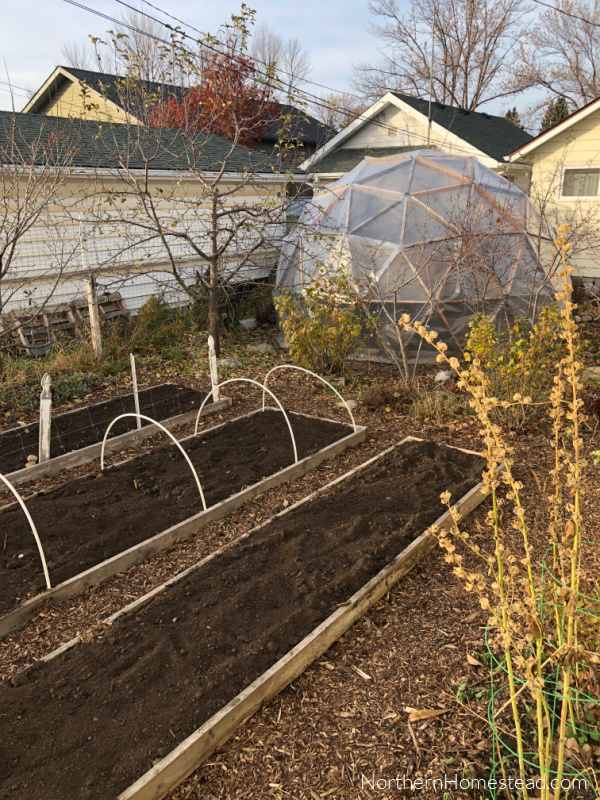
One of the reasons we love our garden in town is the urban microclimate. Our lot might be small, but we can grow many of those crops that our friends on farmland can’t. There is something that is called the urban heat island.
Even though we are in a small town, we are still usually a few degrees warmer than the surrounding fields. Since we have grown many gardens out of town and a home garden in town, we notice this very much. In our case, we simply adjust the plant varieties we grow where. Root vegetables and winter crops do well in the open fields, in fact, actually much better than in our urban garden. Heat-loving plants, however, are better in the sheltered urban garden. This brings us to the next point. Even if you are out of town, you can create a microclimate for yourself.
Windbreak microclimate
Planting a shelter belt is a great investment in a property. A windbreak can make a huge difference to the microclimate; it is great for a home side, field, or orchard.
For a garden plot, though, trees might not be the best option. So many great gardens have been ruined by tree roots. Especially shallow-rooted trees like birch, poplar, and several types of maple will ruin your garden rather quickly.
You get a good 10 times the wind shelter from a windbreak (up to 20 partial protection). A 4-foot-high wind barrier will protect 40 feet (ca. 12 m) of gardening space.
Grow hedgerows with nitrogen-fixing plants, or edible berries and pretty flowers that host beneficial insects and birds in your garden to get even more benefit from them.
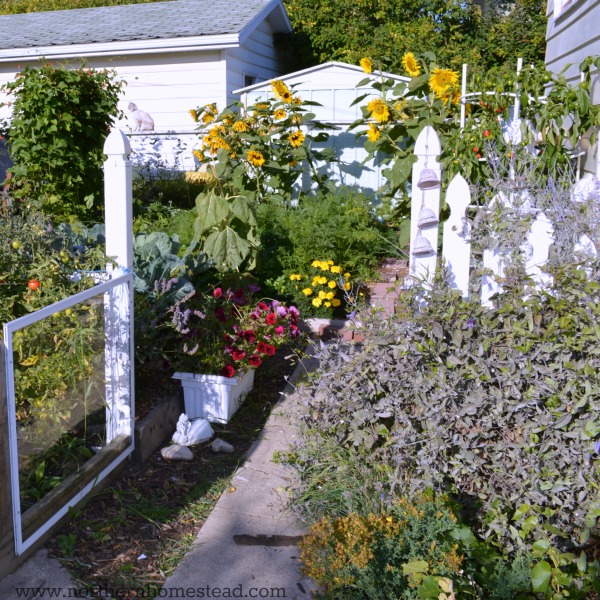
Build a fence, a stone wall, a glass wall… we are talking about a cold climate here, where we want to keep the wind out and create hot spots.
I still remember a very frustrated coworker who tried to grow tomatoes in an open field but was unable to harvest any ripe ones. She also had a south-facing deck at her country home. Following the advice that her deck would be too hot, she did not plant anything there. Sadly, she could have had the best tomatoes in the area if she only observed the microclimate she already had. Things in a cold climate are different.
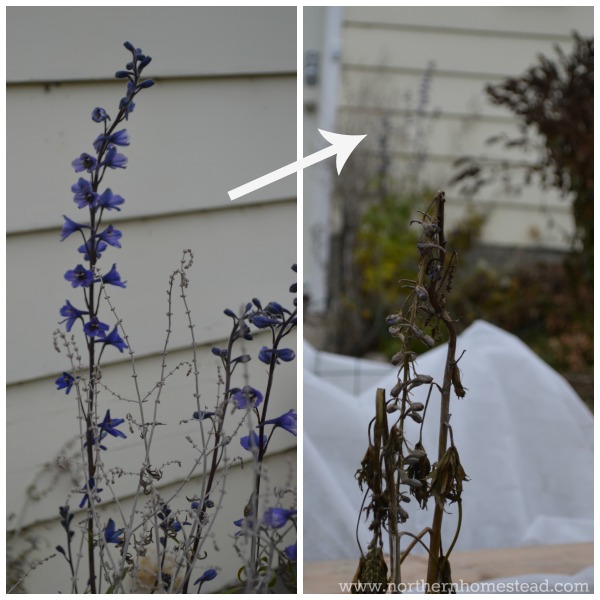
The picture shows two delphinium plants about 20 feet (ca. 6 m) apart. One is blooming even after some real frost, with temperatures dropping as low as -9C (15.8F), and the other is completely frozen and gone. That’s how much difference a south-facing wall makes.
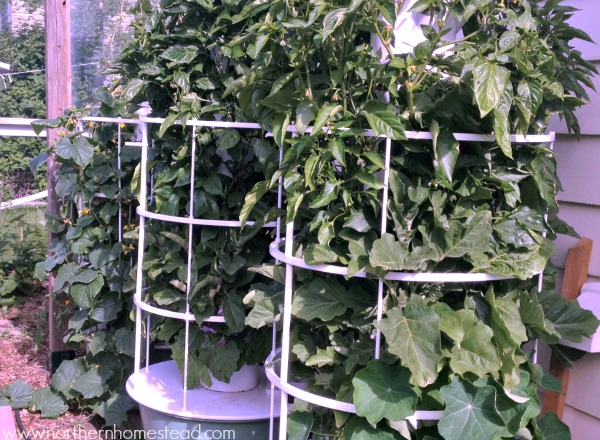
For our tower gardens at a south-facing wall, we also built a glass wind barrier (you can see some of it on the left side of the picture). We want the heat to be trapped there. This way, we grow peppers, eggplants, and cucumbers successfully without a greenhouse. By the way, eggplants and peppers are very challenging to grow in a greenhouse because they attract so many bugs. A sheltered outdoor location is a great alternative.
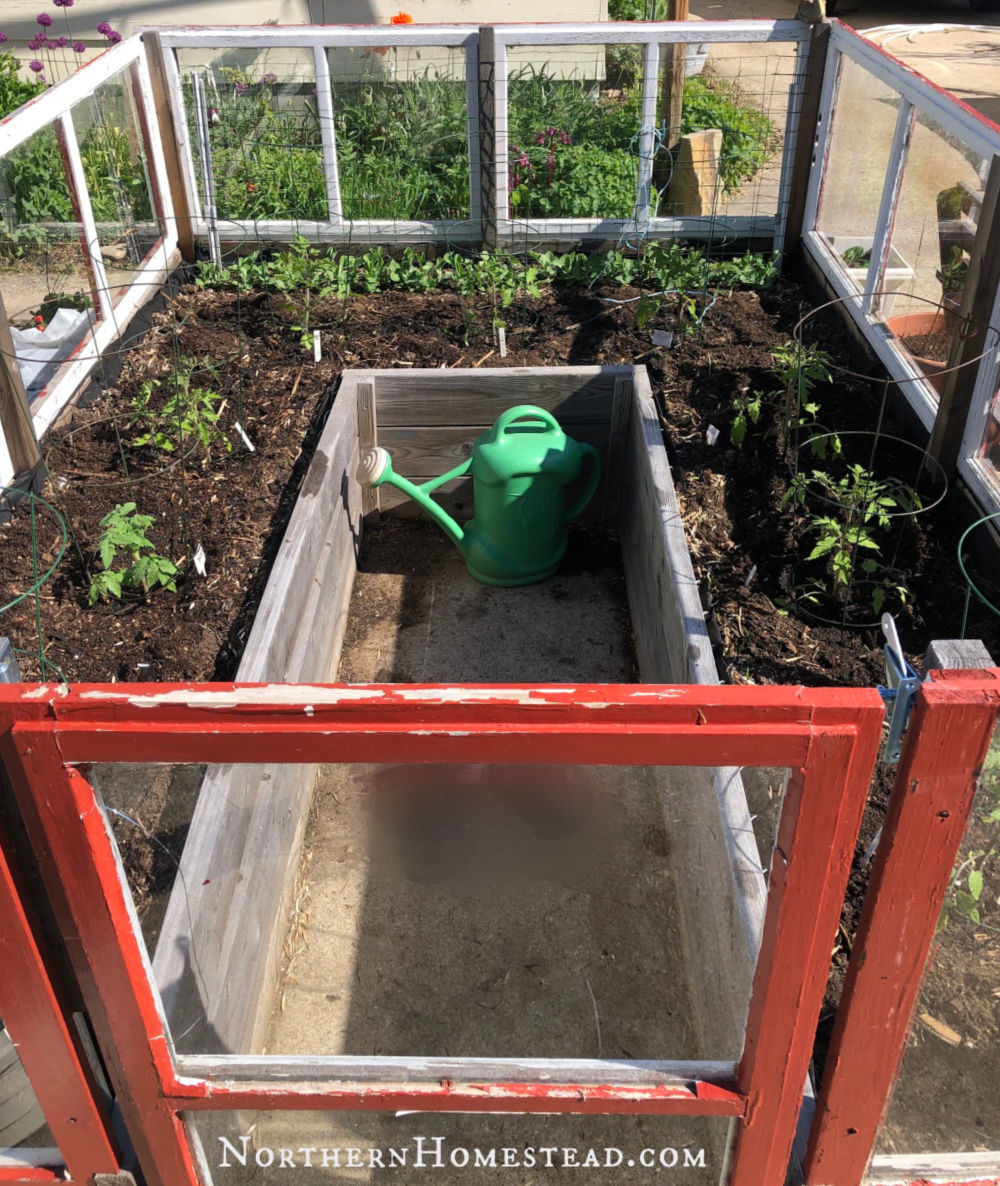
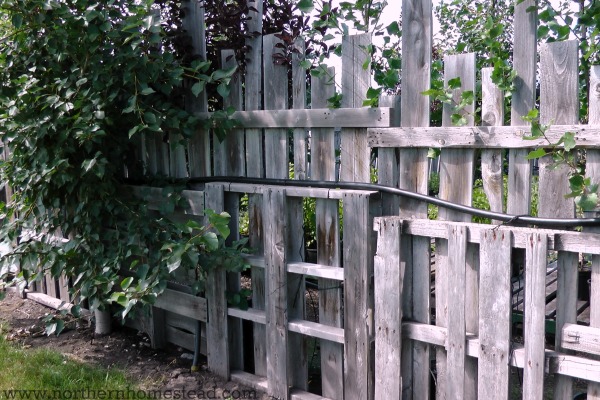
Build wind barriers to increase heat storage even more. A simple pallet fence or old window frames can do wonders. See also the raised window-protected garden bed.
Using snow in the winter
A good snow cover during the winter is very beneficial for the soil. A snow cover allows the soil to stay unfrozen for longer. The deeper the cover, the less freeze will the soil have.
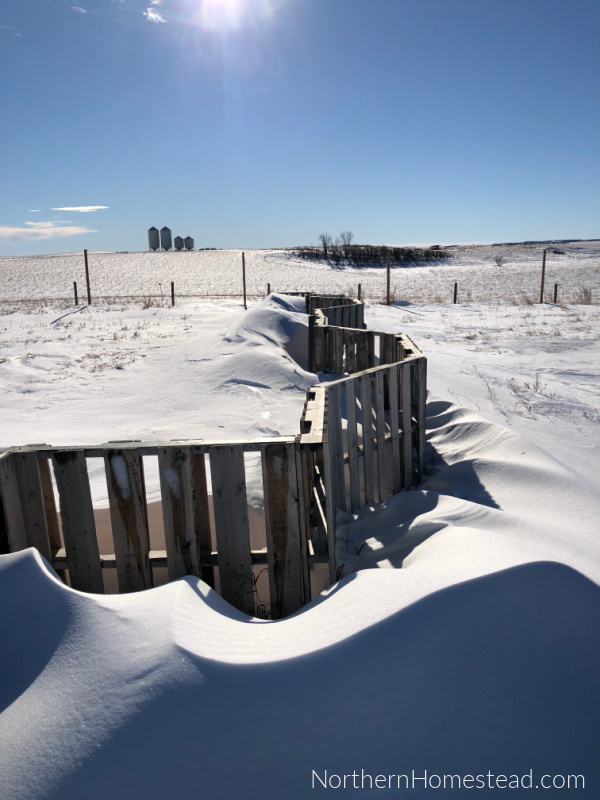
A windbreak or snow fence (here, a simple pallet fence) helps accumulate snow right where we want it. Snow fences can also be used to protect tender perennial plants. The accumulated snow will also provide much-needed moisture in spring.
A row of edible shrubs serves a double function. It will act just like a fence for accumulating snow, but also provides food. Just make sure to plant non-suckering shrubs if planting them close to the garden.
On the other hand, raised beds, walls from a building, and rock borders will help melt the snow and warm the soil more quickly in spring. It might be beneficial for early, hardy shrubs. Or to grow some early greens in those raised beds.
Observing the snow in our garden can help us use it to our benefit.
Water-affected microclimate
This one is huge; however, all I can do is point you to some information; we have no experience ourselves yet. But I know that using water can create amazing microclimates, especially in the hill country. Stepp Holzer grows many heat-loving plants in the mountains of Austria. Get inspired here:
The book Sepp Holzer’s Permaculture: A Practical Guide to Small-Scale, Integrative Farming and Gardening is worth reading.

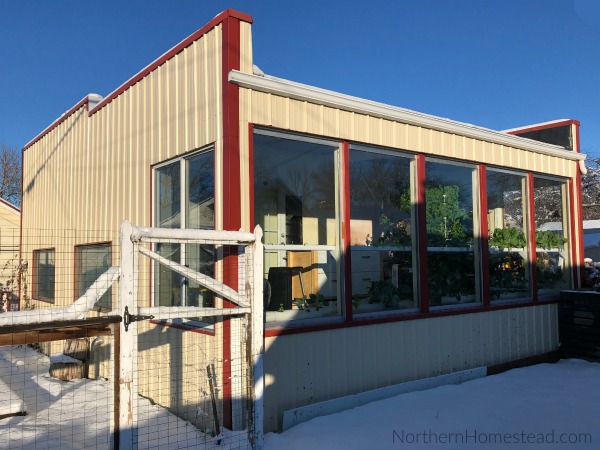
Windows can have a similar reflecting effect as water. Outside the windows of our indoor garden, we grow heat-loving plants. This way, the big windows serve a dual function, both indoors and outdoors.

As you can see, a lot is possible with microclimates. If you have always dreamed of having that sun-ripe tomato in July, it can be done.
There is much more to this subject. Please share your knowledge and experience in the comments below so we can all learn more and grow.
We invite you to subscribe to Northern Homestead and follow us on Instagram, Facebook, or Pinterest for the latest updates.

This is such a great read! I was just discussing with someone the difference in our apple trees out back (which is drastically colder) versus our apple trees planted around the house! Thank you so much for sharing!
I still would like to try to grow pitches close to the house, wouldn’t that be cool!
I like your idea with the grow towers and wind break, I’m coastal island, lots of wind here. How do your rotate the towers so all the sides get sun? Your blog is wonderful! Thank You for sharing your world with the world! Sheri
Thank you for your kind words. To answer your question, we do not rotate the towers. We simply don’t plant the back side. To have 3 towers in the spot was a bit crowded, but all 3 still produced well. But you can plant the whole tower and rotate the Tower Garden by sliding the reservoir lid a quarter turn in the same direction each day or whenever possible. The Tower Garden Dolly is very helpful for that.
I could use a Tower Garden Dolly for a few other things out there in my garden! Those big glazed pots get heavier each year. I was thinking you could even hang a mirror to reflect the sun light on the tower.
My husband is always talking about using a mirror, too. Great idea!