
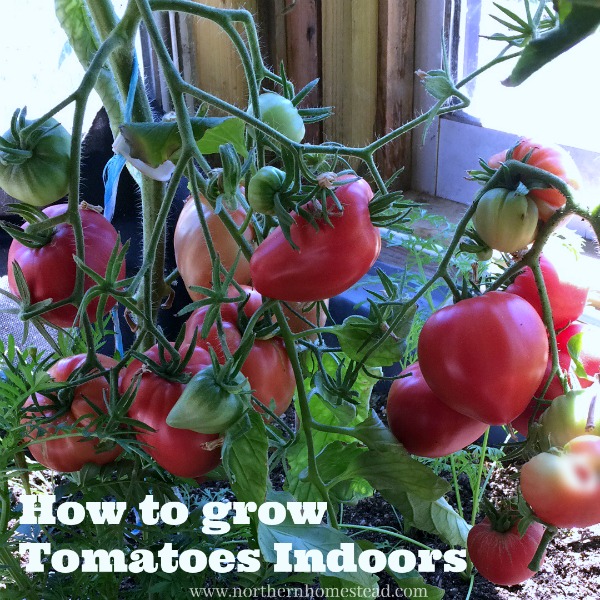
Tomatoes are one of the plants that represent summer. The aroma, the bright colors, and the yummy taste all remind us of a sunny summer day. Gardeners often can’t wait to start growing tomato seedlings. Today, we want to talk about how to grow tomatoes indoors. Can you, should you, and how do you do it? Here’s a complete guide on how to grow tomatoes indoors.
We will explore growing tomatoes partly indoors and partly outdoors to extend the growing season. As well as growing tomatoes year-round, using succession planting.
Can you grow tomatoes indoors?
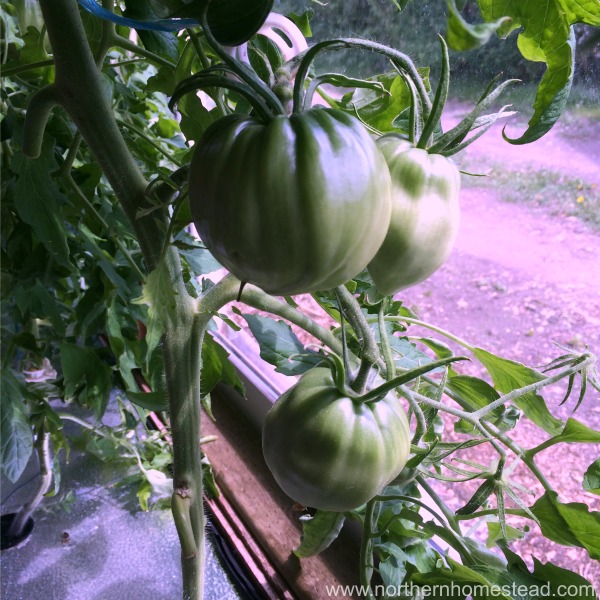
Tomatoes are a great plant to grow indoors. All tomato varieties can be grown indoors, not just cherry tomatoes. You will not need any special varieties of tomatoes for indoor growing. Since indeterminate tomatoes are perennials, you can actually grow a tomato tree indoors. The variety you choose depends on the space you have, the right conditions for growing, and your preference. Dwarf tomatoes like Tiny Tim are a good choice for small spaces. Determinant tomatoes have a shorter life span.
Decide whether you have room for a small or large pot, whether you only want some early tomatoes, or if you’re ready for a tomato-growing advantage, to determine whether to grow smaller varieties or have room for larger indoor tomato plants. We have grown many heirloom varieties with the best results.
Tomatoes also grow well from cuttings. If you don’t have room for a tree but want to grow the same great variety, take a cutting from the existing plant to start a new one whenever the old one outgrows your space. In our experience, it is also easier to keep young plants healthy than older ones.
Tomatoes are pollinated by wind; they do not require insects. Checking the plant every few days is enough to achieve pollination.
We have grown many heirloom varieties with the best indoor results, and we can assure you that it works well.
Why grow tomatoes indoors?
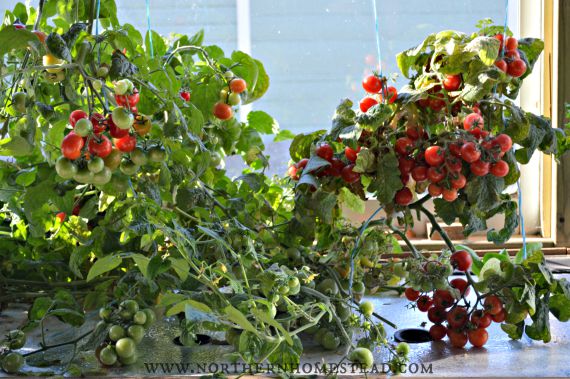
Living in a cold, northern climate means we have to endure long, cold winters. With frost possibility till late May, it seems our winter lasts nine months. We can’t wait for spring. We want to start planting. We want to grow a garden. It might be just one plant or a whole indoor garden; it is rewarding to grow indoor plants. Growing tomatoes indoors is a great alternative to starting seeds for the growing season way too early.
Another reason to grow an indoor garden is extreme outdoor weather conditions. For us, it is a cool, short summer; for someone in a warm climate, it might be extreme heat, too much rain, and hail. You get the idea. To harvest tomatoes earlier and enjoy them longer, you can grow some indoors. If you do not have outdoor space to grow tomatoes, your best option for enjoying fresh homegrown tomatoes is to grow them indoors.
That being said, not everything that is possible also needs to be done. But, eh, if you set your mind on growing tomatoes indoors, why not? Here we share our experience.
How to grow the same tomato plant indoors and outdoors
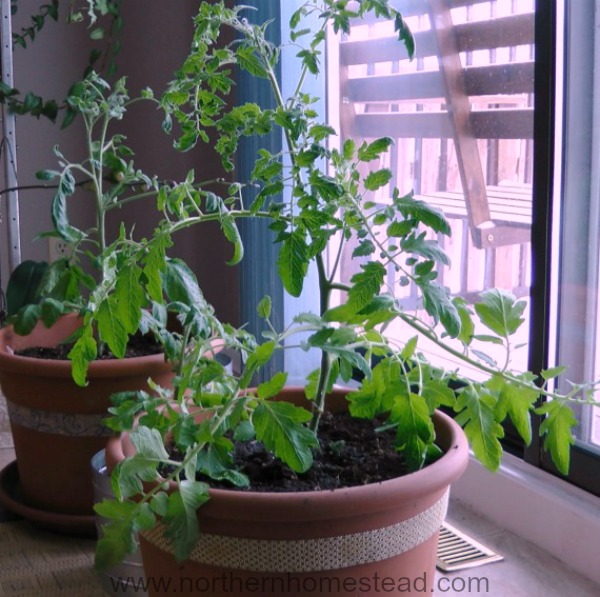
You can grow tomatoes indoors for part of their life. Note: I’m not referring to seedlings typically started indoors and transplanted outdoors once conditions are right. In this blog article, we discuss mature plants. You need to plant the tomato plant in a movable container for this. Use larger pots or grow bags.
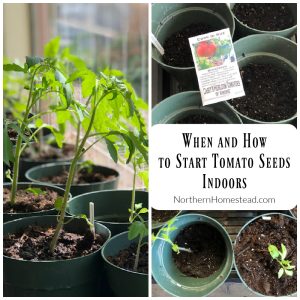
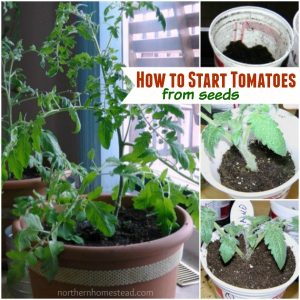
Start tomato seeds in winter under a grow light. Artificial lighting is necessary because hours of direct sunlight are still insufficient. Read more about when and how to start tomatoes from seeds. All of it applies, except the start time. To grow tomatoes indoors, you can start whenever you want. To grow tomatoes partly indoors and partly outdoors, start in winter.
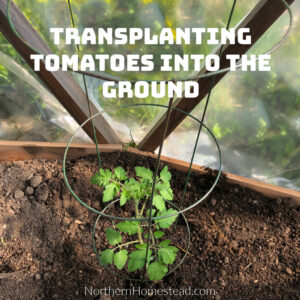
Transplant the seedling into a larger pot or a grow bag and provide plenty of light. Move that plant out as soon as the weather permits (after the last frost date). Make sure to harden off the plant first by either moving it out for a few hours at a time or covering it with a Plant Protection Blanket. This will give you an early start on tomatoes.
However, do not expect the indoor tomato plant to grow as quickly as it would outdoors. Also, determinate tomatoes will stop producing fruit around mid-summer. At this point, you can start a new plant from a cutting and have it ready for the fall indoor garden season.
Bringing in a plant in the fall and prolonging its life indoors is another option. As I explained above, it can be grown in the same pot from a cutting. If you bring a mature plant indoors in the fall, ensure it is free of pests. I find that it helps not to wait till the weather gets cold but to bring the plant in earlier in the fall. When the weather changes, bugs seek hiding places and love containers. So bring your plant in before that happens.
Note: It is difficult to transplant a mature plant from the outdoor garden into a container without damaging the root system. We do not recommend doing this; instead, take a cutting.
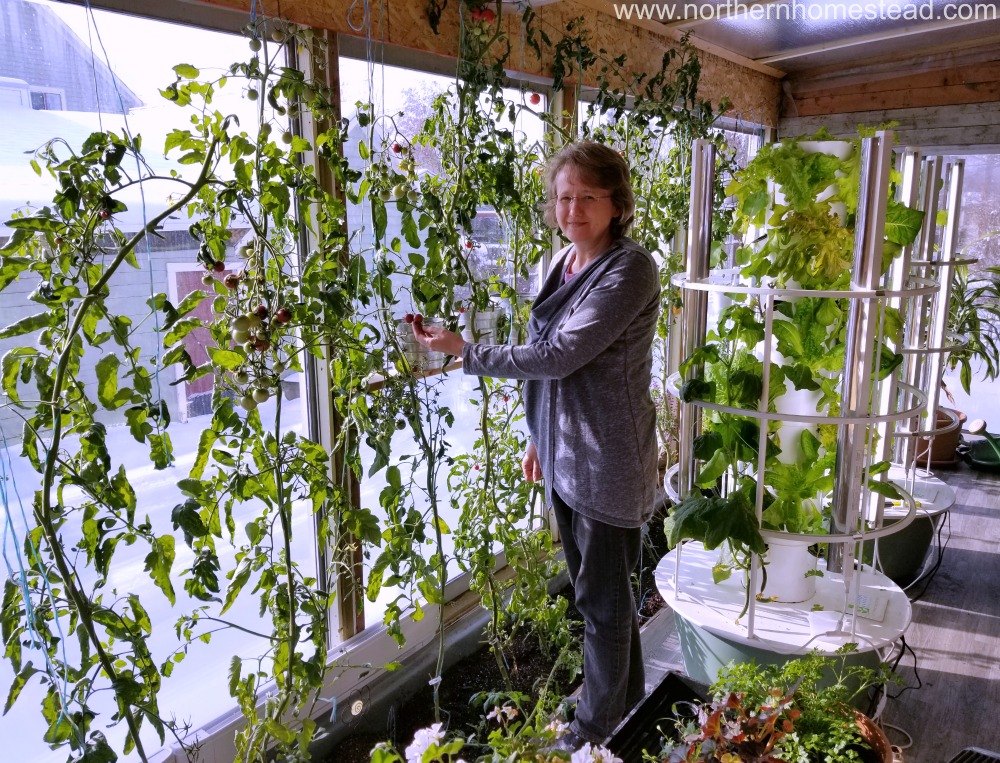
We prefer not to move plants in and out. We have grown tomatoes indoors year-round at big south-facing windows. We often call our window room a greenhouse, but technically, it is not. Those are just windows where we grow plants. A sunroom or a bay window would also work very well.
Step-by-step guide: How to grow tomatoes indoors
1. Enough Light
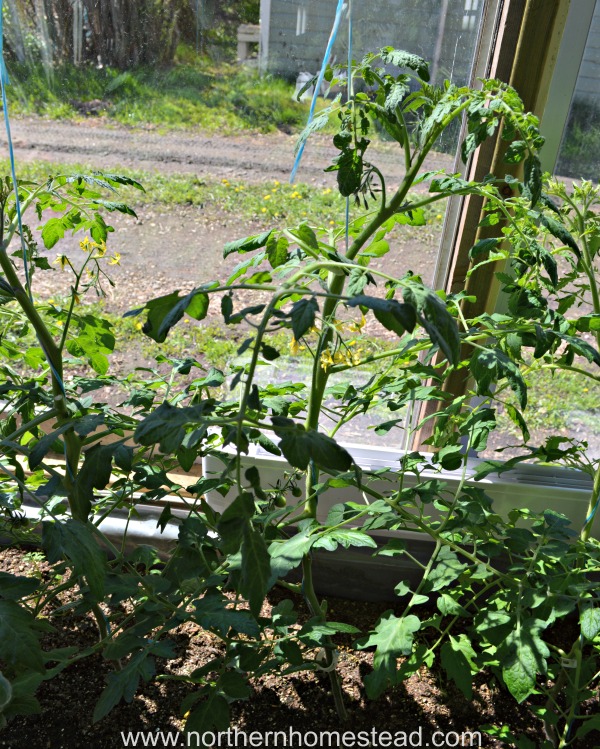
Tomatoes are a summer crop that needs full sun to grow and produce fruit. If they do not have enough hours of light, the plants will not die, but will not produce good fruit either.
From October 28 to February 14, our daylight is less than 10 hours. Additionally, the much-needed winter sun is often obscured by neighboring buildings and trees. With year-round growth, we can see the impact of “below 10-hour days.”
We recommend using grow lights for the seedlings to provide a healthy start. To grow only with natural light, start growing indoor tomatoes right at the edge of the 10-hour day. Read more on how to start tomatoes from seeds.
As with the outdoor garden, the seedlings will be ready to plant just before bud break. (6-8 weeks after starting). After transplanting, the tomato plant can grow without grow lights in a sunny south-facing window if daylight hours are 10 or more. A young plant in the middle of winter will get very leggy without bright light. However, a mature plant survives the dark months quite well; for example, see our Winter indoor garden update.
Learn more about additional light for an indoor edible window garden here.
2. Growing medium
- Growing in soil
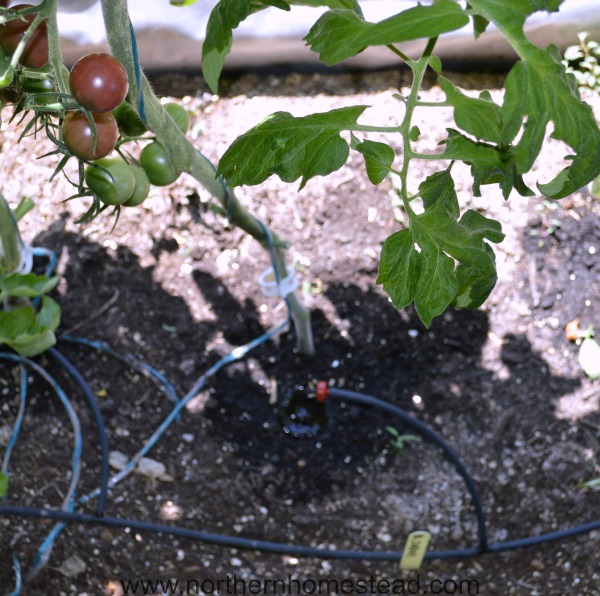
Plants are best grown in good organic soil out in the garden. We can’t provide that in our indoor garden; we only do the best we can.
We have had good experiences growing plants in soil indoors; however, there are more challenges. You will need a good soil mix, such as a good-quality tomato potting mix. Or make your own Mel’s Mix from the Square Foot Garden: Mix together
1/3 compost
1/3 vermiculite
1/3 peat moss
You can find all of these ingredients in a local garden center or Home Depot. Read more about soil for container gardening here.


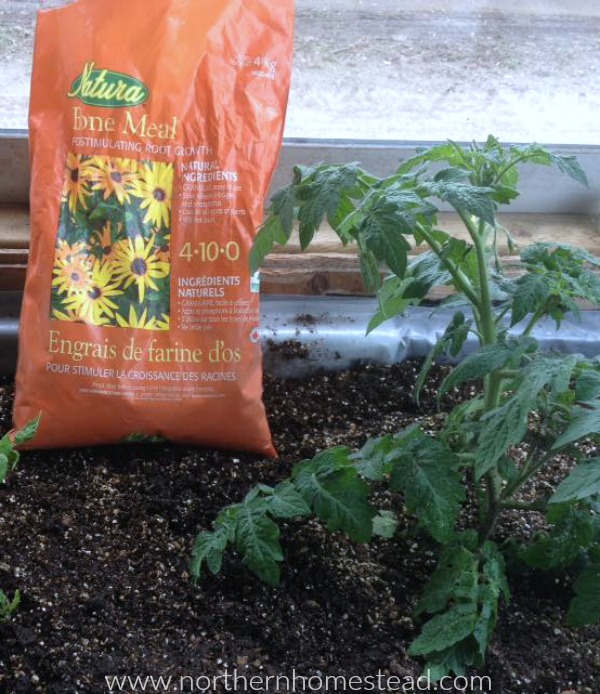
Since tomatoes are heavy feeders, you will need to fertilize them. Using larger containers or a wicking bed, you can apply natural fertilizers such as worm castings, fish emulsion, or Bone Meal. Use a balanced, water-soluble fertilizer in a small pot, or if you prefer smell-neutral fertilizer like NPK 10-10-10. Fertilize again with a high on potassium fertilizer after you see the first fruit.
Watering is also very important indoors. In a sunny window, plants dry out quickly and may require frequent watering. Additionally, containers dry out more quickly. You will have to make sure to be able to water regularly, every day, in the heat of summer or when using a heat mat in winter. Ensure the container has adequate drainage holes so the plants do not sit in water. Use room temperature water.
- Growing hydroponically
In our experience, growing indoors is easiest with hydroponics. A hydroponic system is a clean solution that provides the plants with all the needed nutrients.
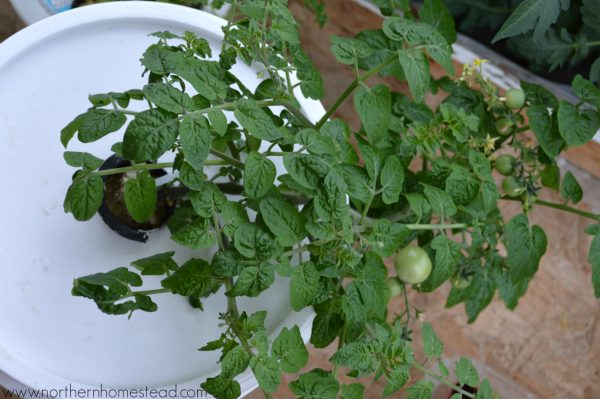
You can use whatever nutrient brand you want or is available at your local supplier. For tomatoes, you will need, for example, both MaxiGrow and MaxiBloom.


Find more information by following the links: hydroponic fertilizer, growing the Kratky hydroponic way, high-pressure aeroponics, and growing a Tower Garden.
Growing in a hydroponic setup is not the same as growing food in organic soil, but indoors, we do not have any organic soil anyway. Still growing tomatoes at home, without any pesticides, in a high-quality mineral blend, is a great choice.
3. Temperature
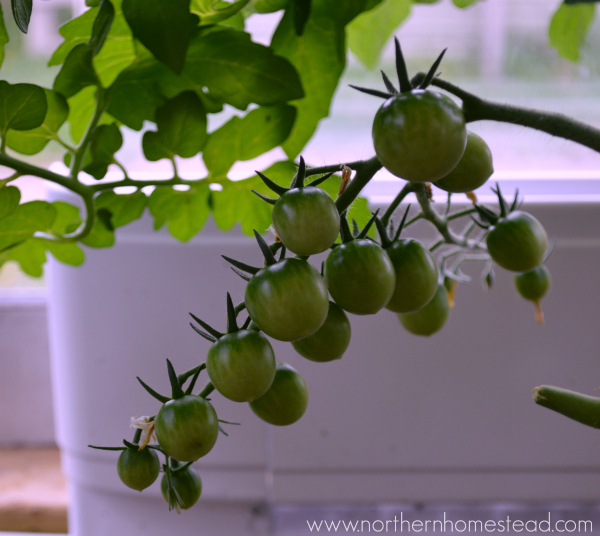
Tomatoes are heat-loving plants that prefer warm conditions. A cooled-down indoor room is not the right place for them. Even if the sunny window is at a different temperature from the room, measure the temperature. Nighttime temperatures can drop very low in the same window due to cold drafts. For growing tomatoes, aim for around 17C (62F) at night and 26C (79F) during the day. Use an oscillating fan to have good air circulation.
The grow room at the back of our garage gets very warm, up to 30C (86F), and the plants thrive. In winter, the room temperature for tomatoes must be kept above 12 °C (53°F). We can’t provide optimal conditions for tomatoes in the winter months; the plants are usually less productive as a result, but it is still rewarding to harvest a ripe homegrown tomato here and there in the middle of winter.
Grow tomatoes indoors in succession
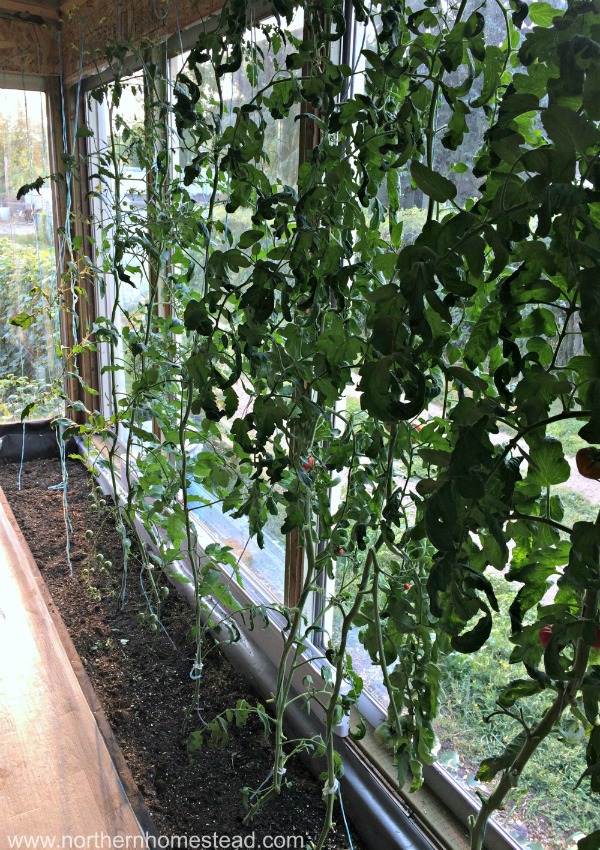
This end-of-August picture is a great example of succession indoor tomato planting. The first three plants are plants that have been started in late winter and have grown here all summer, producing lots of fruit. One has a sucker that will be there after the plant is done with the old fruit. I just cut back the plant and leave the sucker. Note: I do prune suckers of the indeterminate varieties (except the dwarf varieties); this is an exception because I can have a new plant from the old root. See more about pruning tomato plants here.
The next three plants in the picture are young plants started from cuttings in the summer. They have fresh fruit growing. After that, there is an empty space because some of the spring tomatoes have been harvested, and I will use it for new plants. I will not start new tomato plants in late summer, but I’ll start greens for winter growing.
To grow tomatoes in winter, they must be planted in mid-summer. After some experience with succession planting, it has become clear that planting mid-summer and then again in January/February works well. This way, the tomatoes begin producing in late fall, after the outdoor tomatoes are done, and again in late spring, before the outdoor tomatoes start producing.
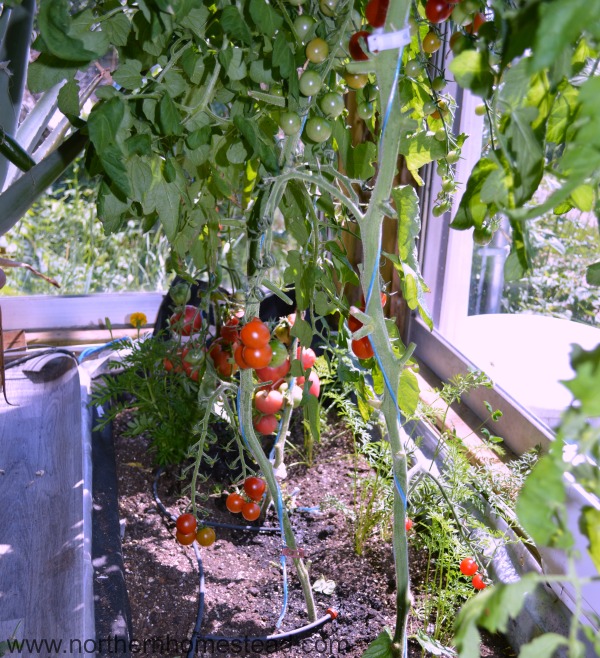
There you have it, a complete guide on how to grow tomatoes indoors. It is easy if you can provide good lighting, soil (or hydroponics), and temperatures that tomato plants love. Try it and let us know how it goes. For us, it really has been worth it. We have harvested many tomatoes from our indoor garden.
We invite you to subscribe to Northern Homestead and follow us on Facebook or Pinterest for the latest updates.

Hello,
Thanks for all the work you do.
Can you please do a special blog on growing indeterminate vine tomatoes indoors? I really want to grow tomatoes indoors, but apparently all the different seeds I bought are all indeterminate! And all I have grown indoors so far are common house plants so my knowledge is extremely limited.
Sincerely
Not sure what you mean. In this post we do cover indeterminate tomato plants. In fact, we mostly grow indeterminate tomato plants indoors. They just produce so much longer. Our favourite is Mano a dwarf indeterminate variety, meaning it stays small, but produces fruit over a long period.
I guess just more detail specifically about how to do it for a vine tomato. Can they still be grown with only a North facing window?
If you are in the northern hemisphere, you can not grow any tomato in a north-facing window. We share more about it in our indoor window garden series. https://northernhomestead.com/edible-window-garden/
Hi,
I love your video of tomatoes great.
I tell another story of sweet pototas plant. In fall I took cutting of sweet potatoes and put in a jar with water.
The slip rooted in the water jar and I will grow in spring in my garden. So with this ideas we can grow all kind of vegetables from slips and rerooted them. Easy way out to regrow our vegetables.
Thank you! Yes, growing plants from cuttings, is such fun. Tomatoes and basil also grow well from cuttings.
I have three window wells in my basement, 4-5 feet deep and about 3.5 feet in diameter, one on the east and 2 on north side of house. I live in growing zone 5a. I’ve always though these would be good little green houses. I watched the temperature through our cold winter and it seemed to be 15 degrees warmer than outside. Currently they have the large metal grates over with a clear plastic top over that. I wondered if these would work as long as I have grow lights, What are your thoughts? I’d especially love to have tomatoes.
North windows are not so good for growing heat-loving plants. You get no sunshine during the day, but colder during the night. If you want to grow with grow light, I would move away from the cold windows. An east window can be nice since the sun comes in so early, but again, this would only be true in the summer. During the winter months, that window also does not get any sun.
Hello I just got two beautiful tomato plants as a gift no name so they will be a surprise. it is very cold right now in our area in Lunenburg ,MA I put them in the east and south window I have I hope to put them in the larger pots I have outside at the end of May Is this fine . Also my pots out side are in the sunlight is that fine
Tomatoes can be grown in pots, you just would have to water more often and fertilize. Depending on how hot the spot gets in the summer, you might need some shade for the roots, the plant should be fine, but the roots do not want to get too hot. Happy tomato growing!
Hi great post! I am interested to grow tomatoes in pots indoors where we will have more than 10hrs of light during the day. But you see we live in the middle east and unlike in your setting, tomatoes wont survive the heat during the summer which is why Im planning to experiment indoors. I do hope that the principles you shared here would be applicable to our growing conditions indoors albeit during the very dry, hot and humid summers of the middle east.
We have no experience with your weather conditions, but we have grown tomatoes successfully indoors during the summer. You have to keep in mind that the sun is much higher in the sky in mid-summer. Also, tomatoes do like it warmer than a cooled-down house would be. Aim for a sunny location in 70-80F. Happy growing.
We are designing a growing kitchen/dining room on Orcas Island at 1,400 ft and your site has become one of our favorite resources. Thank you! Because this space will be used for hosting family and friends, we’re trying to grow productively and beautifully. We’re planning a wall system for greens and herbs and a vining wall for tomatoes, cucumbers, and hot chilis. We’d love both to be NFT systems but are concerned about the larger root systems for the vining/more upright plants. Do you have any thoughts? Maybe we need a DWC system for that wall? We’ll have supplemental lighting for both walls. Thanks in advance for your time.
Best,
Deb
That sounds like a wonderful design. The room will be beautiful and productive. We built an NFT upgrade for bigger plants using a bigger PVC drain pipe. You can read all about it here: https://northernhomestead.com/nft-downspout-hydroponics-system-upgrade/. There is plenty of room for roots.
Thank you!!! You are such an incredibly generous resource. We’ll send an update as soon as our dining room/food farm is built and we can serve our first meals. 🙂
You are so welcome. It can’t get any more local than growing food next to the dining table. Looking forward to hear more about it.