
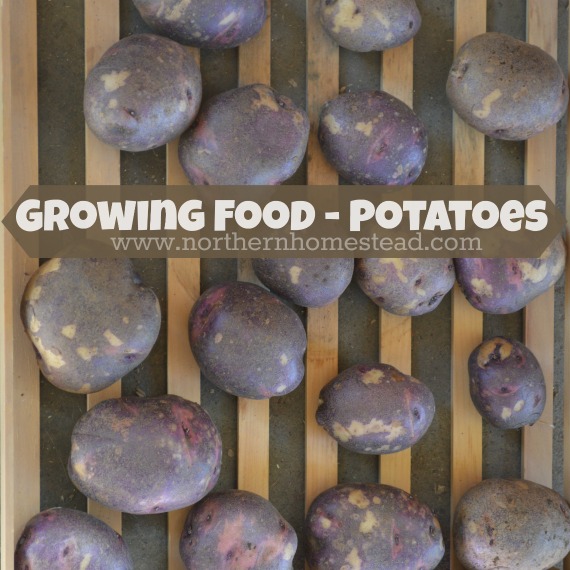
If you want to grow your own food, consider planting potatoes. They’re high-yielding plants that are also easy to grow and can be stored for months. Potatoes are a must-have for any garden. Additionally, growing them at home is worth it since they’re on the “dirty dozen” list. Organic potatoes are not widely available, and they are expensive.
It’s nearly impossible to create a comprehensive how-to guide for growing potatoes since there are countless methods available, and your approach will vary based on your unique preferences and conditions. Therefore, find the method that works best for you and start growing potatoes.
Potato varieties to plant
When shopping at a supermarket, it may seem like only two types of potatoes exist: red and white. There are many exciting and tasty potato varieties to choose from. To get inspired, take a look at Eagle Creek, a potato seed farm just north of us, offering over 40 different potato varieties. Additionally, these varieties can be categorized as early, mid-season, or late.
In a short growing season, early varieties might be your best choice. They should be ready to harvest in 50-70 days after planting. Norland potatoes – an early variety, grow well here in our short summers and store well. We usually grow a few rows simply because they are so no-fail.
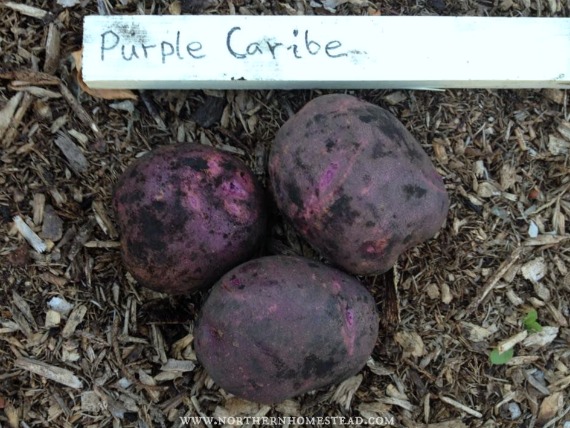
Mid-season varieties typically mature within 70-90 days. Yukon Gold is a popular mid-season potato. Purple Caribe is another one with satiny blue-purple skin and whiter-than-white flesh. Yum!
Our favorite potatoes to grow are German Butterball and Bintje – late varieties. German butter ball has a fantastic buttery flavor and tastes best when small. We usually leave them in the ground till the frost kills the tops. This way, we also get a good amount of bigger potatoes. Both are heirloom potatoes. Great for eating fresh or for storing throughout the winter.
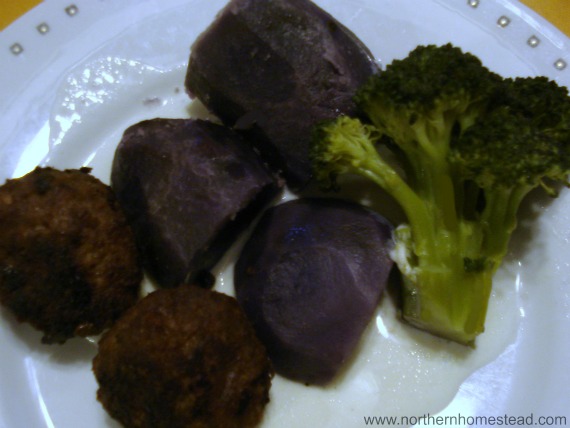
If you want something exotic, grow Russian Blue. Those dark purple potatoes taste just like a good potato, but will be a conversation topic at your dinner table. Plus, purple potatoes have an Anti-Inflammatory effect.
Potatoes, just like tomatoes, can be determinate (bush type) and indeterminate (vine type) varieties. Early and mid-season potato varieties are usually determinate, while late varieties are often indeterminate. However, this does not imply that indeterminate potatoes will grow tall like tomatoes. Instead, they continue producing potatoes along the stem. To ensure the best yield, it is recommended to hill them a few times during the growing season or grow them vertically in a container. Again, vertically not for the vines, but in the soil, hilling a few times, or adding soil to a tall container.
Seed potatoes
Every potato, by design, is a seed potato. But since not every potato has been grown naturally, getting good seed potatoes for your garden is a good idea.
You can easily save your own potatoes for seed potatoes. Healthy, medium-sized potatoes make great seeds. Also, green potatoes make good seed potatoes, which are not suitable for food but store well. Every few years, if the production decreases, you can bring in new seed potatoes.
Does size matter? Rumor has it that if you plant big potatoes, you get big potatoes; if you plant small potatoes, you get small potatoes. Other growers claim that small potatoes bring bigger potatoes. We prefer using larger potatoes for food and medium-sized ones for planting.
Chitting seed potatoes
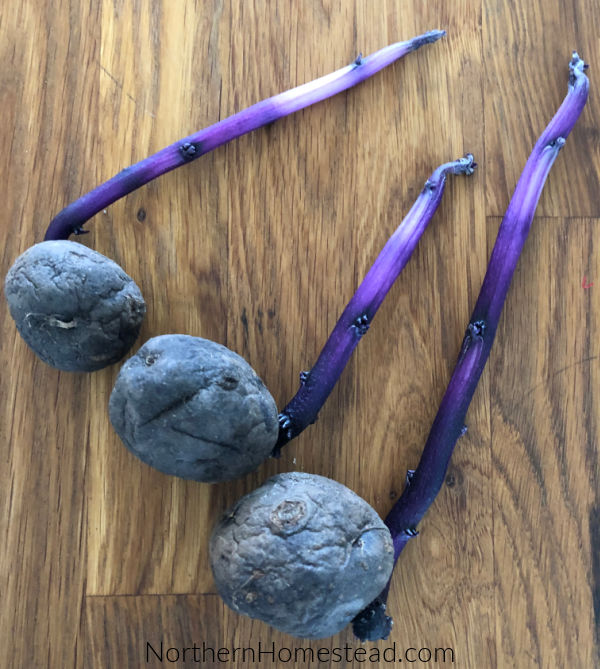
Seed potatoes can be prepared for planting by laying them out in a bright location and allowing them to sprout. This is called chitting. Potatoes do not have to be sprouted; it is a good way to speed up germination. Instead of keeping them in a dark space where they grow long shoots, bring them into the light and let them grow healthy green sprouts.
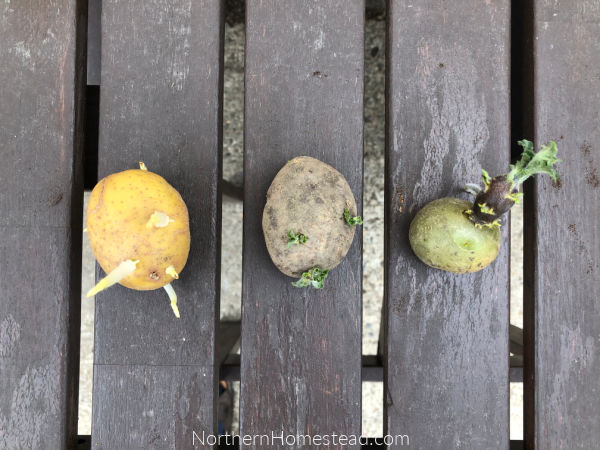
In the picture above, you see three seed potatoes: The first has been stored in a dark room, so the sprouts are weak and white. They will grow, though. The second has been sprouting in a bright room for about a month. The sprouts are green and ready to grow; this would be the ideal situation. The third has been in a bright room for four months; the sprout is much bigger and also ready to grow, but as you see, the potato has put all its energy into this one sprout.
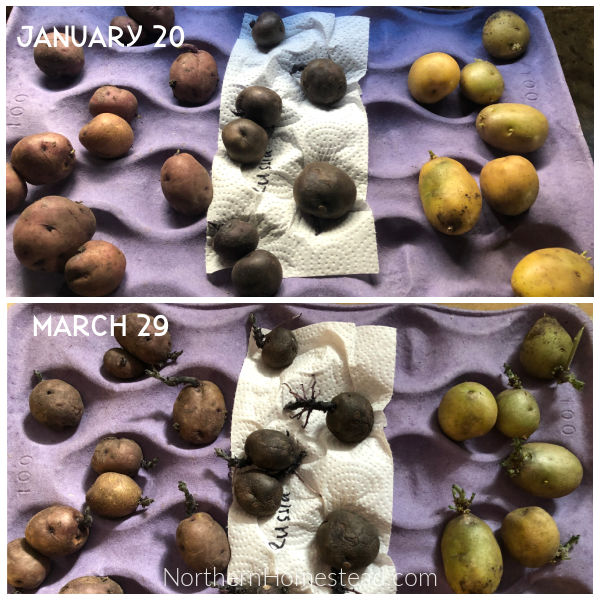
That leads to a question: Can seed potatoes be out in the light for months? We tested it. As you can see in the picture above, in 2 months, the potatoes produced small green sprouts. It sprouts slowly compared to potatoes stored in a semi-dark place, and it grows those long, useless sprouts. If you have less-than-ideal conditions for storing seed potatoes, bring them out into the light. But it looks like the ideal situation is if the chitting does not extend 6 weeks.
These long sprouts grew at the same time period, stored in an open box in the cold room. This is the Russian blue variety in the picture before, seen in the middle. You can see that not only is the size of the sprouts different, but the potatoes are also drier and shriveled. Those will still grow, but we prefer the healthy sprouts better if we have a choice.
You can use an egg carton or a harvest carton to keep seed potatoes dry. Chitting potatoes for 6 to 8 weeks before planting is sufficient. If you have large seed potatoes, you can cut them in half or make 3 from one. Make sure each section has a few eyes to grow. Cut them a few hours beforehand so the cut dries over and does not start to rot in the ground.
Preventing disease in seed potatoes
If you suspect your seed potatoes are diseased or come from unreliable sources, it’s important to prevent the potential spread of disease in your garden. Is this achievable? To some extent, yes.
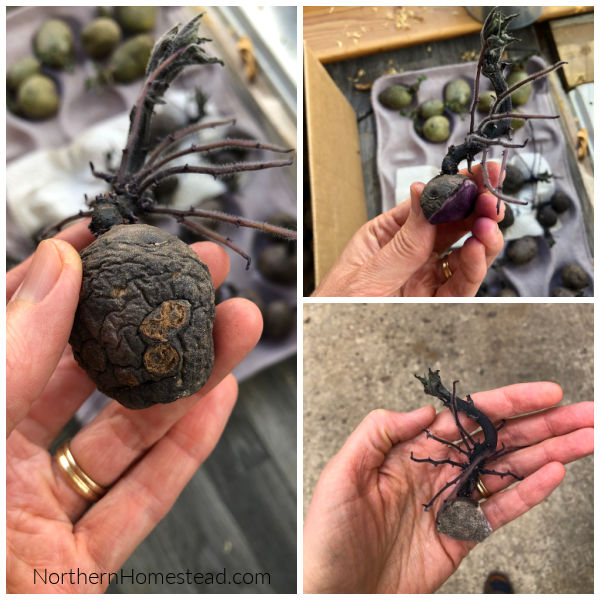
First, let the potato sprout. This one in the picture has been out in the light for months. As we covered before, it does not have to be that long. Just enough to see the main healthy sprout. Cut the rest of the potato back so that only the healthy sprout is left, as shown in the picture above. Let the cut dry for a few hours and plant.
Different methods to grow potatoes
Potatoes can be grown in many ways. I do not think there is a right or wrong method to grow potatoes. It mostly depends on your possibilities and preferences.
Traditionally, potatoes are planted in rows 3ft (ca. 91 cm) apart. The space between potatoes within a row depends on the variety. Early varieties can be planted close together (6″-10″), as they tend to have fewer tubers per hill. Mid-season varieties are generally planted 8″ to 12″ apart. Late Season Varieties & Fingerling Varieties should be planted 12″ apart or more.
Pulling up the soil around the potato plant stems is recommended once or twice for late varieties during the growing season. As we covered before, indeterminate potatoes continue to develop potatoes along the stem. Additionally, hilling prevents the potatoes from being exposed to sunlight, which can cause them to turn green.
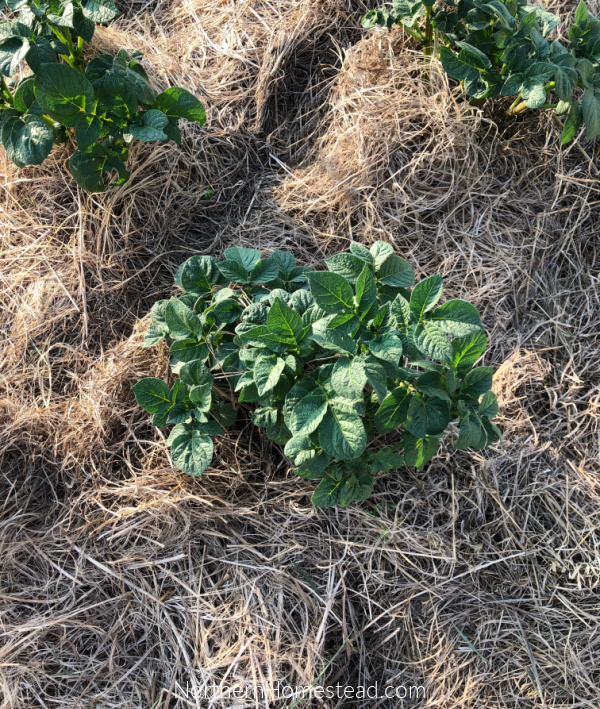
Potatoes can also be mulched instead of hilled with soil. It makes for an easier harvest. If you are growing a no-till garden, the soil is already covered with mulch. However, potatoes will benefit from more mulch than your usual crop.
The pioneer in this easy mulching method was Ruth Stout; her book is Gardening Without Work
Potatoes can also be grown in containers. The idea is to fill the container half full, plant the potatoes, and add soil as the potatoes grow. See this enormous harvest of container-grown potatoes. All kinds of containers, bags, or tires can be used. For determinate potatoes, a bucket can work well; for indeterminate potatoes, a taller container is better, so you can keep filling them up.
Old World Garden Farms adopted the growing of potatoes “container style” in a more natural way. They created Potato Crates from non-treated pallet wood – and were very surprised with the results! Read about it here.
Companion plants and crop rotation
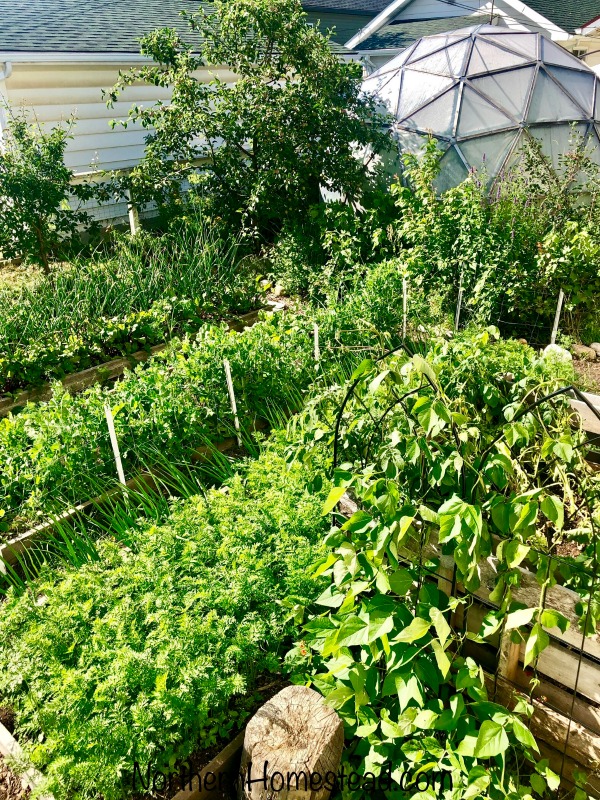
West Coast seeds suggest: Bush beans, celery, corn, garlic, marigolds, onions, and peas all do well when planted near potatoes. Avoid planting potatoes near asparagus, Brassicas, carrots, cucumber, kohlrabi, melons, parsnips, rutabaga, squash, sunflowers, and turnips.
It is also known that potatoes and raspberries should not be planted next to each other. The funny thing is that my parents grew all the potatoes we ate for over 20 years in the same spot, always next to a row of raspberries. Back then, there was no internet, and no one told them it was not a good idea ;).
Needless to say, I don’t take companion planting and crop rotation very seriously. Both are overrated. Just use common sense for both companion planting and crop rotation. If you have potato disease, it is better to crop rotate next year to avoid the same problem. If the harvest is good, you can plant the potatoes in the same spot.
Personally, we like to rotate for weed control. Potatoes are the best crop to plant in a bed that has had a weed problem. They are such prolific growers that nothing else wants to be close. We usually give the potatoes a whole bed so they can take the space they need.
Potato diseases
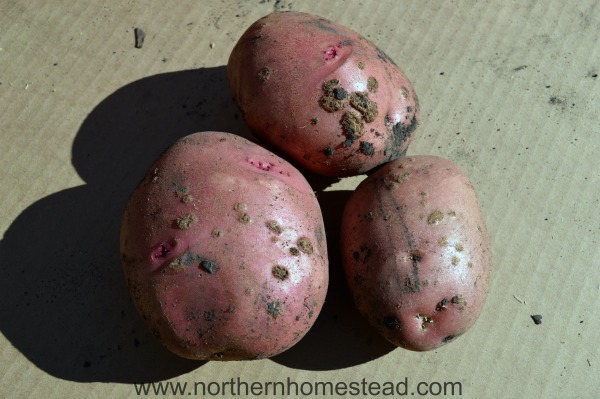
Potato scab is one of the most common potato diseases. In common language, it might also be known as blight. However, scab and blight are not the same. Scab is a bacterial disease that only affects the outer skin of the potato. It looks worse than it is. Potatoes are still edible and even store well with scabs. Scab occurs if the soil is too dry or if there is too much nitrogen-rich fertilizer.
Potato blight, on the other hand, is a fungus, the worst disease a potato grower can have. Blight develops in warm, humid conditions and is uncommon in our climate.
Colorado Potato Beetle is a common problem. Thankfully, we do not have to deal with this issue here at Northern Homestead. But we did have some experiences with CPB while living in Virginia. Spraying the beetles was part of Jakob’s job in the summer. It was not our garden, so Jakob did what he was told, but he could see it did not work. The potatoes died before the beetles did.
One day, we visited a great gardener in the next town and were amazed that the garden didn’t have a beetle problem. The experienced gardener was knocking the mature beetles off the plants instead of picking or spraying them. It seemed that she got them early on, so they’d have a hard time getting back on the plants to lay eggs. In the morning, she would quickly shake out rows of plants and not see Colorado potato beetles return. This method is very simple and worth trying out.
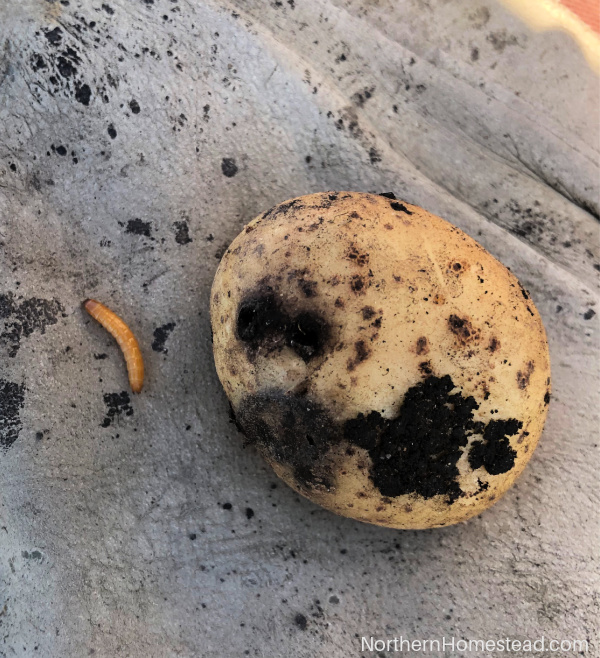
Wireworms in potatoes are common when converting a pasture or hay field into a garden. A reader shared with us: “I did have problems with wireworms, so in the 2nd & 3rd years, about two weeks before planting, I set out traps (a piece of potato on a stick stuck 2” into the soil).” In our experience, the wireworm problem was worse in a new garden, but not as much the year after.
Harvesting potatoes
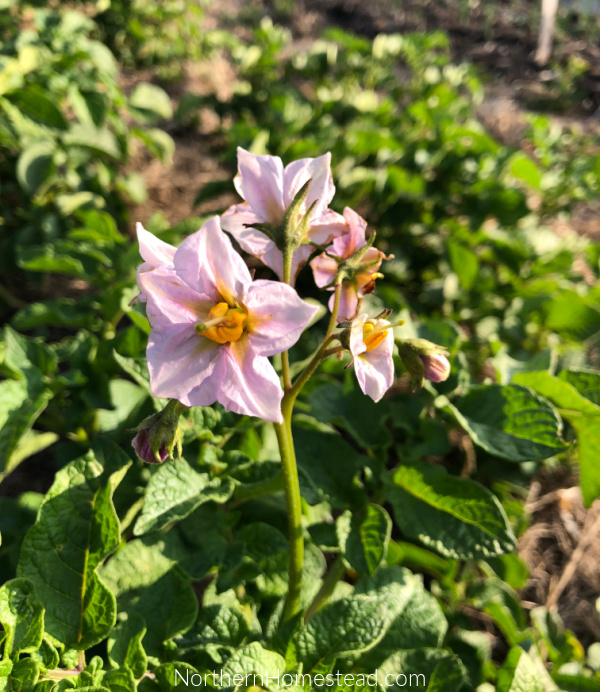
The flowers of potato plants are quite beautiful. Before people realized the tubers were edible and delicious, the plants were only known for their flowers. When potato plants start to bloom, it is possible to begin harvesting young potatoes growing beneath them. Harvest these early potatoes by hand from the side of the plant without damaging or killing the plant.
Young potatoes have thin skin that thickens as the plant stops growing and begins to die back. This is the ideal time to harvest potatoes for storage, as the skins have fully developed, allowing the tubers to be stored for several months.
If possible, choose a dry period to harvest potatoes for storage. Now it does make a difference what method was used to grow them. The traditional method will involve hard work to dig up all those potatoes. Maybe that is why many easier ways have been developed to eliminate all the back-breaking digging. No matter how you get them out, try not to stab any.
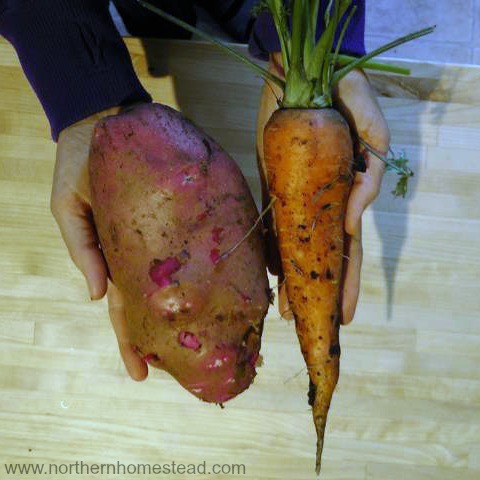
We often harvest our potatoes after the killer frost during the Indian summer. In the picture is an 800g (1.76 pounds) potato and a 250g (o,55 pounds) carrot that we grew in the farm garden.
Storing and preserving potatoes
Potatoes can be stored for months in a burlap potato sack or wooden crate. Let the tubers dry out a bit (just for an hour or two, as needed) before storing them. Do not leave potatoes in bright light for days; even worse, under sunlight, they will turn green.
Potatoes do not need to be washed; they will store better if you don’t. Give them a week or two for drying or “curing” in a warmish (about 60F) but dark place. This will help heal any cuts or bruises and strengthen the skin for long-term storage. Potatoes need a cool (35 -40F) dark place for storage, even though the dark is more important than the temperature.
When potatoes start sprouting, you can remove the sprouts. It will help them to stay firm longer. I often go through all the potatoes twice to remove unwanted sprouts.
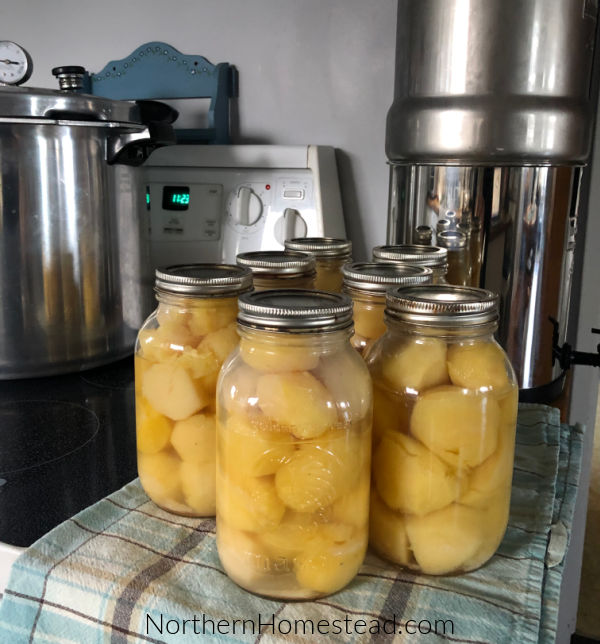
Pressure-canning potatoes and freezing potatoes are other great ways to preserve potatoes. It does not have to be done right at harvest time. Store them as long as you think they will keep, but before they start sprouting, potatoes can be canned or blanched and frozen. Having canned potatoes on hand during the busy summertime is great.
Cooking potatoes
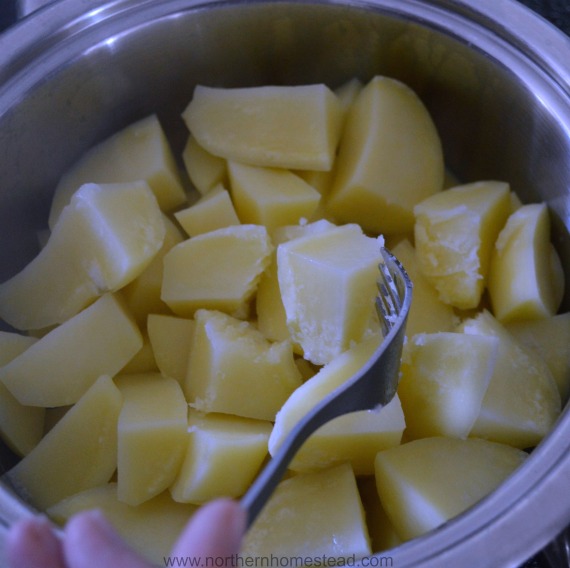
Here are some of our favorite recipes:
Pan-fried potatoes
Best mashed Potatoes
Potato pancake
Steamed buns on potato stew
Potato salad
We prefer our potatoes steamed rather than boiled. Learn how to steam vegetables without a steamer.
What is your favorite way to grow or use potatoes?
We invite you to subscribe to Northern Homestead and follow us on Instagram, Facebook, or Pinterest for the latest updates.
More Growing Food Posts You Might Enjoy:



NEWSLETTER SIGNUP

Love this, thank you. We are just eating the last of last year’s potatoes and I didn’t know to remove the sprouts. I will have to remember that for next year. Also, I ordered my seed potato from Eagle creek, wonderful service and the bags of seed potato are full and of good size, very impressed with them.
Pleased to hear that Eagle creek has worked so well for you. Store bought potatoes are just no comparison to home grown.
Being a northern gardener myself, I’ve been devouring your gardening articles and putting some of your ideas about mulching and layering into practice this spring. I grow lots of potatoes (close to 300 hills of them this year. It’s a staple for us) and have been doing so for the past 20 years in the back-breaking, “hill them all with piles of dirt scraped up with the hoe” way. My back is getting too old for that!! And I’m not THAT old yet! I can’t imagine how I’d be able to garden the same way up into real old age. I’m definitely going to hill my potatoes with straw mulch this year and see how it works.
We did that last year, you probably have seen the post about it. It is way simpler then hill them with soil. Happy gardening Lisa!
We just planted some Norlands yesterday. A little late in the season I think. This is my second attempt at growing potatoes. Last attempt was in a trash can a few years ago and my impatience resulted in a too-early harvest and marble-sized potatoes. Oops. 😀 This time I had my husband cut down some scrap lumber so that I could make one of those potato boxes that I’ve seen on Pinterest. I thought it would be perfect since we have limited ground space, but then I read that early varieties don’t work well in the potato boxes. ::sigh:: We’ll have to wait and see how it works out…
Norlands will grow in the box, since they grow anywhere ;). Just give them a good soil. Happy potato growing!
I love growing potatoes. They’re one of the few things that are easy to grow here in Alaska! Thanks for sharing on the Homestead Blog Hop!
Growing potatoes is very rewording. A must have crop for the north.
We just harvested some Yukons this morning, and they were delicious. I can’t wait to look into those other varieties, thanks for sharing!
Lucky you! My are not even up yet. But God willing they will grow, and be ready in the fall.
The last year potatoes which I took of the garden and keep in cold room. Yesterday when I went to get some potatoes for cooking I found all my potatoes are growing in the box. The potatoes has long room system. Please does any body have any ideas about it.
Thanks enjoy your potatoes story.
Almas
You can take the sprouts off, I do this every year around March. Usually, they are still gut for a few more months.
Any ideas how to store potatoes if you don’t have a basement or root celler?
Canning is a great option for long-term storage. Otherwise, find the coolest and more important darkest place in your house, like a closet in a cool bedroom. Depending on how cold it gets where you are, you might be able to bury them in the garden using a bin, bushel, or basket. Like a miny root celar.
Someone gave me an old kidney shaped “soaking pool” which they had drilled holes in the bottom and used as a flower planter. I thought it would make a great potato planter since it was deep in the middle even tho the edges were shallow because of being molded into “seats”. After setting it up and propping 2X4 scrap lumber under the lip of the tub for support, I filled it with dirt, and added some compost. Then I planted potato eyes in it. Initially nothing grew, but then finally a lot of shoots appeared and grew up to 3 ft high (of course they fell over onto each other and there was no way to hill them up with dirt because the sides of the tub limit was reached). I just finished digging out a nice pail of potatoes which Im so delighted to have grown for the first time! None are as big as your monster tater Anna, but one was almost as big as my palm. Yea! So I wasn’t sure if I could grow potatoes again in the same container and your article gave me the answer. Also I wasn’t sure about washing them. I brushed the soil off half of them and the other half I rinsed with the hose and let dry outdoors overnight. they are all layered in sack with straw.. Thank you for all this good info!
Congratulation on your great first harvest of potatoes. It is so satisfying to grow our own food, isn’t it? Wishing you many more great potato growing seasons.